Locations:


Beyond the tell-tale aroma, onions also provide benefits like strong bones and a healthy heart
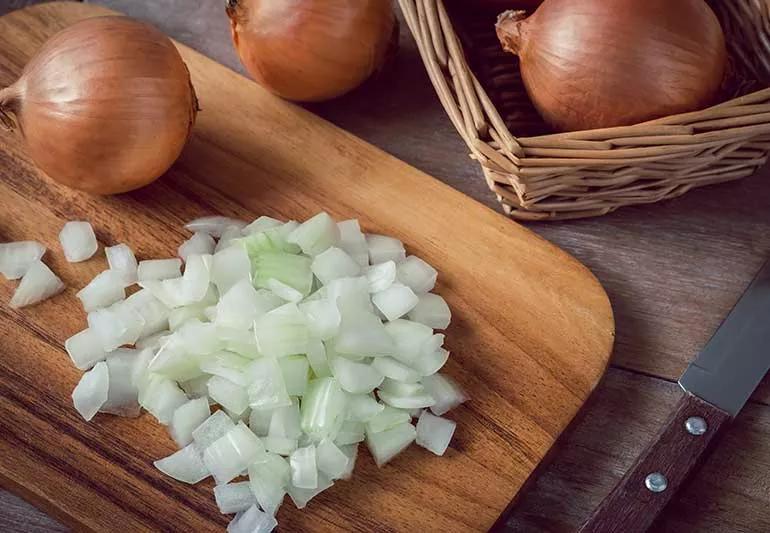
Image content: This image is available to view online.
View image online (https://assets.clevelandclinic.org/transform/914ea896-d9eb-48ff-8c7e-09f1201a5f1e/Onions-1126043275-770x533-1_jpg)
chopped and whole onions on cutting board
They may bring tears to your eyes and a stench to your breath. But onions also add a lot of flavor to dishes. Whether you like this root vegetable raw or cooked, there are many health benefits to eating onions.
Advertisement
Cleveland Clinic is a non-profit academic medical center. Advertising on our site helps support our mission. We do not endorse non-Cleveland Clinic products or services. Policy
Onions are part of the Allium family, a group of spicy, sharp root vegetables that includes garlic, leeks and chives. They’re especially high in organosulfur compounds. These chemicals give onions their strong odor and taste (and make you cry). They also have many health benefits. “People have used onions for medicinal purposes for centuries,” says registered dietitian Gillian Culbertson, RD, LD.
With hundreds of varieties — from tangy white onions to sweet Vidalias — it’s easy to add onions to your meals. Getting more of this veggie into your weekly diet may help to:
Initial laboratory studies suggest that organosulfur compounds may stop cancer cells from multiplying and growing, causing the cells to die. (Please note that this study hasn’t yet been reproduced in humans, so while the results are promising, we can’t know for sure if the effect will be the same in humans.)
A 2019 study found that consuming 35 pounds of onions and other allium vegetables every year may lower your risk of colorectal (colon) cancer by almost 80%. Most Americans consume about 22 pounds of onions in a year, according to the National Onion Association.
Additional studies suggest that an onion-rich diet may lower your risk of:
Advertisement
Onions have more than 25 different flavonoids — natural plant substances that have antioxidant properties. They’re also high in vitamin C, another important antioxidant that supports a healthy immune system. “Antioxidants protect against free radicals that cause inflammation and contribute to chronic diseases like cancer, diabetes and heart disease,” explains Culbertson.
For maximum antioxidant benefits, choose colorful red onions, which have flavonoids called anthocyanins that give the vegetable their color. Because research shows an onion’s outer layers have the highest concentration of flavonoids, try to keep as much of that part as possible when removing the skin.
Another flavonoid found in onions — quercetin — offers many heart-healthy benefits, especially for people experiencing obesity and metabolic syndrome. “Metabolic syndrome is a combination of risk factors, including excess weight, high blood pressure, high cholesterol and high blood sugar, that increases your risk for heart disease,” says Culbertson.
Onions also appear to have blood-thinning abilities, which can help prevent blood clots that cause heart attacks and strokes.
Advertisement
Because quercetin builds up in your bloodstream over time, consistently consuming onions can lead to greater antioxidant benefits. Different studies indicate that eating more onions may improve heart health by helping to:
The antioxidants in onions may also reduce bone loss and osteoporosis that often occurs with aging. “Antioxidants minimize the stress that damages healthy cells and speeds up the aging process,” notes Culbertson.
Sipping on onion juice may sound unappetizing. But a 2016 study found that healthy people in middle age and postmenopause who drank 3 ounces of onion juice every day for eight weeks had less bone loss and stronger bones. Another study suggests that women over 50 who eat an onion a day may:
There’s some evidence that quercetin has antibacterial properties, and storing onions for at least three months increases quercetin levels. A 2018 systematic study found that consuming onions may slow or stop the growth of bacteria that cause:
Advertisement
Onions are a rich source of prebiotics and fiber. “Gut bacteria break down insoluble or undigested fiber, causing fermentation,” says Culbertson. “In this way, onions serve as a prebiotic or food source for the bacteria, which aids digestion.”
Unfortunately, this fermentation can also cause gas and bloating. “Cooked onions are easier to digest and less likely to cause digestion problems than raw onions,” shares Culbertson.
A medium 5.3-ounce onion has approximately:
Nutrient-wise, a medium onion has:
You can buy onion supplements, including onion juice, online and at local stores. But Culbertson cautions that you’ll get more health benefits from onions if you eat the actual vegetable. “It’s always best to get nutrients from foods when possible.”
While your body might appreciate the numerous health benefits of eating onions, those close to you might turn up their noses. The sulfur compounds can make your breath and sweat a little rank. Eating cooked onions instead of raw ones can help. Sauteing, caramelizing, frying or cooking onions lowers the sulfur content. You can also try mints or gum to freshen your breath after a meal.
Advertisement

Sign up for our Health Essentials emails for expert guidance on nutrition, fitness, sleep, skin care and more.
Learn more about our editorial process.
Advertisement
While there’s limited research, the horned melon contains nutrients that may help with your immune system and skin health
Small, but mighty, they’re nutritional powerhouses with loads of fiber and protein

This tropical fruit is a good source of fiber and vitamin C, but it can be unsafe for people with kidney problems
Products like turmeric, fish oil and probiotics blur the line between food and supplements
The root vegetable is a low-calorie food that may help with gut health
This East Asian and subtropical fruit is packed with delicious nutrition
Lean meats, fish, dairy and plant proteins can help you meet your protein needs without piling on saturated fat and sugar
This citrus fruit delivers vitamin C, fiber and other nutrients that can support your heart, immune system and skin

This low-impact activity could boost your cardiorespiratory health

The advice dates to 1574, but it falls a little short given what we know today

Most tongue pain isn’t too serious, but seek help if it’s severe or lasts longer than a few weeks
 Search