Locations:





ADHD can present differently from child to child and can change with age

Image content: This image is available to view online.
View image online (https://assets.clevelandclinic.org/transform/48f1b029-9cf9-40d0-8e62-c31c6fbdc6d4/distracted-child-school-adhd-2209704786)
Daydreaming, distracted elementary school child at their desk
Attention-deficit/hyperactivity disorder (ADHD) affects how your brain manages attention, activity levels and impulse control. But what exactly that looks like can be different for everyone.
Advertisement
Cleveland Clinic is a non-profit academic medical center. Advertising on our site helps support our mission. We do not endorse non-Cleveland Clinic products or services. Policy
“ADHD isn’t just about being ‘hyper’ or struggling to focus,” says developmental pediatrician Carrie Cuffman, MD. “It can show up in many different ways.”
That’s why diagnoses are separated into three main types of ADHD:
There’s also a fourth type: Unspecified presentation. That’s the category providers use when symptoms of ADHD interfere with your life, but don’t meet the criteria to be diagnosed with another type.
Understanding your child’s ADHD type can help you better understand how their brain works and how you can best support them. Dr. Cuffman breaks down the differences.
A diagnosis of inattentive type ADHD centers on symptoms like trouble paying attention, staying organized and completing tasks. Kids may frequently lose things, forget instructions or seem to “drift off” during conversations.
“With inattentive ADHD, the issue isn’t that they’re not trying to concentrate,” Dr. Cuffman explains. “The trouble is that their brains are easily pulled away by distractions.”
A child with inattentive ADHD might:
Advertisement
Hyperactive-impulsive ADHD involves high activity levels, constant movement and acting without thinking. Kids may fidget, talk a lot, interrupt or have trouble sitting still.
“They’re the kids people describe as ‘driven by a motor,’” Dr. Cuffman shares.
It’s important to note that hyperactive or impulsive symptoms aren’t misbehavior. “These kids feel a constant internal push to move or act,” she adds.
You may notice a child with hyperactive-impulsive ADHD:
Combined type ADHD includes both inattentive and hyperactive-impulsive symptoms. It’s the most common type seen in school-age children.
At school, a child with combined type ADHD may rush through their work (impulsive) at times. But other times, they struggle to stay on task long enough to finish a simple task (inattentive).
At home, they may hop from one activity to another, leaving unfinished craft projects and board games in their wake (inattentive). When asked to clean up their supplies, they may lash out and throw the toys (impulsive).
ADHD is diagnosed by a healthcare provider — often a pediatrician, developmental-behavioral pediatrician, child psychologist or psychiatrist.
An ADHD assessment considers symptoms like impulsiveness and distractibility. Importantly, those symptoms must appear in at least two settings (such as home and school) and affect daily functioning.
“Combined ADHD is the presentation we see most often in school-age children,” says Dr. Cuffman. “Preschool-age children are more likely to be diagnosed with hyperactive-impulsive subtype, but as kids grow and school asks more of their attention, both sets of symptoms tend to become clearer, and a child’s diagnosis may change.”
Dr. Cuffman adds that younger children often appear more hyperactive. That’s because little kids naturally have shorter attention spans and higher energy levels.
“We always look at whether the symptoms are beyond what we expect for a child’s age,” she says. “Four-year-olds are active and distractible in general. ADHD stands out when those behaviors are extreme for their developmental level.”
Symptoms can shift as kids grow, too. Hyperactivity often decreases over time, while inattentive symptoms may become more noticeable in adolescence.
Advertisement
Many children who were initially diagnosed with hyperactive-impulsive type ADHD will later meet criteria for combined type as they grow up. Academic expectations rise throughout school, and inattentive symptoms can become more troublesome as they age.
Also, some kids who start out with combined type may be diagnosed with inattentive type ADHD as they reach adolescence and hyperactivity naturally decreases.
It can be tough for parents and caregivers to identify if their child’s behavior is typical of kids their age. Getting a professional evaluation is important for understanding if your child would benefit from treatment and professional support.
Consider talking with a healthcare provider, like a pediatrician, if they’re having trouble with things like:
It can also help to know if there’s a history of ADHD in your family. ADHD often, though not always, shows up in multiple family members. And it’s common for parents to only recognize their own symptoms as they learn about their child’s.
Advertisement
“There’s a strong genetic component to ADHD,” Dr. Cuffman confirms. “It’s very common to see similar traits in parents or siblings.”
ADHD is common and manageable. Most kids with ADHD do well with a combination of medication, school support and behavioral strategies.
Stimulant medications are common first-line treatments. And positive parenting strategies — like clear expectations, lots of praise and structured routines — can also make a big difference.
“ADHD is very treatable,” Dr. Cuffman encourages. “We have many tools that help kids do well at home, in school and in their relationships.”
If you’re concerned about symptoms, talk with your child’s provider. An evaluation can help your family understand what’s going on and what steps to take next.
Advertisement

Sign up for our Health Essentials emails for expert guidance on nutrition, fitness, sleep, skin care and more.
Learn more about our editorial process.
Advertisement

Boys are more likely to exhibit easily noticed hyperactive symptoms, while girls often show subtler, quieter signs of the condition

While the ADHD medications are similar, variations may make one a better choice over the other for you

While the ADHD medications are similar, some differences may make one more effective for you than the other
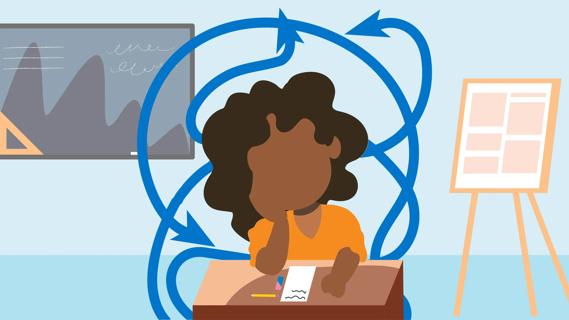
ADHD replaced ADD as a more accurate term for a common neurodevelopmental disorder
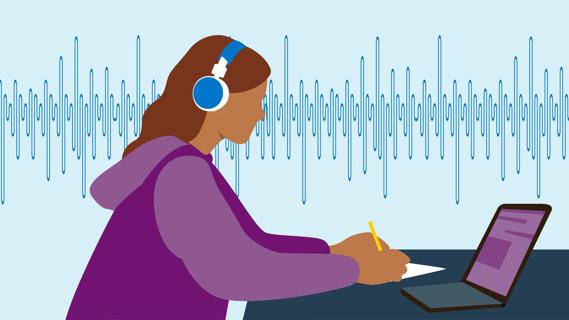
Background stimulation and intentional fidgeting may actually help you stay on task

A booster dose, healthy snack and some downtime may help ward off a medication rebound

Working side by side with another person can improve focus, build accountability and provide motivation to get a task done (or at least started)

The medical condition isn’t a learning disability and doesn’t always cause hyperactivity

Managing your weight through physical activity may lower your chances of getting this common cancer

It typically starts in October and winds down in early spring, with cases at their highest in the middle of winter

Anxiety disorders, health conditions and past trauma can make driving nerve-wracking — help is available
 Search










