Locations:





A digestive disease expert explains
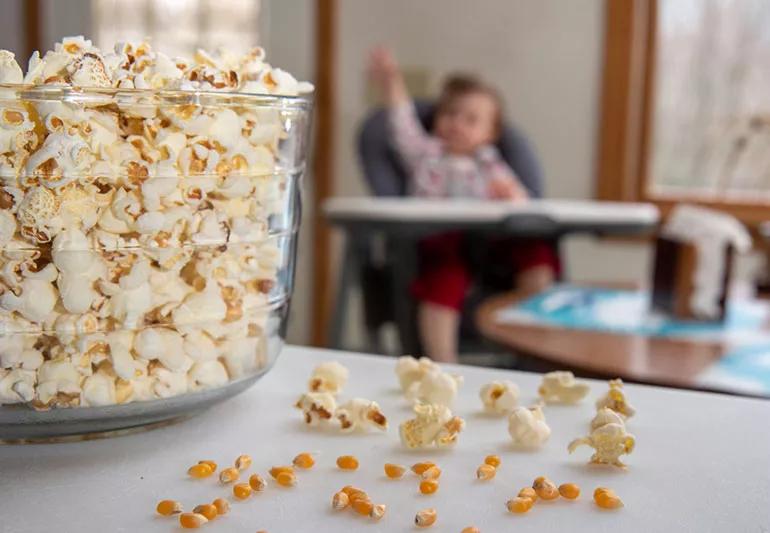
Image content: This image is available to view online.
View image online (https://assets.clevelandclinic.org/transform/09cce64d-8b5a-498c-93b1-855832aa0b4f/popcornKernalsChild-HEN-1872897-041020-770x533-1_jpg)
Child excited about eating popcorn
A: Popcorn is generally considered a healthy snack food, given all of the candy and high-fructose containing snacks on the market.
Advertisement
Cleveland Clinic is a non-profit academic medical center. Advertising on our site helps support our mission. We do not endorse non-Cleveland Clinic products or services. Policy
But be cautious when giving popcorn to kids — especially to very young children — due to the risk of choking. The American Academy of Pediatrics includes popcorn on its choking-risk list for children under age 4.
Older children and adolescents shouldn’t ingest large handfuls of the unpopped “old maid” kernels either. Besides being a choking hazard, crunching them can damage teeth. In severe cases, swallowing them can cause a mass collection in the intestinal tract, known as a “bezoar.” Small bezoars may pass on their own or with the help of medication, while sizeable ones may require surgery.
If your child develops abdominal pain after eating a large amount of unpopped kernels, call your pediatrician.
The bottom line: Don’t entice a young child with popcorn. And if you’re munching away, only eat those kernels that are fully popped.
— Pediatric gastroenterologist Deborah Goldman, MD
Advertisement

Sign up for our Health Essentials emails for expert guidance on nutrition, fitness, sleep, skin care and more.
Learn more about our editorial process.
Advertisement
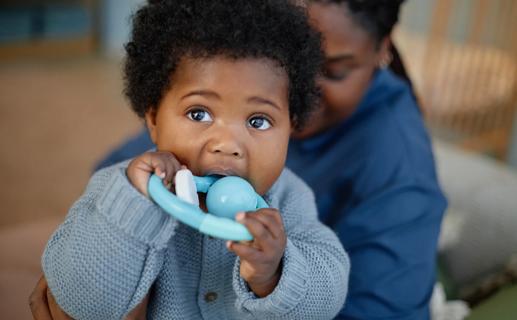
Massage, teething rings, chilled items and pain relievers can help dull the discomfort when baby teeth erupt

Clean their bottom using plain water and a soft washcloth, then apply an ointment — and let them go diaperless when possible

Stay calm and validate your child’s feelings, but don’t give in to their demands

Big feelings, growing independence and lots of meltdowns are all typical parts of toddlerhood

Check for common causes, try soothing strategies and know when it’s time to take a break

Thumb sucking is a normal part of early development, but over time, it can affect teeth, speech and habits

From coos and babbles to first words and short sentences, there’s a wide range of what’s considered ‘normal’
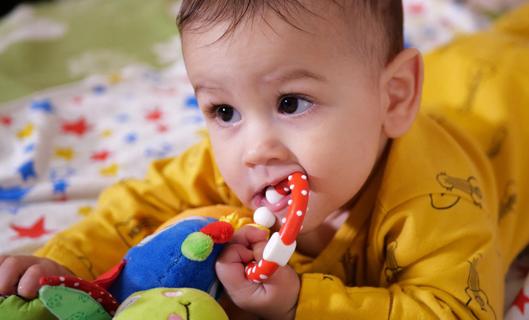
Most teething symptoms are mild — fevers and other major symptoms are likely something else

Managing your weight through physical activity may lower your chances of getting this common cancer

It typically starts in October and winds down in early spring, with cases at their highest in the middle of winter

Anxiety disorders, health conditions and past trauma can make driving nerve-wracking — help is available
 Search










