Locations:





Research doesn’t show a link between the personal hygiene product and breast cancer
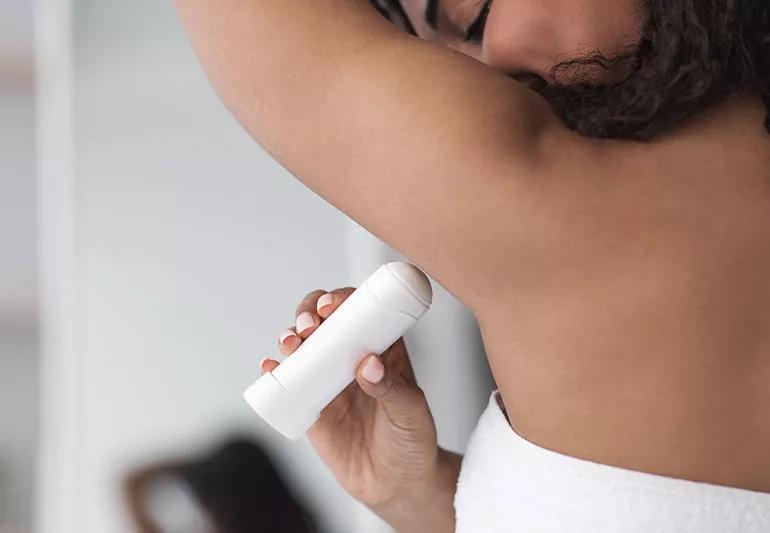
Image content: This image is available to view online.
View image online (https://assets.clevelandclinic.org/transform/af9a6424-f531-4937-bb73-5f18f0b8ab65/deodorantBreastCancer-1328832779-770x533-1_jpg)
person applying deodorant
Scientifically speaking, theories linking deodorants to breast cancer don’t pass the smell test.
Advertisement
Cleveland Clinic is a non-profit academic medical center. Advertising on our site helps support our mission. We do not endorse non-Cleveland Clinic products or services. Policy
No strong scientific evidence has linked deodorant and antiperspirant use to the development of breast cancer, reports the National Cancer Institute. Research shows that any perceived risk is nothing to … well, sweat about.
But cancer-causing rumors continue to linger around personal hygiene products that keep armpits fresh and dry. So, let’s take a closer look at the issue with radiation oncologist Chirag Shah, MD, and medical oncologist Tiffany Onger, MD.
Has there been extensive study looking into the potential connection between breast cancer and deodorants? Not exactly. The American Cancer Society described the research as being “limited.”
But the results of various studies have NOT shown any clear relationship between the use of deodorants and antiperspirants and breast cancer. Dr. Shah and Dr. Onger both emphasize this point.
“Please feel comfortable using whatever deodorant you’d like to use,” says Dr. Onger.
Video content: This video is available to watch online.
View video online (https://cdnapisec.kaltura.com/p/2207941/sp/220794100/playManifest/entryId/1_19xs3l1f/flavorId/1_5f3sgelj/format/url/protocol/https/a.mp4)
Deodorants, including those with aluminum, don't increase breast cancer risk. Discover how the rumor started and what the research says.
Odds are you haven’t taken the time to read the ingredient list on your deodorant or antiperspirant. But if you did, you’d likely find a few potential chemical toxins such as:
Advertisement
Given increased attention to chemicals and cancer risk, that’s a list that can draw concern. But as noted, no conclusive studies have linked chemicals in deodorants and antiperspirants to breast cancer.
Now there’s another ingredient in antiperspirants — aluminum — that draws the most attention when it comes to breast cancer risk. (Aluminum is typically not in plain deodorant.)
The aluminum compound in antiperspirant works to plug sweat ducts in your armpits so sweat doesn’t reach your skin’s surface. That prevents embarrassing sweat marks from darkening your shirt.
Some believe that this trace of aluminum can have estrogen-like effects if absorbed by your skin on a daily basis. (Studies say that estrogen can fuel the development and growth of breast cancer cells.)
“But nothing has shown that aluminum in your deodorant is producing estrogen-like effects or causing breast cancer,” states Dr. Shah.
Another factor in the deodorant-cancer theory is this: Anyone getting a mammogram is asked not to wear deodorant or antiperspirant. (Sounds suspicious, right?)
But the reason for the request has nothing to do with potential cancer risk. Instead, any aluminum in underarm products can appear as white spots on mammogram images and complicate the assessment.
“We just want to prevent any sort of confusion,” clarifies Dr. Onger.
As also noted, there are chemicals in most on-the-shelf deodorants and antiperspirants — and it’s understandable to want to limit your exposure to limit any potential cancer risk.
Underarm hygiene products made from more natural ingredients are available if that’s your desire. Some people even use plain baking soda as a deodorant given its proven odor-fighting ability.
But just because something is touted as “natural” doesn’t mean it won’t cause issues. Watch for any type of breakout, rash or skin irritation and talk with your healthcare provider if they become problematic, suggests Dr. Shah.
There’s also the option of not using any deodorant or antiperspirant if you’re worried about exposure to chemicals or other irritants. (For the record, deodorants are formulated to mask odors. Antiperspirants are designed to stop sweating.)
Rumors tying deodorants to breast cancer risk date back decades. Some believe it started with an email hoax in the 1990s.
So, is your choice of deodorant or antiperspirant really something to worry about? Probably not.
“Age, the use of hormone replacement therapy and family history are some of the biggest risk factors for breast cancer,” states Dr. Shah. “Those are things we should probably be more focused on when it comes to breast cancer risk.”
Advertisement

Sign up for our Health Essentials emails for expert guidance on nutrition, fitness, sleep, skin care and more.
Learn more about our editorial process.
Advertisement
Antibacterial soap hasn’t been shown to be any more effective at killing germs than regular soap and water

Your dollar bills, coins and cards are covered in germs — but they’re very unlikely to make you sick

Bathing once a day is the general guidance, but you could also have reasons to soap up twice a day or not at all
You’re sharing your sheets with dust mites, bacteria and lots of dead skin, so you’ll want to keep your bedding fresh
You may notice itching, redness and swelling after wearing or using laundered items

An icy blast may boost mental clarity, increase circulation and give your skin a little glow — but don’t overdo it

Researchers found potentially harmful germs on 95% of wristbands

Wash your bath towels at least once a week, and washcloths at least twice a week

Rapid weight loss can cause loose skin, facial volume loss and body contour changes
Swallowing too much air, certain foods and drinks, and digestive conditions can all make you belch more
From poor hand hygiene and ventilation issues to contaminated food, many factors can make infectious diseases spread quickly
 Search










