Locations:





Labile hypertension tends to be situational, but still warrants medical attention
Image content: This image is available to view online.
View image online (https://assets.clevelandclinic.org/transform/44aa04b6-8724-43e0-ba9f-4fab045dda7e/bpChanges-695935540-770x553_jpg)
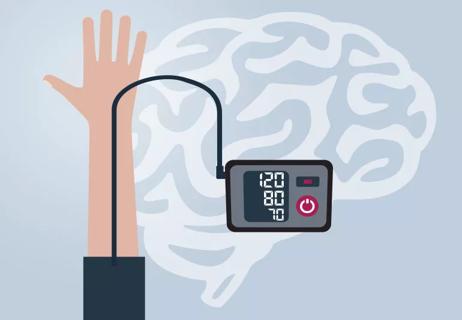
Blood pressure pump and heart with echo reading
Most healthy individuals have variations in their blood pressure — from minute to minute and hour to hour. These fluctuations generally happen within a normal range.
Advertisement
Cleveland Clinic is a non-profit academic medical center. Advertising on our site helps support our mission. We do not endorse non-Cleveland Clinic products or services. Policy
But when blood pressure regularly spikes higher than normal, it’s a sign that something isn’t right. Doctors call the condition labile hypertension, and it merits investigation.
“The underlying cause needs to be identified, so we can do something about it,” says hypertension specialist Michael Lioudis, MD.
Although the term “labile hypertension” means blood pressure that fluctuates more than usual, the term actually has no official definition. There’s no line that must be crossed — no minimum blood pressure reading or number of spikes — necessary to make the diagnosis.
The term simply indicates a situation where blood pressure is rising beyond what’s considered normal and acceptable for an individual.
“Most times, these people have reasonable blood pressure control,” says Dr. Lioudis. “Yet they have periods when they may experience facial flushing, tension headaches, sweating or feelings of unease. When they check their blood pressure, it’s high.”
Labile hypertension tends to be situational. This means the spikes occur in response to stressful events — a fender bender, intensive physical exertion or thinking about financial woes, for example. This helps distinguish labile hypertension from true hypertension, in which blood pressure is high all the time.
Although hypertension can develop at any time, it raises a red flag when it occurs in young people (teens and early 20s) or after age 60.
Advertisement
People who develop hypertension in their 40s — particularly if they have a family history of hypertension — are more likely to have essential hypertension than labile hypertension. They tend to be overweight or have underlying dietary issues, such as excessive sodium intake or heavy alcohol consumption.
When labile hypertension is suspected, a 24-hour ambulatory blood pressure monitor may be used to confirm the diagnosis. Then, the work of pinpointing the underlying cause begins. Serious detective work often is required. “We look at the patient’s overall health, lifestyle and medications,” says Dr. Lioudis.
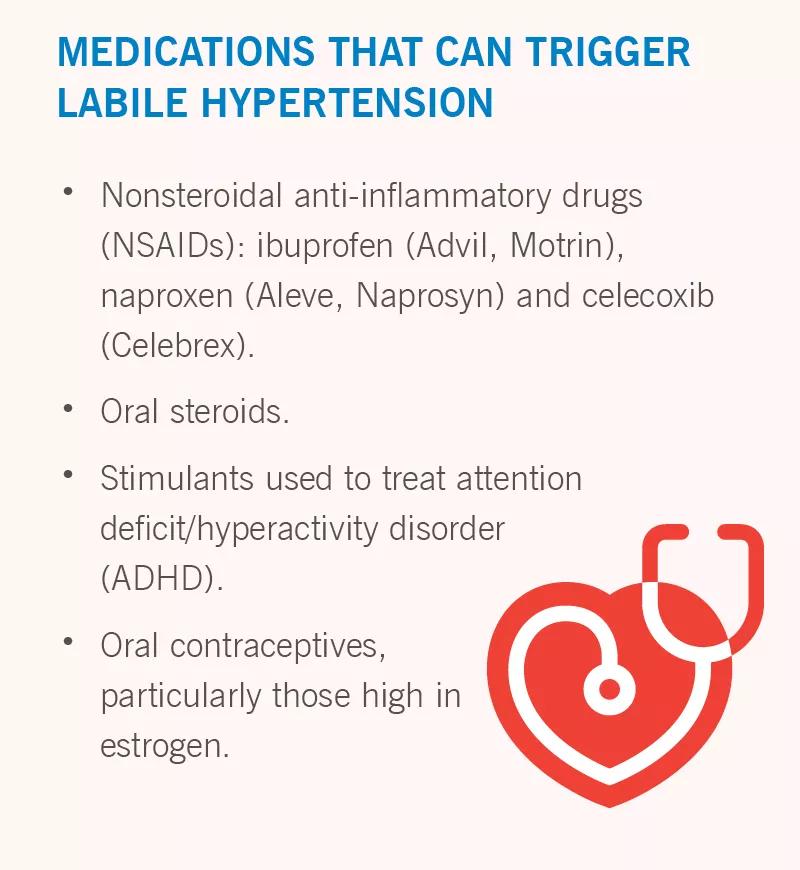
Image content: This image is available to view online.
View image online (https://assets.clevelandclinic.org/transform/b0f9d53d-d25d-46e2-bd01-4c389b7161fc/table-HEpost-drugsLabileHypertension_jpg)
When a medication or lifestyle choice is the precipitating factor, making appropriate changes can cause labile hypertension to disappear.
Underlying medical conditions are a bigger concern, since they may be harder to treat.
“We look for sleep apnea, cardiovascular disease, kidney disease or a problem with the adrenal glands, as any of these can cause blood pressure to fluctuate,” explains Dr. Lioudis.
In labile hypertension, blood pressure tends to spike upward. Blood pressure that swings in both directions may be a sign of a different problem called autonomic dysfunction.
People with this problem have difficulty regulating involuntary functions such as heart rate, breathing and body temperature, in addition to blood pressure. “We usually send these patients to cardiology for testing,” notes Dr. Lioudis.
Hypertension can wreak havoc on the body before alarming symptoms appear. That’s why regular checkups are a must.
Sometimes, Dr. Lioudis asks patients to check their blood pressure at different times of the day. It’s the only way to spot masked hypertension. People with this condition have normal blood pressure in the doctor’s office, but high blood pressure at home.
“We can’t do anything for hypertension unless we know it exists,” he says. “That’s why we advise everyone to have their pressures checked at least yearly. They should also talk with their family doctor about stress, heart or kidney disease, family history of high blood pressure and any other potential contributing factor. By working together, you can bring your blood pressure under control.”
This article originally appeared in Cleveland Clinic Heart Advisor.
Advertisement

Sign up for our Health Essentials emails for expert guidance on nutrition, fitness, sleep, skin care and more.
Learn more about our editorial process.
Advertisement
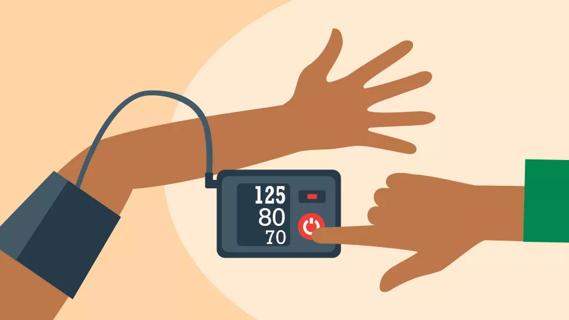
An ideal blood pressure is less than 120 mm Hg systolic and less than 80 mm Hg diastolic
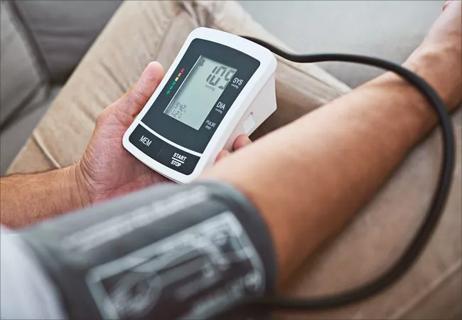
Steer clear of bells and whistles — simple, affordable monitors are all you really need

Stay on top of your health by monitoring your blood pressure regularly
Study underscores importance of managing BP

The common household medication isn’t a solution for hypertension — and regular use comes with risks

Obstructive sleep apnea can lead to high blood pressure — and vice versa

Certain supplements, like licorice root and St. John’s wort, can raise your blood pressure or negatively interact with medication

Foods high in potassium, calcium and vitamins C and E can help lower your blood pressure

Managing your weight through physical activity may lower your chances of getting this common cancer

It typically starts in October and winds down in early spring, with cases at their highest in the middle of winter

Anxiety disorders, health conditions and past trauma can make driving nerve-wracking — help is available
 Search










