Locations:





Options for your changing mobility range from small swaps to major renovations
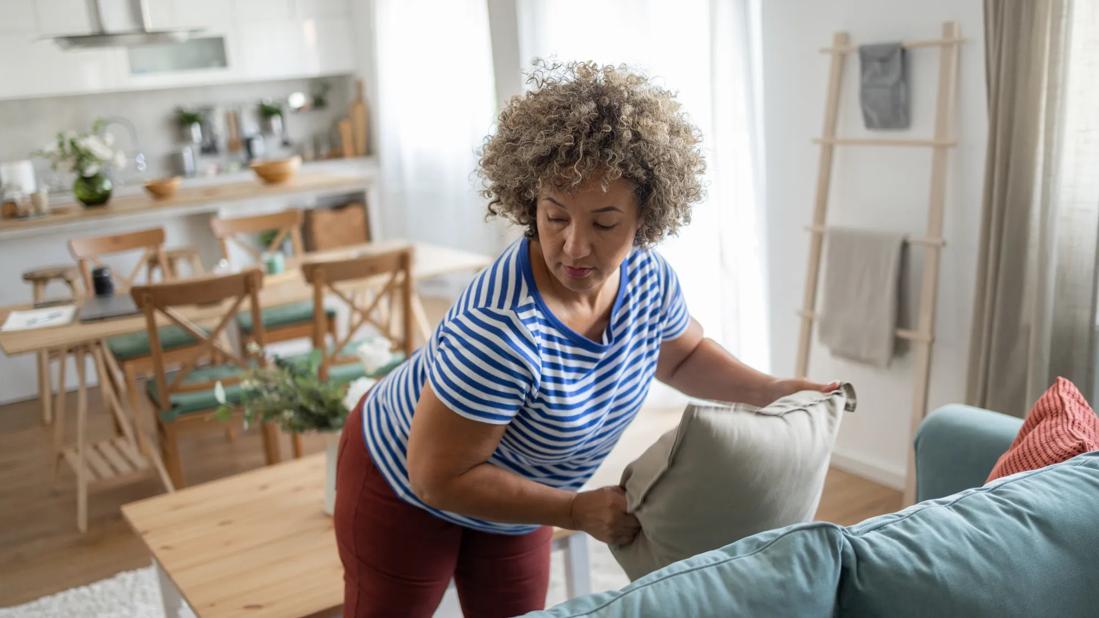
Image content: This image is available to view online.
View image online (https://assets.clevelandclinic.org/transform/a86d79bf-938f-4955-aecc-0591ed58fb49/arranging-furniture-1755841920)
Person arranging pillow on couch in living room area
When you’re living with secondary progressive multiple sclerosis (SPMS), your home plays an important role in how safe and comfortable you feel in your everyday life. As your mobility changes, your home may need to change, too, to help make life more accessible.
Advertisement
Cleveland Clinic is a non-profit academic medical center. Advertising on our site helps support our mission. We do not endorse non-Cleveland Clinic products or services. Policy
But figuring out where to start can be overwhelming. Occupational therapy clinical specialist Alyssa DeCarlo, OTR/L, explains when to think about home modifications and what adjustments to consider.
Making changes to your home can help you stay safe and independent for longer, even as your SPMS progresses and your mobility changes.
“When people hear the term ‘home modifications,’ their minds often jump right to renovations,” DeCarlo acknowledges. “But it can also mean changing the positioning of an object or adding a piece of equipment that supports your independence.”
SPMS disease progression can be slow or fast, and it looks different for everyone. So, planning is about options, not predictions. DeCarlo outlines important categories of possible home modifications, including room-by-room breakdowns.
Even if you’ve been living with MS for a while, it’s worth revisiting foundational safety strategies as your needs evolve. Easy, low- or no-cost swaps can significantly lower your fall risk.
Advertisement
Fatigue is one of the most common SPMS symptoms, so saving energy on small movements matters. These mobility supports can help you with basic movements, like standing up and sitting down, allowing you to conserve your energy for other things.
Innovative technological tools can provide significant support to people who need a little extra help at home. Consider options like:
Explore your phone’s accessibility features, too.
“The settings on your phone can be really helpful,” DeCarlo notes. “You can widen touch targets, ignore double-taps or use voice access.”
As your strength or fatigue levels change, bed mobility often becomes more difficult. DeCarlo recommends:
Some people, she recommends replacing queen or king-sized beds with separate adjustable twin beds that are pushed together.
“That way, you get the comfort of a regular mattress and you can be close to your loved one in bed,” she points out. “But if a caregiver needs to access both sides of the bed to help you get in or out, they can separate the beds to do that.”
From a structural standpoint, kitchens can be especially tough to adapt.
“Most people don’t undertake whole-kitchen modifications,” DeCarlo says. “Instead, we focus on helpful tools and strategies that allow you to do kitchen-related activities.”
Advertisement
This category is a whopper.
“The bathroom is where we spend the most time talking about home modifications,” DeCarlo says. “It’s the area with the biggest safety concerns and the biggest impact on your independence.”
Tight spaces, slippery surfaces and narrow doorways all mean potential trouble. Plus, bathroom-related issues feel deeply personal. So, it’s worth planning for comfort, privacy and dignity, as well as safety.
To understand which options are right for you, it’s always best to talk to an occupational therapist. But DeCarlo explains the basics, breaking down potential modifications into a few categories.
Advertisement
Having your bathtub removed and turned into a walk-in or roll-in shower is often the safest option for the long term. But it’s not feasible for everyone’s home or budget. And DeCarlo says other modifications bring a variety of pros and cons, from how much support they offer to how much they cost to install.
“What’s best for you will depend on your abilities and what’s possible within the confines of your space,” she notes.
There are lots of adaptation options for toilets. The right choices for you will depend on your needs, the height of the toilet and the physical space itself. Here are some possibilities:
Advertisement
Other aspects of your bathroom deserve attention, too. In particular, DeCarlo points out that bathroom doorways are often the smallest in the house.
“Putting your door on offset hinges — hinges that swing the door outward — can add up to two inches of doorway width,” she shares. “Or you can have sliding doors installed. They’re easier to manage and offer more space than swing-style doors do.”
And don’t forget the sink. Adding space beneath it (called a “sink cutout”) allows you to sit to wash your hands, apply makeup, etc. You’ll want to have the piping insulated, though, to keep you safe from burns.
If you live in a multilevel home, planning ahead is especially essential. Though stair lifts might seem like a simple fix, DeCarlo says they’re often not the best long-term solution.
“If you’re eventually in a full-power wheelchair, who will get the 450-pound chair upstairs?” she asks. “And you still have to be able to safely transfer on and off the lift.”
She offers options to consider instead:
Occupational therapy can help you navigate home modification options and questions.
This catch-all resource is designed to help you figure out how to work with your abilities, rather than against them. That includes making changes to your home and daily habits, and even pointing you toward grants that can defray the cost of home modifications.
“If your goal is to stay in your house, we’re going to find a way to help you do it,” DeCarlo emphasizes. “And if we can’t, we’re going to be honest and tell you that — but only after we’ve exhausted all the options.”
It can be hard to accept that your needs are changing. But even if you don’t yet need major home modifications, DeCarlo encourages you to start exploring the options early.
Making changes before you need them can help you:
“It’s never too early to start talking about what aging in place looks like,” she says. “Being proactive, rather than reactive, gives you more options to stay in your home safely for longer.”
Remember: You don’t have to do everything at once. One small change at a time can help you feel safer, steadier and more at home in your own space.

Sign up for our Health Essentials emails for expert guidance on nutrition, fitness, sleep, skin care and more.
Learn more about our editorial process.
Advertisement
To help preserve your cognitive function, try to keep your brain active, manage fatigue and learn new organizational skills to conserve energy

Practice conversations ahead of time, explain what your diagnosis means and be specific about how others can support you

MS symptoms often feel worse before your period starts, and the condition may progress in menopause

Building a support system, adapting activities you love and following a healthy diet can all help manage symptoms and changes

Painful vision loss, facial paralysis, limb weakness and persistent dizziness all indicate you should see a healthcare provider immediately

A variety of healthy foods can help reduce inflammation and keep other conditions at bay
Some ‘flare-ups’ are temporary and expected, others can signal a need to change therapies

Most routine vaccines are safe for people living with multiple sclerosis — but be sure to talk with your care team about your needs

Managing your weight through physical activity may lower your chances of getting this common cancer

It typically starts in October and winds down in early spring, with cases at their highest in the middle of winter

Anxiety disorders, health conditions and past trauma can make driving nerve-wracking — help is available
 Search










