Locations:





Five minutes of quiet, focused time can help
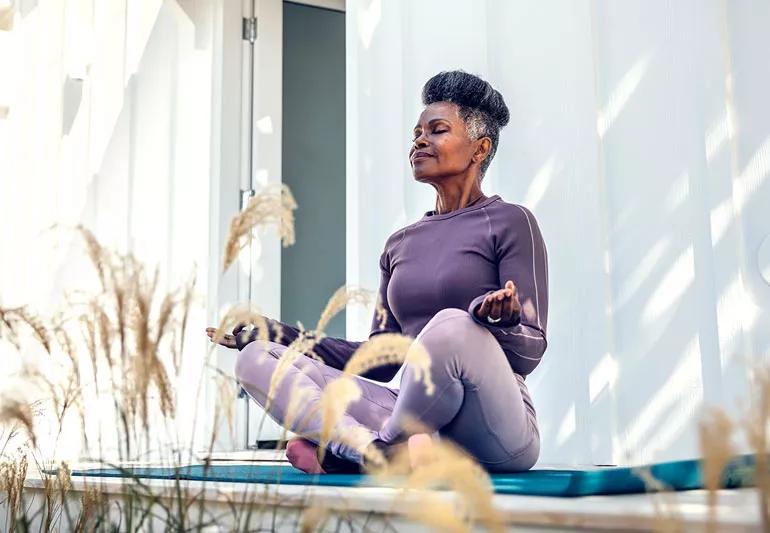
Image content: This image is available to view online.
View image online (https://assets.clevelandclinic.org/transform/423d39ef-62fd-499e-93f7-2593d6c8e970/meditationPain-1254783770-770x533-1_jpg)
elderly woman meditating on back porch
When everything hurts, the last things on your mind are mantras and deep breathing. But meditation can be a great tool for easing pain — and reducing stress overall. It’s also free, and the only side effects you’ll have to worry about are feeling blissed out or possibly dozing off.
Advertisement
Cleveland Clinic is a non-profit academic medical center. Advertising on our site helps support our mission. We do not endorse non-Cleveland Clinic products or services. Policy
“In the simplest terms, meditation is focusing awareness on the present moment,” says licensed professional clinical counselor, Trisha Miller, LPCC. While meditation can’t “take the pain away,” she says it can help us calm down so we can observe sensations in our body (including pain). This might help us relax and accept discomfort.
“Observing and accepting discomfort may help increase your tolerance for pain. This is because when you meditate, you are relaxing your mind and body, and that leads to the release of endorphins or ‘feel-good’ hormones,” Miller explains.
There are many different forms of meditation, or mindfulness practices, that can help manage pain. “Mindfulness meditation, body scan meditation, guided imagery and transcendental meditation are just a few. Qigong or yoga is also good for combining gentle movement with breath and mindfulness,” suggests Miller. She adds that while all forms of meditation can be beneficial in coping with pain, it’s OK to start with one style and experiment to discover what works best for you.
Meditation doesn’t have to be this elaborate process with incense, candles, singing bowls or silk loungewear. It just requires peace, quiet and a cozy spot at home.
Advertisement
“Find a comfortable position where you won’t be interrupted. Meditation can be done seated, laying down or in any position that feels good to your body,” Miller says.
You might prefer dimmer lighting and a quiet space. Props can be helpful as well, but aren’t required.
“Being comfortable is important. Feel free to use anything that supports your comfort and sense of security. You might want to have a pillow or blanket handy, but no special props are needed to meditate,” adds Miller.
Some people like to use essential oils or aromatherapy while meditating, but it isn’t necessary. Miller says it’s always best to check with your healthcare provider if you do decide to explore aromatherapy because some essential oils might aggravate certain medical conditions. If your healthcare provider says it won’t hurt, then go for scents you find calming.
Start by meditating for just five minutes. You can use a timer to keep track or find short mindfulness or body scan meditations on apps or YouTube. Practice meditating a few times a week to start, then work your way up to 15 or 20 minutes. During practice, when you notice your thoughts beginning to wander, redirect your attention back to your breathing.
On top of the many apps that offer meditation practices, Miller adds that some healthcare providers offer programs that incorporate mindfulness-based strategies along with massage, acupuncture or nutritional services to help people cope with chronic pain. So, if you need help, don’t be afraid to ask your healthcare provider for alternatives.
Advertisement

Sign up for our Health Essentials emails for expert guidance on nutrition, fitness, sleep, skin care and more.
Learn more about our editorial process.
Advertisement

These creams that you apply to your skin can actually help reduce localized pain, swelling and inflammation

Your choice depends on your reason and need for treatment
Always seek medical advice for pain — but exercise, stretching, guided imagery and deep breathing may help in the meantime

Finding a neutral position can ease stress on your back, neck and shoulders
This self-myofascial release technique can help ease sore or achy muscles

Know how long pain should reasonably last

Fibromyalgia causes widespread pain — and now we know more about the root cause
A few simple adjustments to your chair, desk and computer can help reduce strain

Hormonal changes, a slower metabolism and muscle loss can make weight gain more common around menopause — healthy habits can help you manage it

Life-threatening complications include sepsis, stroke, pneumonia and more
Fruity-smelling breath can happen when your body burns fat for energy, and in some cases, can signal a medical emergency
 Search










