Locations:





 Search
How to separate serious concerns from minor pain
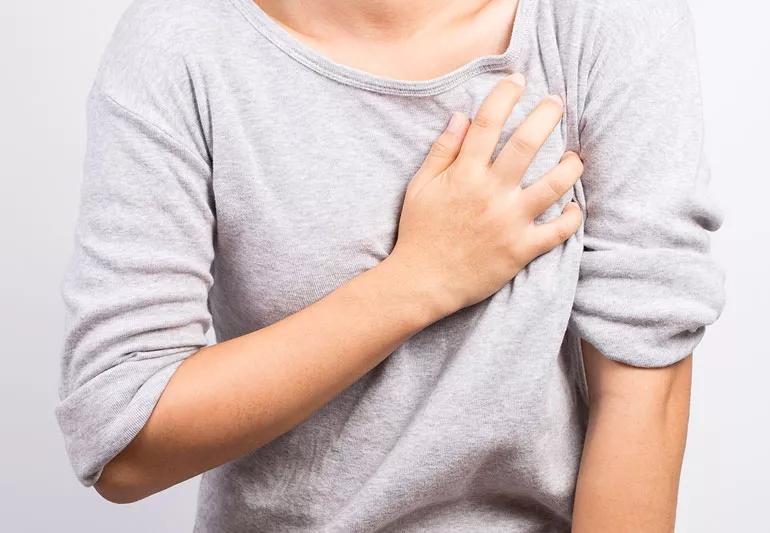
Image content: This image is available to view online.
View image online (https://assets.clevelandclinic.org/transform/67aefaea-03ff-4c4e-950a-e74ebd4e96a9/breastPain-578107234-770x533_jpg)
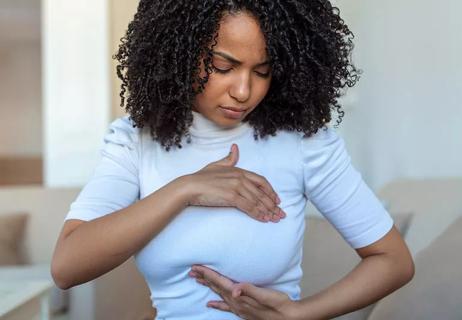
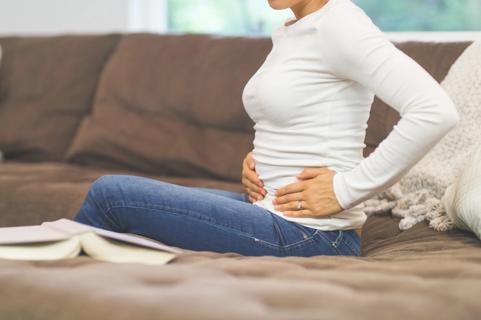
Woman with breast pain
For many women, having breast pain automatically causes concern. You don’t necessarily expect to have pain there. So when it happens, you question what’s causing it.
Advertisement
Cleveland Clinic is a non-profit academic medical center. Advertising on our site helps support our mission. We do not endorse non-Cleveland Clinic products or services. Policy
Know this: Breast pain is quite common. “In fact, around 30% of women will experience breast pain in their lifetime,” says breast health specialist Holly Pederson, MD. In the majority of cases, the cause is hormonal fluctuations or — surprisingly — even how much coffee or other caffeine you drink.
This is an important question.
For example, do you have pain in both breasts? Is it worse before your menstrual period? If the answer is “yes,” you may have cyclical pain. That’s common in pre-menopausal women. The pain typically gets better when your period starts.
We also call similar pain “non-focal” pain because it’s not focused in one breast or one specific spot. Interestingly, consuming too much caffeine sometimes causes this type of pain, too. We don’t know exactly why.
In either case, though, pain in both breasts is not likely to be a sign of breast cancer. “If you have concerns, get a physical exam,” Dr. Pederson says. “Your doctor will help determine if you need added screening.”
However, if your pain is located in one breast — and especially in one specific spot on one breast — don’t delay in getting it checked. This “focal” pain is more likely to be a sign of cancer than pain in both breasts, she says. If your pain is associated with a breast lump or visible changes in your skin or nipple, those are causes for concern, too.
These cases apply to a small number of women, but they’re absolutely worth discussing with a doctor, especially if you’re over age 30.
Advertisement
Most of the time, breast pain isn’t severe enough to require medication, Dr. Pederson says. “If diagnostic tests such as ultrasound are normal, usually nothing further needs to be done,” she notes. “We often recommend conservative steps first, such as cutting out caffeine, to see if symptoms improve.”
An herbal supplement called evening primrose oil offers relief for some women, too. Since it’s an herbal supplement, she says, there’s not a lot of clinical research behind it. But small-scale studies have supported it as being clinically effective. Over-the-counter topical pain relief cream may help too.
For more severe cases, medications are available. For example, a topical non-steroidal anti-inflammatory drug (NSAID) gel called diclofenac offers pain relief without the same long-term concerns of oral NSAIDs.
Very rarely, doctors will prescribe tamoxifen for breast pain. Tamoxifen is an anti-estrogen medication used to prevent and treat breast cancer, and studies have shown it to be effective for reducing breast pain. But it does come with potential side effects, including hot flashes and a small risk of blood clots. “That’s why we always weigh the benefits against the potential side effects,” Dr. Pederson says.
For many women, simply knowing that breast pain is common — and that most of the time it’s not associated with cancer — is enough to bring peace of mind. But when you have pain, don’t hesitate to get an exam and find answers.
Advertisement

Sign up for our Health Essentials emails for expert guidance on nutrition, fitness, sleep, skin care and more.
Learn more about our editorial process.
Advertisement
Dry skin, eczema, allergies and infections can all cause itchiness — but in some cases, itching may signify a more serious health condition
A breast abscess feels like a hot, hard and painful lump — seek support from a healthcare provider at first signs of an infection
Bacterial infections, breast abscesses and clogged milk ducts can all cause inflammation in your breasts
Any mass or abnormal area that you feel for more than three days should be checked out
Things like stress, heated styling and other health conditions may cause you to lose more hair than normal
Vaginal dryness, cervicitis, infections or other cervical issues could be the culprit
An anti-inflammatory diet, regular exercise and heat therapy can all help — but severe pain may require medical treatment
This chronic condition most commonly causes pelvic pain and severe cramping during periods, but it can bring other types of pain symptoms, too
Grocery shopping with a plan, paying attention to portion sizes and eating at your own pace can all help you put an end to this habit
Semaglutide and other GLP-1s work best as long-term medications
Antibiotics should be used for short periods alongside other treatments to help with inflammation











