Locations:





They claim to boost energy and improve longevity, but there’s currently not enough research to confirm these benefits
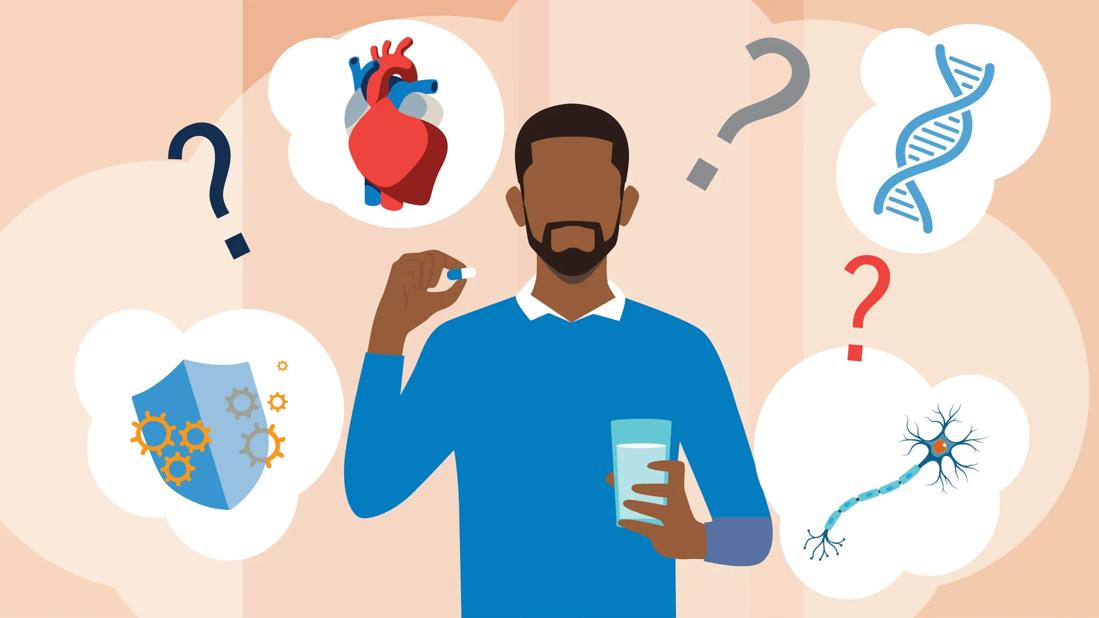
Image content: This image is available to view online.
View image online (https://assets.clevelandclinic.org/transform/f112308c-8f39-452b-82ad-e5894ffa3898/taking-NAD-supplements-2194379439)
Person holding glass of water, holding up a pill, with health issues and questions around them
You may have recently seen NAD+ supplements promoted for energy, anti-aging or overall health. But what exactly are they? And do they work?
Advertisement
Cleveland Clinic is a non-profit academic medical center. Advertising on our site helps support our mission. We do not endorse non-Cleveland Clinic products or services. Policy
Naturopathic medicine specialist Jacob Hill, ND, breaks down what NAD+ supplements are, what the research shows and what to keep in mind before using them.
NAD supplements are products that contain ingredients your body converts into nicotinamide adenine dinucleotide (NAD). NAD is a molecule found in every cell of your body that plays a key role in turning food into fuel.
“NAD is involved in a lot of processes throughout your body,” Dr. Hill says. “But a primary role of NAD is energy production.”
NAD is difficult for your body to absorb in supplement form. So, these products typically contain ingredients called NAD precursors. These are substances your body uses to make NAD on its own.
NAD precursors can include various forms of niacin (vitamin B3), like nicotinamide. They can also include related molecules, like nicotinamide riboside and nicotinamide mononucleotide.
Niacin itself (nicotinic acid) isn’t as commonly used in NAD supplements. It may have a higher risk of side effects and toxicity when you use it in high doses.
Some supplements combine NAD precursors with other nutrients and herbs. The effect the supplement has on your body — and its potential side effects — depends on which NAD precursors are used and any other added ingredients.
Advertisement
You may see these products labeled as NAD supplements, NAD+ supplements or nicotinamide adenine dinucleotide supplements. Although they’re sometimes used interchangeably, NAD+ is actually a specific molecule in your body.
“NAD+ accepts electrons when we break down food and carries them to places throughout the cell, including the mitochondria, which are the powerhouse of the cell,” Dr. Hill says. “That’s where cells make most of our adenosine triphosphate (ATP), the main energy source for the body.”
Because NAD is involved in so many energy-related processes, researchers are interested in whether boosting NAD levels could help conditions linked to low energy or cellular stress.
Fans of NAD+ supplements say they can help boost energy levels and ward off signs of aging. That’s because your NAD levels decline with age — and as your NAD levels drop, your cells may become less efficient at making energy and repairing damage.
“That’s where a lot of the current interest in these supplements comes from — the potential anti-aging and longevity benefit,” Dr. Hill says. “But research in this area is still developing. The long-term benefits and risks are unclear until more research is available.”
Researchers are exploring whether NAD supplements may play a role in other health areas as well. But Dr. Hill stresses that these uses are still being studied, and so far, evidence is limited or inconclusive.
Areas of interest include:
NAD supplements are generally considered safe for most people. But side effects are still possible, especially when taken at higher doses. Side effects can depend on which NAD precursors are used in supplements, too.
Potential NAD supplement side effects include:
Supplements that contain niacin (nicotinic acid) may also cause flushing, which feels like a temporary warmth in your skin. They can also cause liver toxicity at high doses.
Advertisement
And finally, an important note: For the most part, these side effects only apply to NAD precursors when you take them in supplement form.
“Some of these NAD precursors are found in food, too,” Dr. Hill points out. “The side effects usually only come when they’re concentrated in higher doses, like in a capsule.”
Different NAD precursors can have different effects that may not be safe for everyone. Because NAD supports energy production, it could have unintended consequences for some people.
“We think about cancer in particular,” Dr. Hill says. “Cancer cells use a lot of energy to grow. So, there’s concern that trying to increase energy production by using NAD supplements could potentially support the growth of cancer cells. This isn’t conclusive, but it’s an area of concern.”
Always speak with your healthcare provider before trying NAD supplements if you:
“We don’t have long-term safety data related to most NAD supplements,” Dr. Hill reiterates. “So, if you’re interested in using them longer term, it’s best to speak with your healthcare professional first.”
If you’re considering an NAD supplement, Dr. Hill urges you to pay close attention to how products are made and labeled:
Advertisement
If you’re interested in supporting your body’s NAD levels, Dr. Hill suggests starting with approaches like food and exercise rather than supplements.
“You can increase your NAD levels through food and healthy lifestyle habits,” he says. “It’s a safer and more natural way to start than supplements.”
Advertisement
Foods rich in NAD precursors provide the building blocks your body uses to make NAD. Examples of these foods include:
Regular physical activity also encourages your cells to increase energy production.
“When I work with people on improving energy and supporting cellular health and healthy aging, lifestyle medicine recommendations come first,” Dr. Hill adds.
In the end, the safest route is always to speak with a healthcare provider before trying any new supplement, including NAD supplements.
“Working with a healthcare provider helps ensure that you’re using the right product, form and dose for your needs,” Dr. Hill emphasizes. “They can also help you find other ways to achieve your health goals, no supplements needed.”

Sign up for our Health Essentials emails for expert guidance on nutrition, fitness, sleep, skin care and more.
Learn more about our editorial process.
Advertisement
Maca root supplements claim benefits like sexual health, menopause symptom relief and more energy — but human research is limited

Despite rumors, science hasn’t shown that creatine causes hair loss

This South Pacific plant is often promoted for stress relief and relaxation, but there are a few things you should know before trying it

The compound that gives chili peppers their kick may support your health — and even help relieve certain types of pain

Collagen peptide supplements may support your skin, joints and bones — but there’s no guarantee
This naturally occurring nutrient supports energy and heart health, but supplements aren’t necessary for everyone

Properly prepared, elderberries can be a safe and healthy part of a balanced diet — just steer clear of supplements
Science doesn’t support most claims about this bee byproduct, and supplements have potential risks
Eyes typically increase to full size during two growth spurts in childhood
To start, opt for calorie-dense foods that are rich in protein and healthy fats

Pre-birth injections and monoclonal antibodies can help prevent serious complications
 Search










