Locations:





Rapid weight loss can change the way your face looks, bringing wrinkles, sagging skin and a gaunt appearance
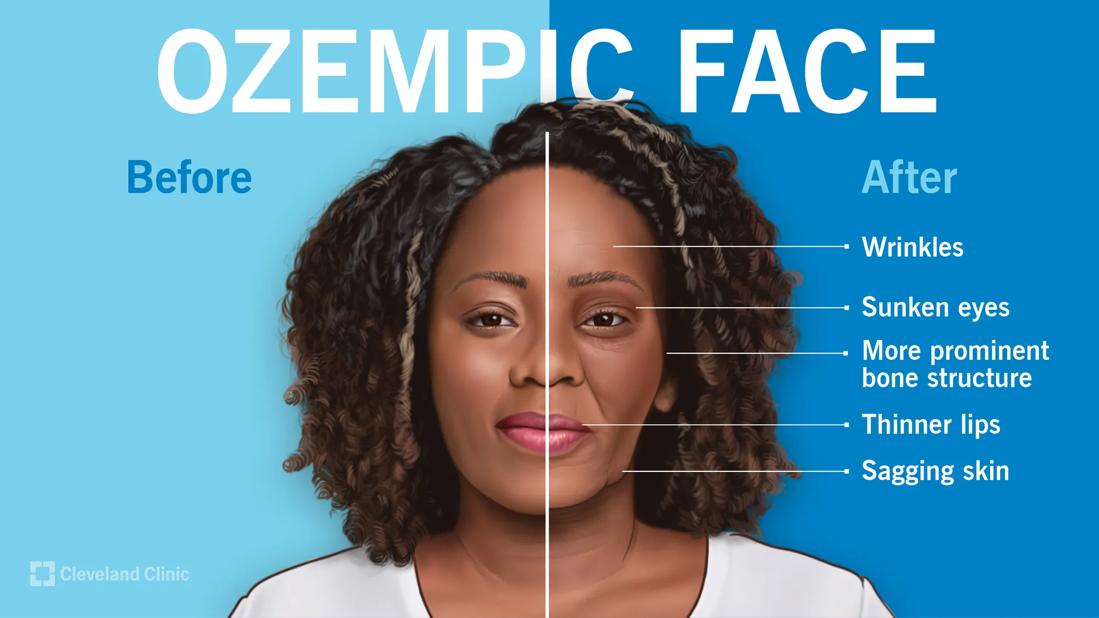
Image content: This image is available to view online.
View image online (https://assets.clevelandclinic.org/transform/90774b14-d640-42b6-b2aa-814317a697ef/ozempic-face)
Ozempic face, before and after, with wrinkles, sunken eyes, thinner lips and sagging skin
When you start taking Ozempic®, you may feel hopeful about the results to come. But it’s always important to know about all the possible side effects, including a harmless but sometimes unwelcome effect sometimes called “Ozempic face.”
Advertisement
Cleveland Clinic is a non-profit academic medical center. Advertising on our site helps support our mission. We do not endorse non-Cleveland Clinic products or services. Policy
Video content: This video is available to watch online.
View video online (https://cdnapisec.kaltura.com/p/2207941/sp/220794100/playManifest/entryId/1_50nfb6hm/flavorId/1_5f3sgelj/format/url/protocol/https/a.mp4)
“Ozempic face” is facial volume loss from rapid weight loss, causing sunken cheeks, wrinkles and an older look. Gradual weight loss may limit effects.
“The term ‘Ozempic face’ refers to the changes in the face that can happen with rapid weight loss,” explains endocrinologist Vinni Makin, MD. “It’s characterized by gauntness, sunken cheeks, new wrinkles and loose skin on the face and neck.”
‘Ozempic face’ isn’t a side effect of the medication itself. Rather, it’s a side effect of the rapid weight loss the medication can bring.
This term first became popular on social media after a celebrity dermatologist used the term to refer to the way that Ozempic (generic name: semaglutide) affected some of his patients. But it’s not a medical term, and it’s probably not one you’ll hear your healthcare provider use. It’s also not limited to taking Ozempic.
“Facial changes can also occur after having bariatric surgery or adopting lifestyle changes that cause very rapid weight loss,” Dr. Makin points out. “But they’re often associated with weight loss medications like semaglutide and tirzepatide, which can lead people to very quickly achieve weight targets that they haven’t been at in many years.”
Losing facial fat can change the way your face looks, of course. But instead of just looking thinner, you may be surprised to find that you look older, too. Here’s how rapid weight loss, like from taking Ozempic, can affect your face:
Advertisement
The faster you lose weight, the more likely you are to experience Ozempic face.
“It’s a very common side effect because people often maximize their dose to try to achieve target weight goals quickly,” Dr. Makin notes. “But the faster your weight loss, the more likely that your face will show signs of the weight loss.”
She adds that older adults are also more likely to experience Ozempic face because they have lower subcutaneous fat reserves even before starting weight loss treatment.
When rapid weight loss affects your face, you may see signs of aging in your face that seem to come out of nowhere. Some hallmarks include:
To try to prevent facial changes associated with rapid weight loss, consider a more gradual approach instead.
“Focus on slower weight loss — about one to two pounds per week,” Dr. Makin recommends. “You can also minimize these side effects by using your medication in combination with a healthy diet and exercise regimen.”
She shares more tips for keeping your skin healthy while taking weight loss medication (and all the time!):
Advertisement
Ozempic face won’t fade with time. If you regain the weight you lost, your face may start looking fuller again, too. But if you maintain your weight loss, its effects on your face will likely stick around, too.
But that doesn’t mean there’s nothing to be done about it.
“Cosmetic fillers or skin tightening procedures can help minimize the appearance of wrinkles or sagging skin,” Dr. Makin says. Options include:
Advertisement
All that said, so-called ‘Ozempic face’ doesn’t bring any negative health effects, and it doesn’t need treatment unless you want treatment.
Don’t let your fear of possible facial changes keep you from taking a medication that could help you achieve a healthy weight.
If you’re starting a medication like Ozempic, Wegovy™ or Mounjaro®, be sure to tell your provider your concerns about how rapid weight loss may affect your face. They can help you create a personalized plan to try to maintain a slow and steady weight loss that’s less likely to speed up signs of aging in your face.
Advertisement

Sign up for our Health Essentials emails for expert guidance on nutrition, fitness, sleep, skin care and more.
Learn more about our editorial process.
Advertisement
Abruptly ending treatment often comes with weight regain and other issues
Despite their name, these patches don’t contain GLP-1 medication and have dubious effects

Rapid weight loss can cause loose skin, facial volume loss and body contour changes

Eat smaller meals, stay hydrated, avoid high-fat foods and, if needed, ask your doctor about switching to a lower dosage
Taking a smaller dose than what your doctor recommends isn’t a good idea

Both are GLP-1 medications that are FDA-approved for Type 2 diabetes and weight loss, but how they work differs

Healthy eating helps, but so do a lot of other strategies for improving your overall health and wellness

Exercising while taking semaglutide and other GLP-1s helps prevent muscle loss and boosts metabolism

Managing your weight through physical activity may lower your chances of getting this common cancer

It typically starts in October and winds down in early spring, with cases at their highest in the middle of winter

Anxiety disorders, health conditions and past trauma can make driving nerve-wracking — help is available
 Search










