Locations:





This decadent treat may help improve your heart health and boost your mood
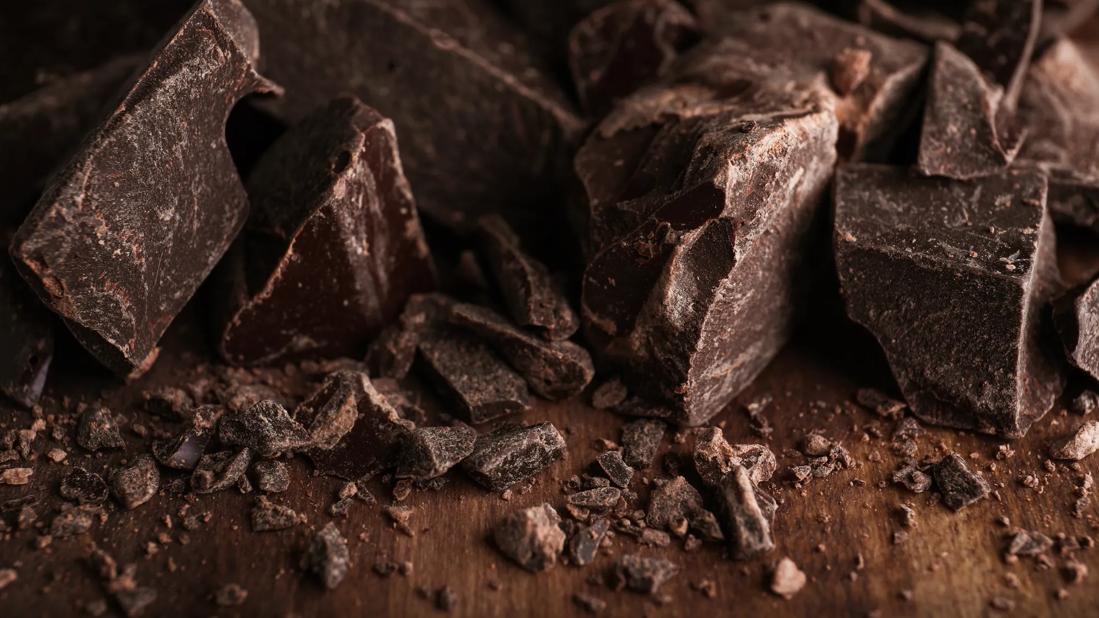
Image content: This image is available to view online.
View image online (https://assets.clevelandclinic.org/transform/c4d78917-e187-4bd0-903a-96706adb98c8/dark-chocolate-chunks-1341622762)
Chunks of dark chocolate
Dark chocolate is one of life’s most decadent treats. No matter how you enjoy it — as a candy bar, in a hot drink, or drizzled over ice cream — dark chocolate brings joy. But dark chocolate benefits may also include improving your heart health, enhancing your mood and more.
Advertisement
Cleveland Clinic is a non-profit academic medical center. Advertising on our site helps support our mission. We do not endorse non-Cleveland Clinic products or services. Policy
It can be. When compared with other kinds of chocolate, dark chocolate stands tall.
“Dark chocolate has lower added sugar and fat than milk chocolate or white chocolate,” says registered dietitian Devon Peart, RD, MHSc, BASc.
At their core, milk chocolate and dark chocolate have similar ingredients, including cocoa butter, sugar and cacao solids. But the two kinds of chocolate differ in their percentage of cacao solids.
“Dark chocolate has between 50% and 90% cacao solids,” says Peart. “And milk chocolate has between 10% and 50%.”
The nutritional value of dark chocolate varies depending on the percentage of cacao solids it contains. For example, 1 ounce of dark chocolate with 70% to 85% cacao solids contains:
Another bonus? Compared to other sweet treats, dark chocolate is high in fiber.
“About one ounce of dark chocolate has about four grams of fiber,” adds. registered dietitian Beth Czerwony, RD, LD.
Dark chocolate is also packed full of important minerals, such as:
In addition to being a better option than milk or white chocolate, you may get the following benefits from dark chocolate.
Advertisement
Dark chocolate contains two to three times more flavanol-rich cacao solids as compared to milk chocolate.
And flavanols, a type of polyphenol, may be a huge health benefit for your heart. Flavanols are related to the production of nitric oxide, which relaxes your blood vessels and improves blood flow. In turn, this may also lower blood pressure — though more studies are needed.
“Improved blood flow means protection from heart disease,” says Peart.
Another way dark chocolate may help your heart health? Research shows that it may help lower your LDL “bad” cholesterol and may increase your HDL “good” cholesterol.
“Dark chocolate can help with cholesterol by decreasing LDL levels, which helps decrease the chances of plaque buildup in the arteries and may improve blood vessel function,” says Czerwony. “Dark chocolate can also increase HDL levels, which is also cardio-protective.”
If you’re looking to improve your attention and memory, as well as your ability to learn, dark chocolate (and all those flavanols!) may help.
While more research is needed, your brain health may improve, in part, because of the nitric oxide that improves blood flow throughout your body.
“Better blood flow is also good for cognition because you’re having more blood flow to the brain,” explains Peart.
Research also shows dark chocolate may improve your brain function in the short term thanks to its levels of caffeine.
Additionally, there’s some thought that dark chocolate could help prevent Alzheimer’s disease and Parkinson’s disease, but more research is needed.
“It may decrease your chances of dementia if you have a routine amount of dark chocolate in your diet,” notes Czerwony.
Although more research is needed, scientists have also found some evidence that dark chocolate can increase your insulin sensitivity.
“The more you are sensitive to insulin, the lower your diabetes risk,” Peart reports.
While the amount of sugar can vary in dark chocolate, overall, it’s lower in sugar (about 10 to 20 grams) than milk chocolate.
“As with any way of eating, portion control will be helpful in maintaining healthy blood sugars,” stresses Czerwony.
The flavanols found in dark chocolate may also improve blood flow to your skin and protect it from sun damage.
A review of studies found that eating dark chocolate may protect your skin from the effects of UV (ultraviolet) rays.
“Dark chocolate, especially those with high flavanol levels, contains antioxidants that can help improve blood flow to the skin and protect it from UV damage,” shares Czerwony.
Advertisement
Good news: If you feel better after eating dark chocolate, there’s a scientific reason for that. Dark chocolate has long been associated with feelings of pleasure and enjoyment.
“Polyphenols also lower cortisol, which is a stress hormone,” Peart explains.
In fact, research shows that participants who ate 85% dark chocolate daily maintained better overall mood than others who ate chocolate with less cocoa or no chocolate at all.
As its name implies, milk chocolate contains some form of milk or milk solids. But dark chocolate is generally considered nondairy. That means it’s a good option if you have a sensitivity to milk products or try to keep a dairy-free diet.
Peart notes that manufacturing processes could introduce dairy products into the chocolate, so it’s best to check the ingredient list before purchase.
At higher percentages, dark chocolate has a bitter taste and contains more caffeine.
“Caffeine can exacerbate reflux, or heartburn,” cautions Peart. “If you have a sensitivity to caffeine or don’t want to have caffeine because it’s a stimulant, you should stay away from dark chocolate.”
But the amount of caffeine in dark chocolate is far less than the amount you’ll find in coffee.
Advertisement
“Even if you had 2 ounces of 70% dark chocolate, there would be around 50 to 60 milligrams of caffeine,” she clarifies. “In an 8-ounce cup of coffee, which is much smaller than most people drink, there’s 100 to 200 milligrams.”
Dark chocolate also contains a moderate amount of saturated fat, which is the kind associated with high cholesterol.
“But the heart-protective benefits of flavanols are thought to outweigh the downside of the saturated fat in dark chocolate,” says Peart.
It can be easy to get overwhelmed by all the different dark chocolate choices. But Peart and Czerwony offer the following tips:
Advertisement
As with any sweet treat, moderation is key.
“One misconception often is, ‘Well, dark chocolate is good for me, so I can have however much I want,’” Peart says. “There are some benefits to dark chocolate. But they’re not compelling enough that we would say you should definitely include this in your diet. Pound for pound, it’s a high-calorie food. It’s definitely something to enjoy in moderation.”
A recommended dark chocolate serving size is between 1 and 2 ounces, which is about 30 to 60 grams. That’s a bigger amount of chocolate than you might think. For example, 1 ounce is the equivalent of three thin squares of chocolate broken off from a bigger bar.
Dark chocolate is also best savored slowly — a little goes a long way.
“You’ll need less of it to get satisfaction than you would from other sweets,” Peart says. “Dark chocolate is comforting. It signals to your brain that you’re satisfied and finished, so you’re more likely to feel like you’ve had enough.”

Sign up for our Health Essentials emails for expert guidance on nutrition, fitness, sleep, skin care and more.
Learn more about our editorial process.
Advertisement
This East Asian and subtropical fruit is packed with delicious nutrition
Lean meats, fish, dairy and plant proteins can help you meet your protein needs without piling on saturated fat and sugar
This citrus fruit delivers vitamin C, fiber and other nutrients that can support your heart, immune system and skin
Protein is essential in your diet, but piling more onto your plate isn’t always better

Both are healthy choices, but wild-caught salmon offers a few more benefits

This vibrant purple yam offers vitamin C, fiber and antioxidants in every bite
These bright berries are packed with nutrients and antioxidants that may support your eyes, immune system and overall well-being

The general rule is 1.2 to 1.6 grams of protein per kilogram of body weight — but that may not be exactly right for you

Managing your weight through physical activity may lower your chances of getting this common cancer

It typically starts in October and winds down in early spring, with cases at their highest in the middle of winter

Anxiety disorders, health conditions and past trauma can make driving nerve-wracking — help is available
 Search