Locations:





Some drugs come with visual side effects
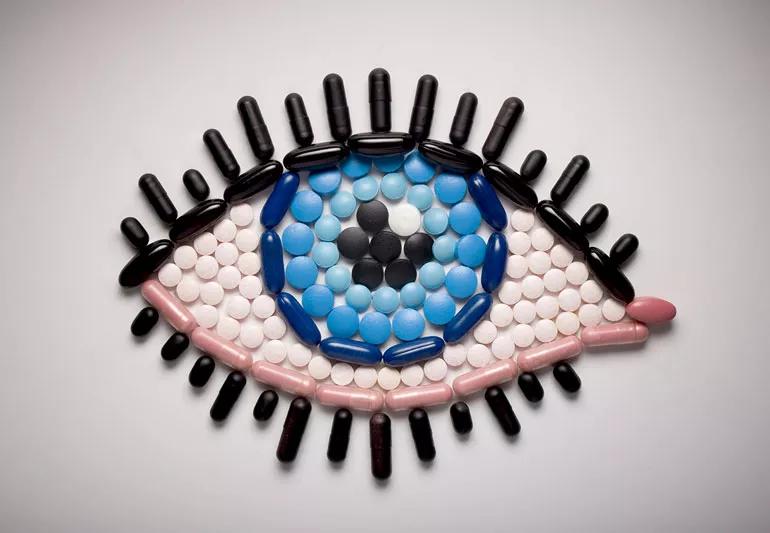
Image content: This image is available to view online.
View image online (https://assets.clevelandclinic.org/transform/292133db-faec-4934-a6d1-3b5a8bd1511c/medicationsVision-89127925-770x533-1_jpg)
eye made out of medications
As you fill out a new prescription, you might not think of the impact it could have on your eyes. Yet some prescription drugs and even a few over-the-counter remedies can have serious visual side effects.
Advertisement
Cleveland Clinic is a non-profit academic medical center. Advertising on our site helps support our mission. We do not endorse non-Cleveland Clinic products or services. Policy
Medications can have a variety of effects on your eyes, ranging from minor, temporary issues such as blurred vision to permanent damage.
Learn which drugs cause the most problems — and what to watch for if you have risk factors.
According to ophthalmologist Richard Gans, MD, a few stand out in particular, but you should always check for potential visual side effects with any new medication.
Here are a few common culprits:
Corticosteroids— People take these for a range of conditions, from asthma and allergies to arthritis and skin conditions. But whether in cream or pill form, they can cause swelling in the back of the eye or retina and potentially lead to cataracts.
“Even an over-the-counter nasal spray like Flonase® comes with risks,” Dr. Gans says.
Antihistamines — They may fight allergies, but they also can raise certain patients’ risk for glaucoma. See more information below for those with particularly high risk levels.
Antipsychotic medications — Drugs such as Thorazine® and Mellaril® can be toxic to your retina.
Antimalarials — For example, Plaquenil (hydroxychloroquine) — used to treat malaria, lupus and arthritis — also has toxic effects on the retina.
Dr. Gans notes there are other drugs that may raise eye surgery risk and other conditions, so talk to your doctor if you have concerns.
Advertisement
“And if you take a medication that comes with risk, be sure to have regular eye exams to make sure they don’t damage your vision,” he says.
Anyone taking medications such as cortisone and others listed above may experience visual side effects.
“If you have glaucoma or diabetes, you should be especially cautious,” Dr. Gans says. “Some people’s eyes are configured to have a narrow angle that puts them at risk for an acute onset of glaucoma,” he adds.
Sulfa (sulfonamide or sulphonamide) drugs like Topamax® or certain antihistamines or incontinence medications like Detrol® or Ditropan® can trigger an acute attack of glaucoma in someone with a narrow angle.
People with diabetes are especially prone to developing blurred eyesight from cortisones, he adds.
“With high blood sugar levels there’s temporary swelling within the lens of the eye, resulting in blurred vision,” he says. “With poor control of blood sugar structural damage can occur within the eye that can cause severe vision loss.”
If you get a new prescription or even start a new OTC medication, be aware of anything that causes pain to the eyes or distorted or blurred vision.
“If you do experience a problem, talk to the doctor who prescribed the medication,” Dr. Gans advises. “Don’t stop the medication without your doctor’s advice. They’ll want to assess whether the medication is the likely culprit — and sometimes the benefits outweigh the side effects.”
Always read the warning labels too, he says — especially if you have a condition such as glaucoma or diabetes. A variety of medications have warnings that patients with glaucoma shouldn’t take them.
“Remember, if you’re having clear-cut eye problems related to medication, see an eye doctor,” Dr. Gans emphasizes. “Your vision is too important to assume side effects will just go away.”
Advertisement

Sign up for our Health Essentials emails for expert guidance on nutrition, fitness, sleep, skin care and more.
Learn more about our editorial process.
Advertisement

Medications, tubing and stress can steal away the ZZZs you need
While the ADHD medications are similar, some differences may make one more effective for you than the other

Heart medications can help manage blood pressure, cholesterol and other issues that contribute to heart disease

The herbal supplement continues to be sold amidst warnings about health risks

Taking a smaller dose than what your doctor recommends isn’t a good idea

The common household medication isn’t a solution for hypertension — and regular use comes with risks

Over-the-counter reading glasses can work well for many people, but they’re not the best choice for everyone
This TikTok trend can cause injuries, infections and inflammation

Managing your weight through physical activity may lower your chances of getting this common cancer

It typically starts in October and winds down in early spring, with cases at their highest in the middle of winter

Anxiety disorders, health conditions and past trauma can make driving nerve-wracking — help is available
 Search










