Locations:





As the stalky vegetable breaks down, it leaves behind sulfuric byproducts that can make your pee stink
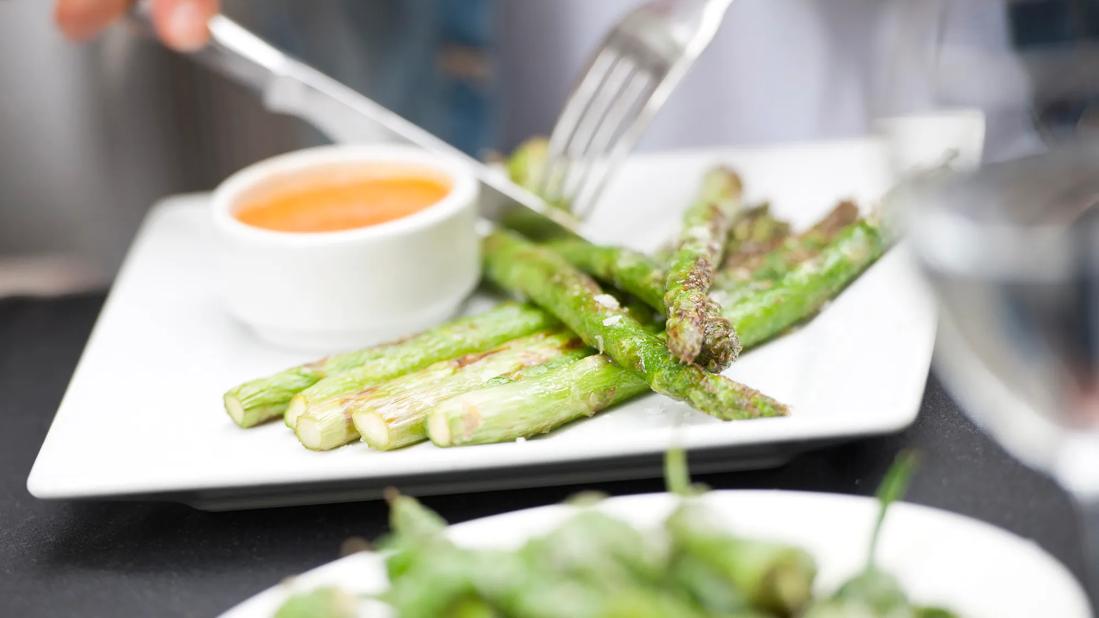
Image content: This image is available to view online.
View image online (https://assets.clevelandclinic.org/transform/10da86ae-c36f-4530-b737-380c271695b6/asparagusPee-637933614-770x533-1-jpg)
Hands with fork and knife cutting grilled asparagus
Why does asparagus make your pee stink? If you’ve pondered this question, you’re not alone.
Advertisement
Cleveland Clinic is a non-profit academic medical center. Advertising on our site helps support our mission. We do not endorse non-Cleveland Clinic products or services. Policy
We asked urologist Tyler Trump, MD, to demystify asparagus pee’s malodorous musk. Dr. Trump explains why it happens, who it affects and if there’s anything you can do to prevent it.
The main culprit behind that distinctive asparagus pee smell is asparagusic acid. It’s a compound that naturally occurs in asparagus — and only in asparagus. Asparagusic acid itself doesn’t smell. But as you digest the stalky vegetable, it breaks down into sulfuric byproducts.
Sulfur, in general, isn’t very pleasant to smell.
“Sulfur is the chemical that gives rotten eggs and skunk spray their unique aroma,” Dr. Trump explains. “When you pee, those sulfur byproducts evaporate almost immediately, causing you to smell that unpleasant scent.”
Asparagus pee usually shows up between 15 and 30 minutes after eating the vegetable and hangs around for several hours. One study even found that the smell could taint your tinkle for up to 14 hours!
Does everyone's urine smell after eating asparagus? The answer, it turns out, is no.
Depending on what study you read about asparagus and urine scent, somewhere between 20% and 50% of people experience this funky phenomenon. But what about everyone else? Researchers suspect that they’re missing out on the “fun” for a couple of reasons:
Advertisement
Asparagus pee may smell a bit disarming, but it’s still a totally normal bodily reaction.
And smelly pee’s no reason to shun the stalk. In fact, asparagus is a great addition to a balanced diet.
“Asparagus is considered a low-potassium food when consumed in small portions,” says Dr. Trump. “You can eat it as part of a healthy diet.” If you have kidney disease, you’re encouraged to eat a low-potassium diet. So, asparagus (six stalks or fewer) is a healthy choice.
It’s also worth noting that asparagus isn’t the only food that can temporarily change the smell of your pee. Some people report that drinking too much coffee causes their urine to smell like … well, coffee. Brussels sprouts, onions, garlic and soda have also been linked to odd-smelling pee in some people.
“You really only have to worry about the scent of your pee if it’s musty, sweet or has an aroma like ammonia, fruit, maple syrup or rotten fish,” Dr. Trump clarifies. “Those scents could point to an underlying health condition — especially if the smell doesn’t go away on its own within a day or so.”
While there’s nothing you can do to prevent asparagus from turning your pee pungent, you can make a few minor changes to reduce its intensity:
At the end of the day, it isn’t a big deal and it happens to many of us.
So, don’t shy away from asparagus because of urine odor. In fact, next time you smell that distinct scent, go ahead and pat yourself on the back for eating a nutritious veggie. Consider it the smell of success!
Advertisement
Advertisement

Sign up for our Health Essentials emails for expert guidance on nutrition, fitness, sleep, skin care and more.
Learn more about our editorial process.
Advertisement
This East Asian and subtropical fruit is packed with delicious nutrition

Lean meats, fish, dairy and plant proteins can help you meet your protein needs without piling on saturated fat and sugar

This citrus fruit delivers vitamin C, fiber and other nutrients that can support your heart, immune system and skin
Protein is essential in your diet, but piling more onto your plate isn’t always better

Both are healthy choices, but wild-caught salmon offers a few more benefits

This vibrant purple yam offers vitamin C, fiber and antioxidants in every bite
These bright berries are packed with nutrients and antioxidants that may support your eyes, immune system and overall well-being

The general rule is 1.2 to 1.6 grams of protein per kilogram of body weight — but that may not be exactly right for you

Managing your weight through physical activity may lower your chances of getting this common cancer

It typically starts in October and winds down in early spring, with cases at their highest in the middle of winter

Anxiety disorders, health conditions and past trauma can make driving nerve-wracking — help is available
 Search










