Locations:





Eating more natural, whole foods can help lower your risk of heart and cardiovascular diseases
It’s often said that the way to someone’s heart is through their stomach. In many ways, those words couldn’t be truer.
Advertisement
Cleveland Clinic is a non-profit academic medical center. Advertising on our site helps support our mission. We do not endorse non-Cleveland Clinic products or services. Policy
Everything you eat directly affects how your heart and cardiovascular system function. And diets, or eating plans, built around certain foods can minimize your risk of heart disease and life-threatening cardiac events.
So, what heart-healthy foods should be on your grocery list? Preventive cardiology dietitian Julia Zumpano, RD, LD, has some ideas.
Video content: This video is available to watch online.
View video online (https://cdnapisec.kaltura.com/p/2207941/sp/220794100/playManifest/entryId/1_n21zp0n4/flavorId/1_5f3sgelj/format/url/protocol/https/a.mp4)
What you put on your plate every day goes a long way toward determining how hard your heart works to pump blood through your system to keep you alive.
“The key is to understand how what you eat affects your body,” says Zumpano. “You can definitely reduce your risk of developing cardiovascular disease by eating certain foods every day.”
In general, heart-healthy foods tend to include nutritional building blocks like:
Here are foods that deliver on those needs.
Keep your heart happy by adding any of the following 40+ items to your shopping list.
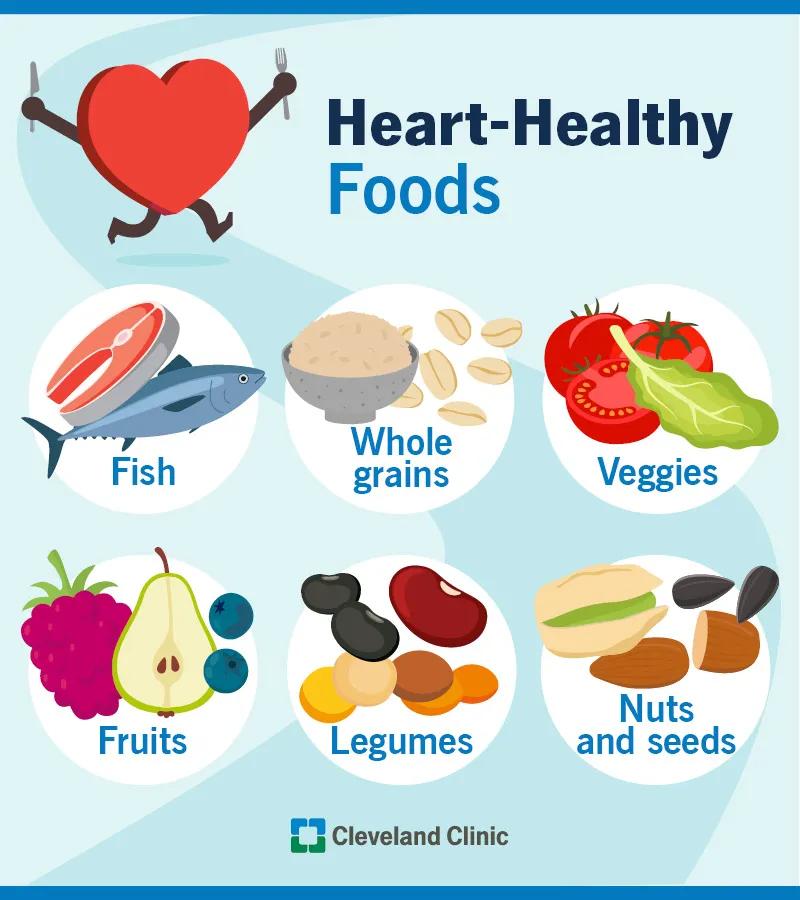
Image content: This image is available to view online.
View image online (https://assets.clevelandclinic.org/transform/d03abba2-1ae5-4f30-b0bf-ca6d41370a5a/heart-healthy-foods-infographic)
Omega-3 fatty acids may not sound like something good for your ticker, but don’t be fooled by the name: This essential nutrient is a “healthy fat” — and it’s a powerhouse when it comes to heart health.
Omega-3s work to protect against artery plaque buildup by lowering triglyceride levels and increasing high-density lipoprotein (HDL) — aka “good” cholesterol — in your blood.
Advertisement
Certain types of fish are swimming in omega-3, says Zumpano. Top sources include:
Getting omega-3s into your diet doesn’t have to include a fishing rod. You can find them on land, too.
Walnuts offer a healthy dose of the plant-based version of omega-3 fatty acid called alpha linolenic acid (ALA). A variety of seeds also offer the anti-inflammatory benefits of ALA, including:
Just pay attention to serving size. While these options are packed with healthy fats and protein, they’re still high in calories, cautions Zumpano. It’s best to look for unsalted options, too.
Berries may be small, but they can have a sizeable effect on heart health.
For starters, berries are chock full of phytonutrients, notes Zumpano. These powerful antioxidants can prevent damage to cells in your body (and heart) while also reducing inflammation that restricts blood flow and raises blood pressure.
Fiber in berries also may help lower your levels of low-density lipoprotein (LDL), otherwise known as “bad” cholesterol.
Popular heart-healthy berry options include:
As long as you’re shopping for berries in the produce aisle, research shows that many other fruits also can protect your heart. The list includes:
The humble oat is a rockstar when it comes to protecting your heart. In fact, making a bowl of oatmeal a regular breakfast choice can help lower your total cholesterol and “bad” LDL cholesterol, says Zumpano.
The positive effect can come quickly, too. One study showed that people saw significant changes in their cholesterol after just six weeks of working oats into their daily diet.
Consider using more of these heart-healthy whole grains, too:
Beans check a lot of boxes when it comes to heart health. Studies show that consuming legumes can act as a positive force on blood pressure and cholesterol ― two key factors in cardiovascular disease.
So, you’ll be doing your heart a favor with every bite when you eat legumes like:
Substituting soy-based food, such as tofu or edamame beans, for “animal protein” ― OK, meat ― can help lower cholesterol levels by reducing the amount of saturated fat in your diet.
“Soy products can be a heart-healthy replacement for meat in many dishes,” says Zumpano.
“Eating the rainbow” is a colorful phrase often used to encourage healthy food choices. But this isn’t just an artistic suggestion. Each hue brings different phytonutrients and antioxidants to the table to boost heart health.
Advertisement
So, get some orange onto your plate! (Carrots, sweet potatoes or acorn squash, for instance.) Work some reds into the meal! (Tomatoes and beets). Add a bright dash of yellow! (Yellow peppers.)
Building on the color theme, don’t forget your leafy greens! Nitrates in salad building blocks, like arugula, lettuce, spinach, kale, collard greens and Swiss chard, can keep arteries relaxed and open for better blood flow.
Surprised to see this treat on the list? Well, dark chocolate earns a seat at the table with other expected heart-healthy foods.
Dark chocolate is full of beneficial antioxidants called flavonoids, which can help improve blood flow and blood pressure by relaxing your blood vessels, reports Zumpano. They also fight cell damage.
Choose dark chocolate products that are at least 70% dark chocolate to get the benefits. The higher the percentage, the more flavonoids.
But remember that dark chocolate should still be considered a treat despite its positives. Moderation is key, given its saturated fat content. (In other words, don’t plan on dark chocolate being your main course at dinner.)
Diet certainly isn’t the only factor for heart disease risk, but what you eat is something you directly control. You hold the power. “The choices you make every time you’re in the kitchen can make a big difference for your heart,” emphasizes Zumpano.
Advertisement
Many of the foods mentioned are pillars of the Mediterranean diet, an eating plan that focuses on plant-based foods and healthy fats. The diet is considered the gold standard when it comes to heart health.
So, with all of that said, where can you start making changes? Think small, suggests Zumpano. Try working in one or two heart-healthy items a week as you make meals. A few simple swaps ― like subbing an apple for a cookie at snack time ― can bring positive changes over time.
“We eat multiple times every day,” she notes. “That gives us a lot of opportunity to help our hearts.”
Advertisement

Sign up for our Health Essentials emails for expert guidance on nutrition, fitness, sleep, skin care and more.
Learn more about our editorial process.
Advertisement

Focus on what you eat, how well you sleep and your physical activity to help keep your ticker in tip-top shape

Age, sex and genetics are just a few factors that can affect your risk of developing coronary artery disease

You don’t have to wait until you have symptoms of heart disease to seek cardiology care

Move a little more, eat a little healthier, sleep a little better and destress a lot
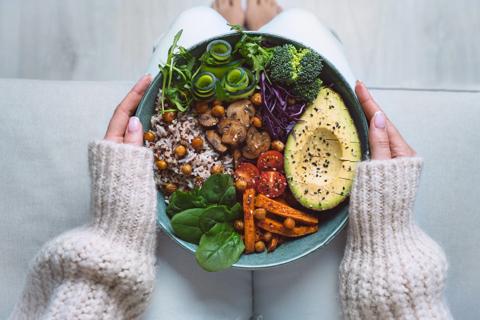
The Mediterranean diet, DASH diet or more plant-based eating plans can improve heart health

Having underweight, having overweight and having obesity can be dangerous for your heart

Avoid smoking, eat a good diet and exercise to prevent your heart from aging prematurely
Your life depends on this incredible organ doing its job 24/7

Hormonal changes, a slower metabolism and muscle loss can make weight gain more common around menopause — healthy habits can help you manage it

Life-threatening complications include sepsis, stroke, pneumonia and more
Fruity-smelling breath can happen when your body burns fat for energy, and in some cases, can signal a medical emergency
 Search










