Locations:





The term refers to how long it takes you to fall asleep, which can be a key factor in overall sleep quality
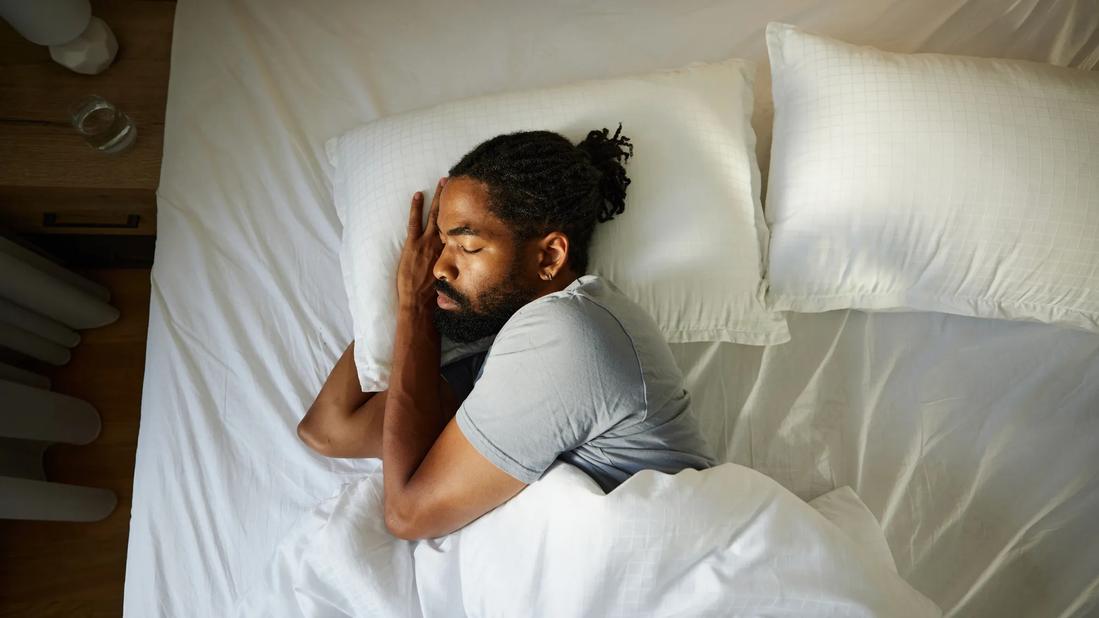
Image content: This image is available to view online.
View image online (https://assets.clevelandclinic.org/transform/2b29ef61-ba94-46ad-8db7-7a6272b87e32/sleep-2187422446)
Person in bed sleeping
Success often begins with a good start — and that’s especially true when you lie down in search of a good night’s sleep.
Advertisement
Cleveland Clinic is a non-profit academic medical center. Advertising on our site helps support our mission. We do not endorse non-Cleveland Clinic products or services. Policy
With that in mind, let’s learn about “sleep latency.”
Sleep latency is the amount of time it takes you to fall asleep after you’ve gotten into bed. It’s one of the core measurements used in sleep medicine and an important focus in the treatment of insomnia.
A commonly cited “healthy” sleep latency range is about 10 to 20 minutes. But sleep specialist Michelle Drerup, PsyD, emphasizes that it isn’t a strict rule.
Taking a little longer to fall asleep doesn’t automatically mean that something is wrong, especially if you’re still getting enough ZZZs overnight to wake up feeling bright-eyed and bushy-tailed.
On the flip side, falling asleep faster isn’t always better. Dozing off within a few minutes of your head hitting the pillow could be a sign that you’re overtired and fatigued.
Bottom line? “What matters most is consistency and your overall sleep quality,” says Dr. Drerup. “It’s about listening to your body. We don’t want to get too hung up on a minute-by-minute exactness.”
Many things can influence or change how quickly you fall asleep at night. Some are mental, some are physical and others are tied to daily habits, explains Dr. Drerup. Common factors include:
Advertisement
Dr. Drerup also points out that once you start having difficulty falling asleep, the problem can escalate. Regularly spending long periods awake in bed can train your brain to associate your bed with wakefulness instead of sleep.
“When you’re lying there frustrated, the bed becomes a place of worry versus a place that cues sleep,” she explains.
There are a few simple ways to estimate your sleep latency:
Wearable devices may also give estimates on how long it takes you to zonk out, but they’re not perfect. For example, they can misinterpret downtime spent in bed when you’re not actively trying to sleep as a long sleep latency.
If you’re experiencing insomnia or other sleep disorders, a healthcare provider may recommend testing that can measure sleep latency and sleep quality in more detail.
The time it takes to fall asleep isn’t something you need to obsess over in minute-by-minute detail. Instead, think of sleep latency in general terms: Does the time it takes to fall asleep feel right to you?
“If you’re lying in bed and actively thinking ‘Why am I not asleep yet?’ that’s usually a sign it’s taking longer than it should,” notes Dr. Drerup.
Take note, too, if sleep latency issues make you answer YES to any of these questions:
If it consistently takes you an hour or more to fall asleep most nights, it’s worth talking to a healthcare provider, advises Dr. Drerup. In some cases, an underlying condition or insomnia may need to be addressed.
Want to fall asleep faster at night? Then take a look at how you’re spending your day.
“When you wake up in the morning, you’re basically starting your process to go to bed that night,” says Dr. Drerup. “From that point on, you’re doing things that can build up your sleep drive.”
Sleep drive is the natural pressure to sleep that builds during your waking hours. The higher it is at night, the easier it is to fall asleep. Here are ways to support that process:
Advertisement
If you notice a change in your sleep latency, keeping a sleep log may help you determine the cause. Troublesome patterns or habits often stand out when viewed over time, as opposed to focusing on one night.
“Be your own sleep detective,” encourages Dr. Drerup. “Sometimes, making a simple change can make it much easier for you to fall asleep.”
Advertisement

Sign up for our Health Essentials emails for expert guidance on nutrition, fitness, sleep, skin care and more.
Learn more about our editorial process.
Advertisement
Nocturnal emissions are a natural part of growing up and nothing to worry about

There’s limited research on whether the supplement can help you snooze — adopting proven sleep habits may be a better place to start

Head to bed in a bra to reduce breast pain, nipple irritation and stretch marks

These brief episodes of sleep last only seconds, but they can have serious consequences when they happen at the wrong time

Your chronotype reflects when your body naturally wants to sleep and wake — and why your energy peaks when it does

Putting on socks at night can help regulate your core body temperature to bring on ZZZs

A little ‘prep work’ before going to bed can help you get the quality sleep your body needs

Sleep masks can help you create total darkness so you can sleep better
Eyes typically increase to full size during two growth spurts in childhood

To start, opt for calorie-dense foods that are rich in protein and healthy fats

Pre-birth injections and monoclonal antibodies can help prevent serious complications
 Search










