Locations:





 Search
Understanding hammertoe, mallet toe and claw toe
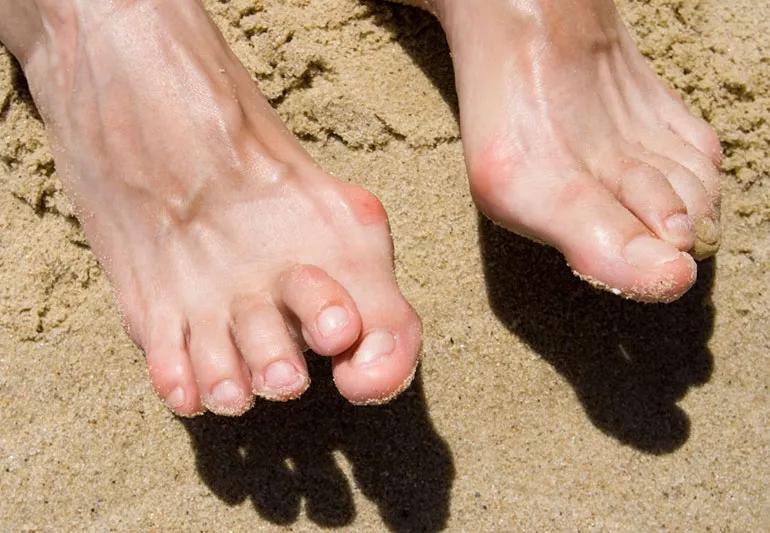
Image content: This image is available to view online.
View image online (https://assets.clevelandclinic.org/transform/cc1ce411-0b19-4c09-8d5a-e5c0887a62e0/hammertoe-877122674-770x533-1_jpg)
feet with hammertoe affliction
Does one of your toes appear to bend in an awkward way, or curl under painfully? If so, you may have a hammertoe.
Advertisement
Cleveland Clinic is a non-profit academic medical center. Advertising on our site helps support our mission. We do not endorse non-Cleveland Clinic products or services. Policy
A hammertoe is a term that describes symptoms and joint changes involving the toes (most commonly the second toe). However, there are other types of toe deformities, including:
These happen when muscles, tendons or other tissues in the toes become shortened or hardened (this is called contracture).The deformity classification depends on the specific location of the contracture, says orthopedic surgeon Nicole Nicolosi, DPM.
These deformities sometimes need to be fixed by surgery, but there are several less invasive ways to ease pressure and relieve the pain they cause.
If you have one of these, here are five things you should know:
If it’s not treated, a flexible hammertoe can become a rigid hammertoe, Dr. Nicolosi says.
“A toe deformity occurs when the muscle operating the toe becomes weak and another muscle overpowers that muscle,” she explains. “This results in contracture of the toe.”
This muscle imbalance sometimes has a genetic or intrinsic component. If you have a high arch or flat feet, this can inherently cause instability in your foot when you walk.
Advertisement
An injury to the toe, often caused by the shoes you choose, also sometimes causes the imbalance.
“Long-term inappropriate shoe wear can compress the digit and cause muscle imbalance to occur,” Dr. Nicolosi says. She lists high heels and unsupportive flip-flops as examples of inappropriate footwear.
The digital contracture can result in rubbing on the top of the shoe.
“That can cause formation of callus tissue, which can be painful,” Dr. Nicolosi says. “The callus can then increase pressure in shoe gear, which then increases pain and therefore limits activity.”
Doctors can treat flexible hammertoes conservatively, Dr. Nicolosi says.
They may suggest a crest pad or a Budin splint; each has an elastic band that goes around the crooked toe to bring a flexible hammertoe back into the correct position.
“Another option is an in-office flexor tenotomy, which is used to cut the overpowering tight muscle tendon to correct the muscle imbalance and reduce the deformity,” she says.
For a rigid hammertoe, your doctor may suggest wearing a shoe with a deeper, fuller toe box to ease the pressure on the deformity. If this doesn’t solve the problem, however, surgery to straighten the toe is likely needed, Dr. Nicolosi says.
“Toe deformities develop due to unsupported motion, so one thing you can do to prevent symptoms from worsening is to avoid non-supportive shoes, such as high heels and unsupported flip-flops.”
She recommends a supportive shoe insert to control abnormal foot motion, as well as a supportive shoe.
Advertisement

Sign up for our Health Essentials emails for expert guidance on nutrition, fitness, sleep, skin care and more.
Learn more about our editorial process.
Advertisement

Some things you find in your house have antifungal properties — but that doesn’t mean they’ll clear your toenail fungus
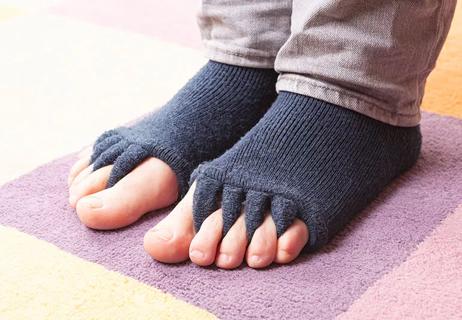
Toe spacers and separators can add some comfort, but they’re not a fix-all
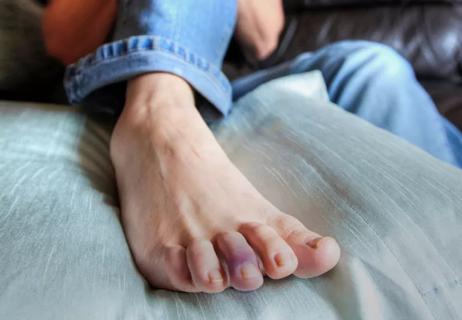
Injuring a toe is painful, but is it a serious problem? Find out when to see a doctor and what to do to help your toe heal at home.
While it may be no big deal, underlying conditions that need treatment can also cause cold extremities
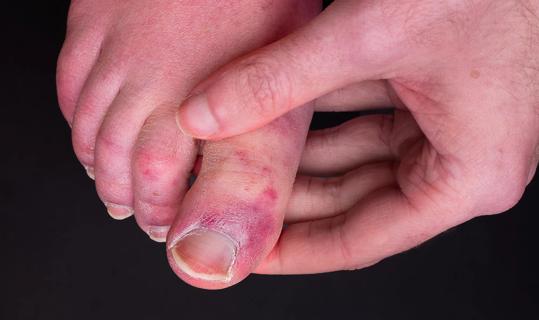
Chilblain-like skin lesions and rashes are mild (and rare) complications of many viral infections, not just COVID-19
Try seated and standing exercises to help lengthen and strengthen the muscles that support your plantar fascia
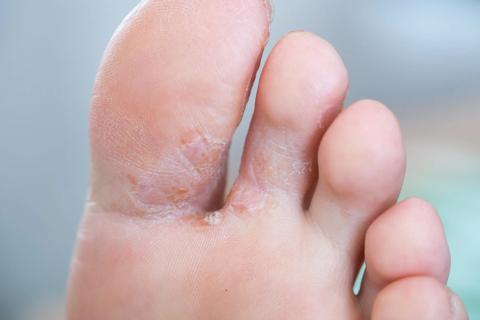
Home remedies are unlikely to cure your contagious foot fungus — and they might even make it worse
Cramps can creep up if your shoes are too tight, you’re dehydrated or you have poor circulation
If you’re dealing with intense itching and red or swollen skin, it might be eczema
While similar in some respects, teeth and bones have key differences, like durability and structure
Warm water, lotion, cooking oils or nail polish remover may all help to loosen the adhesive











