Locations:





Sushi made with raw or undercooked fish should be avoided, but other types are OK
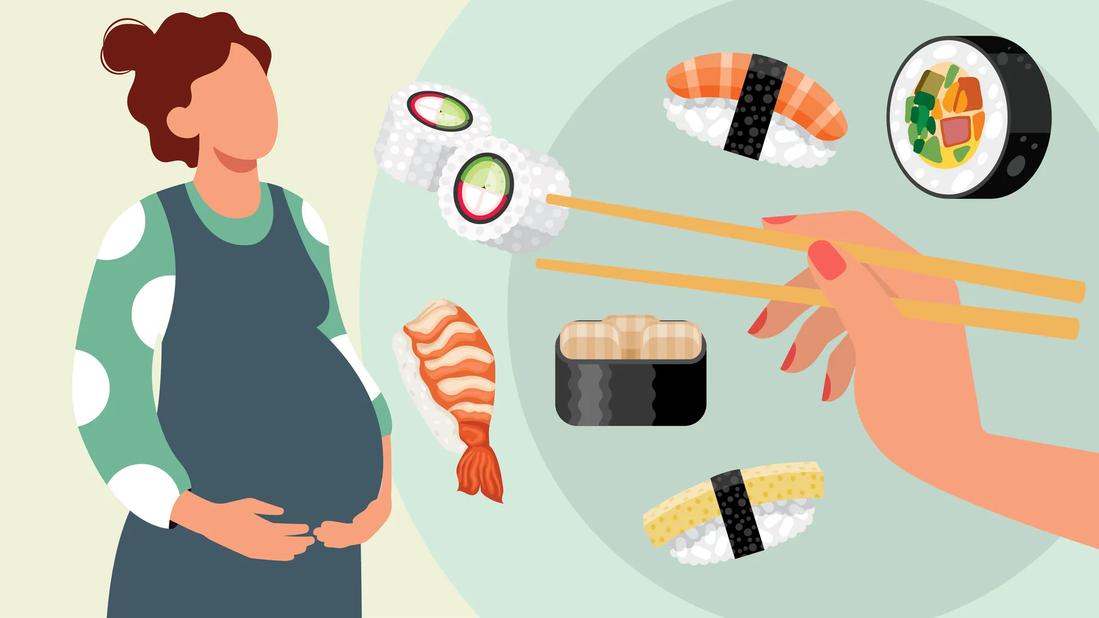
Image content: This image is available to view online.
View image online (https://assets.clevelandclinic.org/transform/debb8f9b-cf10-4435-afa6-78b5431e1363/pregnancy-sushi-2081127603)
Pregnant woman looking at sushi options floating over a plate, with a hand holding chopsticks
It seems our appetite for sushi has never been higher. Global sales show that we can’t get enough of these nutrient-dense rolls made with rice, seaweed and ingredients like seafood and vegetables.
Advertisement
Cleveland Clinic is a non-profit academic medical center. Advertising on our site helps support our mission. We do not endorse non-Cleveland Clinic products or services. Policy
But if you’re pregnant, ordering off a sushi menu calls for some caution. Maternal-fetal medicine specialist Cara Dolin, MD, explains what’s safe to eat and what’s not.
Many types of sushi feature raw or undercooked fish, which brings a heightened risk of bacteria and foodborne illness. That’s not ideal for anyone, of course — but when you’re pregnant, the potential danger is especially high.
That’s because bacteria (especially Listeria) can lead to a miscarriage or stillbirth, as well as newborn death due to infection, says Dr. Dolin.
Babies born with a Listeria infection also could experience:
“The bacteria specifically target the hematologic [blood] system of the baby,” she explains. “It can affect the brain and liver — and that can bring some serious consequences.”
Other concerns from eating raw fish include:
Advertisement
Given all of the above risks, it’s recommended that women immediately stop eating raw or undercooked fish once they learn they’re pregnant. It’s not a bad idea to adjust if you’re trying to conceive, too.
During pregnancy, it’s best to avoid any sushi with raw or undercooked (seared) fish to limit potential exposure to bacteria and parasites, emphasizes Dr. Dolin. That covers various types of sushi, like:
Mercury can be an issue in raw seafood, too, but it’s also a concern in cooked seafood. So, how can you avoid it in your sushi? It starts with passing on rolls made from certain types of fish known to have higher levels of mercury.
Those tend to be larger, predatory fish that eat smaller fish to accumulate more mercury in their bodies, she says. The list includes:
So, what type of sushi can hit your plate? In general, sushi rolls made with cooked fish or vegetables should be safe, says Dr. Dolin. That would include:
But one important note: Make sure that you’re getting your sushi from a reputable restaurant or vendors that follow food safety standards. Cross-contamination with raw fish can be an issue.
“If they prep a veggie roll on the same surface where they prep raw fish rolls, you could get exposed to exactly what you’re trying to avoid,” notes Dr. Dolin.
Dr. Dolin stresses that sushi — and fish in general — can be part of a healthy pregnancy diet. The key is moderation. That means no more than two to three 4-ounce servings of low-mercury fish per week.
The U.S. Food and Drug Administration (FDA) classifies fish as “best choice,” “good choice” and “choices to avoid” when it comes to mercury levels. You can see its recommendations here.
“Fish is actually healthy to eat during pregnancy,” says Dr. Dolin. “It can be a great source of omega-3 fatty acids, which are important for fetal brain development. So, don’t feel like you have to cut fish entirely from your diet. Just eat it safely.”
Advertisement

Sign up for our Health Essentials emails for expert guidance on nutrition, fitness, sleep, skin care and more.
Learn more about our editorial process.
Advertisement
This antiviral treatment can help you avoid flu complications

Limit your caffeine intake to no more than 200 milligrams a day, including caffeinated food and drinks

A little caffeine is OK during pregnancy, but it’s best to limit consumption of coffee and other caffeinated items

Most rashes aren’t dangerous — but it’s worth talking to your pregnancy provider about them
The best available evidence indicates that, used correctly, acetaminophen is safe to take throughout a pregnancy

Prenatal massage, done properly, is a safe and effective way to lower stress and relieve pregnancy discomforts
Avoid high-mercury fish and processed meat, and go easy on salt and caffeine

Unless your healthcare provider tells you otherwise, it’s typically considered safe to have sex during pregnancy

Managing your weight through physical activity may lower your chances of getting this common cancer

It typically starts in October and winds down in early spring, with cases at their highest in the middle of winter

Anxiety disorders, health conditions and past trauma can make driving nerve-wracking — help is available
 Search










