Locations:





Fertility drops as you age, but you can still get pregnant in perimenopause

Image content: This image is available to view online.
View image online (https://assets.clevelandclinic.org/transform/4eb225ba-96b5-4e37-b808-6392e75187cb/pregnancy-test-perimenopause-1476136539)
Woman holding pregnancy test stick, looking out the window
If your periods are becoming irregular and you’re dealing with hot flashes, mood changes or other signs of perimenopause, you might assume pregnancy is no longer in the cards.
Advertisement
Cleveland Clinic is a non-profit academic medical center. Advertising on our site helps support our mission. We do not endorse non-Cleveland Clinic products or services. Policy
After all, you’ve probably heard that your fertility declines after your mid-30s. And if you’re approaching menopause, surely pregnancy isn’t an option, right?
Not quite.
Ob/Gyn and menopause specialist Catherine Caponero, DO, shares what you need to know about perimenopause and pregnancy.
Yes, you can still get pregnant during perimenopause.
That’s because, while female fertility declines with age, it doesn’t disappear overnight. In fact, estimates from the U.S. Centers for Disease Control and Prevention (CDC) show that more babies were born to women aged 40 to 44 than to teen mothers in recent years.
And no, we’re not just talking about assisted reproduction treatments, like IVF or intrauterine insemination.
“You’re not more fertile during perimenopause, but fertility doesn’t go down to zero until you reach menopause,” Dr. Caponero states. “Spontaneous pregnancies can — and do — happen until you reach your final menstrual period.”
If you don’t have any conditions that affect your ability to conceive, it’s possible to get pregnant until you reach menopause. That’s the point at which you’ve gone one full year without a menstrual cycle.
On average, menopause happens around age 52. But it can vary a lot.
Advertisement
Perimenopause is the transition leading up to menopause. It typically happens in your 40s.
Your fertility can decline during this time because you have fewer healthy eggs as you age. But you still ovulate during perimenopause. In other words, your ovaries can still release eggs. And if you have sex, those eggs can get fertilized.
But you may not ovulate as regularly as you used to. So, if you rely on tracking your cycle to know when you’re most fertile, those calculations can be off.
“Ovulation becomes more erratic and unpredictable,” Dr. Caponero explains. “This causes your cycle length to change, which can make tracking fertility much less reliable.”
Perimenopause can last for years for some women. For others, it may only be a matter of months.
Depending on your goals, knowing that you can get pregnant even as your body prepares for menopause may come as welcome news.
And if you’re not keen to conceive? Take it as a reminder that reliable birth control is still important during perimenopause.
Dr. Caponero says women’s health providers often recommend continuing contraception until age 55.
That advice is extra important if you’ve been taking hormonal birth control — like pills and IUDs — which can mask the changes that happen during perimenopause.
“Just because you reach a certain age doesn’t mean you’ve gone through menopause,” she clarifies. “If you’re on birth control that affects your cycles, it can be harder to know when menopause has truly happened.”
For example, birth control pills may keep your cycles more regular than they would otherwise be. And if you have an IUD, you may not bleed, or you may bleed only lightly.
In some cases, too, continuing birth control throughout perimenopause can do double duty — guarding against pregnancy and managing perimenopause symptoms.
“One effective approach is to use both an IUD and an estrogen hormone replacement patch,” Dr. Caponero suggests. “The IUD uses progesterone to protect the uterus and prevent pregnancy, while estrogen from the patch can help relieve perimenopause symptoms and support bone health.”
Talk with a women’s health provider about your best options for birth control during perimenopause.
If you’re hoping to become pregnant, you may be worried about declining fertility as you enter perimenopause.
Dr. Caponero shares when to seek help:
Advertisement
“Fertility continues to decline with age, and the risk of chromosomal abnormalities increases,” she explains. “We want to get people connected appropriately so that they can have safe and healthy pregnancies.”
A healthcare provider can also help clarify whether you’re still ovulating, what your hormone levels look like and whether fertility treatments might improve your chances.
You can have a healthy pregnancy at any age. But pregnancy in women aged 35 and older (what healthcare providers call “advanced maternal age”) can come with some higher risks.
“The risks aren’t entirely because of the hormonal changes of perimenopause, but more so because the health of your eggs declines with age,” Dr. Caponero says.
In your late 30s and beyond, you may be at higher risk for:
If you’re pregnant and over age 35, your provider will likely recommend closer monitoring and additional testing to monitor fetal development.
If you’re in your perimenopause era, it’s important to know that you still have choices when it comes to your fertility.
That could mean rethinking your birth control. Or taking advantage of your remaining fertility.
Advertisement
Understanding what’s still possible can help you make decisions that feel right for your body at this stage of life. A women’s health provider can help you talk through your goals and options.
“Perimenopause can be unpredictable, and it can catch you off guard,” Dr. Caponero says. “Having an open conversation with your provider can help you avoid surprises and make choices that match your goals.”
Advertisement

Sign up for our Health Essentials emails for expert guidance on nutrition, fitness, sleep, skin care and more.
Learn more about our editorial process.
Advertisement
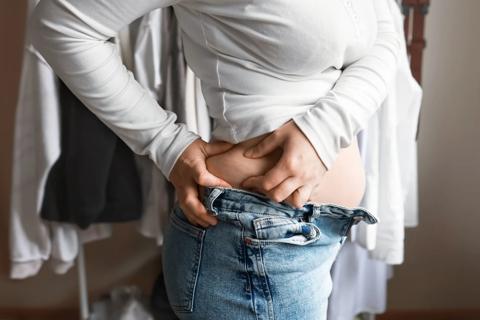
Aging and hormonal changes around menopause can shift where your body stores fat, depositing it around your midsection

Hormonal changes, a slower metabolism and muscle loss can make weight gain more common around menopause — healthy habits can help you manage it

Estrogen loss contributes to bone loss, which significantly raises your risk of osteopenia and osteoporosis
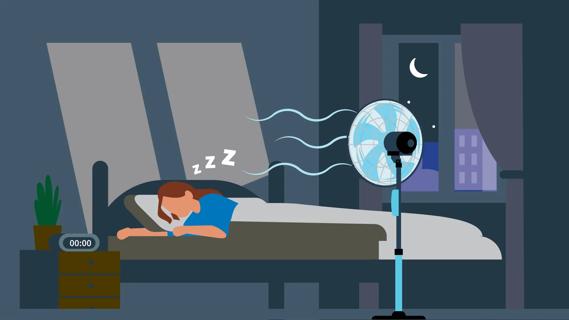
Making certain changes to your diet, sleep habits and even your wardrobe may help lessen the impact of menopause symptoms

A women’s health specialist explains those cold flashes that come on quickly
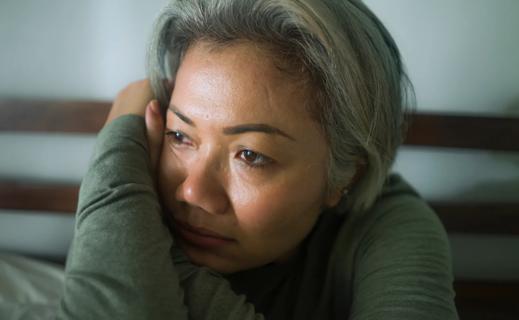
Changing hormone levels can bring issues like brittle nails, indigestion, dry skin and new allergies (to name a few!)

If you’ve noticed changes in your mood and mental health while going through menopause, you’re not alone
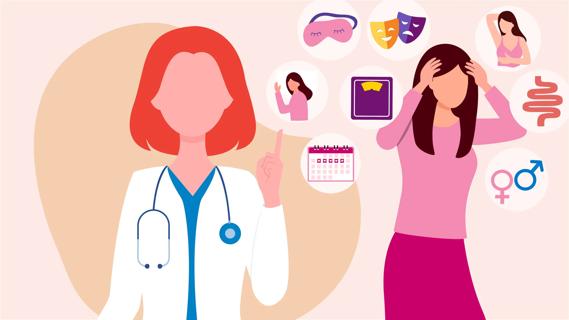
Missed periods, heavy periods, painful sex and frequent hot flashes are just a few symptoms worth discussing with your provider

Managing your weight through physical activity may lower your chances of getting this common cancer

It typically starts in October and winds down in early spring, with cases at their highest in the middle of winter

Anxiety disorders, health conditions and past trauma can make driving nerve-wracking — help is available
 Search










