Locations:





These common mouth sores are very different — cold sores are caused by a virus and are contagious, but canker sores aren’t
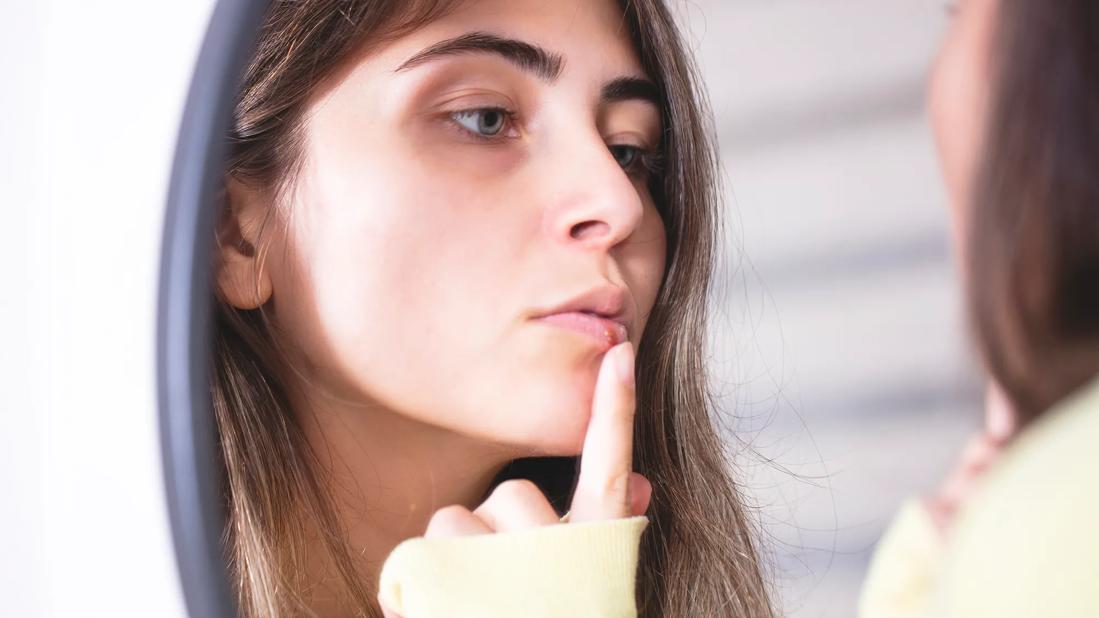
Image content: This image is available to view online.
View image online (https://assets.clevelandclinic.org/transform/004860c1-358a-4252-85b0-01aa5f9b943b/cold-sore-look-mirror-1188964727)
Person looking in mirror at a sore on their lip
If you’ve ever had a painful sore in or around your mouth, you might have wondered: Is it a canker sore or a cold sore? While both can be uncomfortable — and sometimes even look alike at first glance — they’re two very different conditions.
Advertisement
Cleveland Clinic is a non-profit academic medical center. Advertising on our site helps support our mission. We do not endorse non-Cleveland Clinic products or services. Policy
Knowing what you’re dealing with can help ensure you’re treating them properly, so you can feel better and keep the people around you safe.
Medical dermatologist Anthony Fernandez, MD, PhD, explains what canker sores and cold sores are and what to do about them.
Video content: This video is available to watch online.
View video online (https://cdnapisec.kaltura.com/p/2207941/sp/220794100/playManifest/entryId/1_7uiox1qm/flavorId/1_5f3sgelj/format/url/protocol/https/a.mp4)
Learn the differences between cold sores and canker sores.
Canker sores happen inside your mouth and aren’t contagious. Cold sores usually appear outside your mouth and are contagious.
Let’s take a quick look at the differences between canker sores and cold sores:
| Canker sore | Cold sore | |
|---|---|---|
| Location | Inside your mouth | Inside or outside your mouth |
| Cause | Stress, injury, food | HSV-1 virus |
| Appearance | Round white or yellow ulcer | Cluster of fluid-filled blisters that develop into ulcers |
| Treatment | Saltwater rinse, pain relief measures | Antiviral medications, cold compress, sunscreen |
| Is it contagious? | No | Yes |
| Location | ||
| Canker sore | ||
| Inside your mouth | ||
| Cold sore | ||
| Inside or outside your mouth | ||
| Cause | ||
| Canker sore | ||
| Stress, injury, food | ||
| Cold sore | ||
| HSV-1 virus | ||
| Appearance | ||
| Canker sore | ||
| Round white or yellow ulcer | ||
| Cold sore | ||
| Cluster of fluid-filled blisters that develop into ulcers | ||
| Treatment | ||
| Canker sore | ||
| Saltwater rinse, pain relief measures | ||
| Cold sore | ||
| Antiviral medications, cold compress, sunscreen | ||
| Is it contagious? | ||
| Canker sore | ||
| No | ||
| Cold sore | ||
| Yes |
Both canker sores and cold sores can be uncomfortable, even painful. But they look and feel different.
Canker sores are small, shallow ulcers that form inside your mouth. You might find them on your:
If you have a canker sore, it’ll usually start with a tingling or burning sensation in your mouth. It soon develops into a painful sore that’s round or oval-shaped, with a white, yellow or gray center and a red border. You’ll typically only have one canker sore at a time, but sometimes, they show up in small groups.
And they can be quite painful.
“Canker sores can make eating, drinking or even talking uncomfortable,” Dr. Fernandez acknowledges.
Cold sores — sometimes called fever blisters — typically form outside the mouth. But if you’re living with immunocompromise or you’ve only recently been infected with the cold sore virus, you may get them inside your mouth.
Advertisement
You usually find cold sores:
“Cold sores tend to show up in the same place with each outbreak,” Dr. Fernandez clarifies.
They typically begin with a tingling or burning feeling, then develop into small, fluid-filled blisters. Those blisters may break open, ooze and get crusty.
Cold sores may also come with flu-like symptoms, like:
Cold sores are caused by a virus. Canker sores aren’t.
Canker sores are usually triggered by:
“Stress plays a big role,” Dr. Fernandez notes. “We tend to see more canker sores during periods of emotional or physical strain.”
Cold sores, on the other hand, are caused by herpes simplex virus type 1 (HSV-1) — sometimes called “oral herpes.” It’s a very contagious virus that spreads through close contact.
You can get HSV-1 by:
It’s also possible — though less likely — to spread the virus even when you can’t see a sore. That’s called asymptomatic shedding.
Once you have the virus, it stays in your body and can reactivate, especially when triggered by:
“Stress lowers your immune system’s ability to suppress the cold sore virus, which can lead to an outbreak,” Dr. Fernandez explains. “Sunlight is another big one — UV rays can reactivate HSV-1 in people who’ve had cold sores before.”
Both canker sores and cold sores usually heal on their own, but treatment can help ease your pain and shorten the healing time. And while canker sores can’t spread from one person to another, cold sores can. So, getting appropriate treatment for cold sores can help stop the spread.
Canker sores often go away within one to two weeks. To feel better faster:
Advertisement
Cold sores also last about a week or two, but you can take these steps to reduce pain and speed healing:
During an active outbreak, avoid kissing, sharing items or touching the sore — and wash your hands often.
If you’re not sure if you’re dealing with a canker sore or cold sore, don’t guess — check with a dermatologist or a primary care provider. Also seek medical attention if:
A healthcare provider can help determine whether it’s a canker sore, a cold sore or something else — and recommend the right treatment based on your symptoms. They can help you find relief and prevent future flare-ups.
Advertisement

Sign up for our Health Essentials emails for expert guidance on nutrition, fitness, sleep, skin care and more.
Learn more about our editorial process.
Advertisement

Bad breath can smell foul, fruity, sour, fishy or even metallic — the scent may offer clues about what’s causing it
For fresher breath in the a.m., practice good oral hygiene, including flossing your teeth and scraping your tongue

This medicated liquid is available by prescription only and is specially formulated for your specific needs
Lots of things can activate the herpes simplex virus, from the common cold and cold weather to cracked skin and cosmetic procedures
This oral health practice doesn’t have proven benefits, and it’s not a substitute for brushing and flossing

Prescription oral antivirals are your best bet, but OTC creams can help, too
Stay hydrated, use a humidifier and try sugar-free candies or over-the-counter products with xylitol
Non-cancerous ulcers usually heal within a few days or weeks — if it’s sticking around, it’s time to get it checked

Eyes typically increase to full size during two growth spurts in childhood
To start, opt for calorie-dense foods that are rich in protein and healthy fats

Pre-birth injections and monoclonal antibodies can help prevent serious complications
 Search










