Locations:





Understanding your options
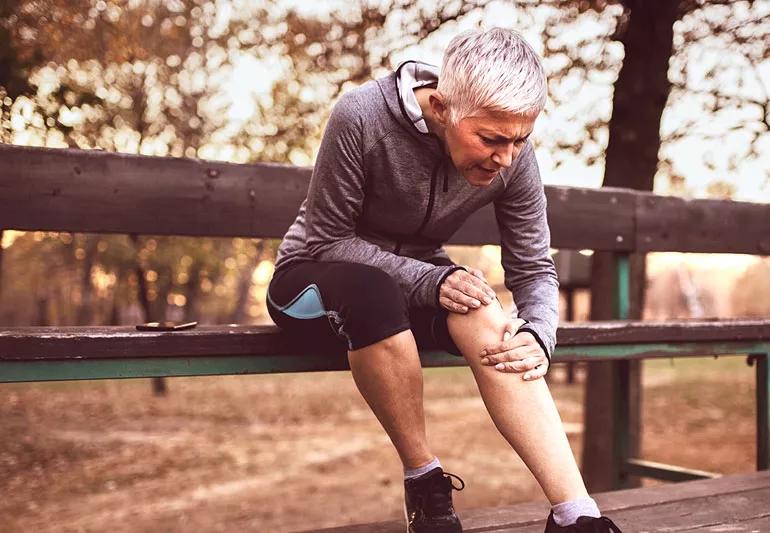
Image content: This image is available to view online.
View image online (https://assets.clevelandclinic.org/transform/7810aaff-652b-457b-b3fe-bdaa23d7d42d/kneeBrace-1094639064-770x553_jpg)
Woman suffering knee pain while walking
While there’s no cure for knee osteoarthritis, a combination of strategies can help relieve your pain and keep you active.
Advertisement
Cleveland Clinic is a non-profit academic medical center. Advertising on our site helps support our mission. We do not endorse non-Cleveland Clinic products or services. Policy
Although the cornerstones of treatment are exercise and physical therapy — and pain medications and steroid injections are also options — you can also try knee braces, shoe inserts or simply wearing more supportive shoes.
“Knee braces can be helpful for managing your pain,” says physical therapist Dawn Lorring, PT, MPT. “The location and severity of your symptoms will drive which brace works best for you.”
Osteoarthritis is caused by the breakdown of cartilage (that’s the cushioning material that covers the ends of bones in joints.) This causes pain and stiffness.
In the knee joint, arthritis can occur at any of three points where the bones come in contact:
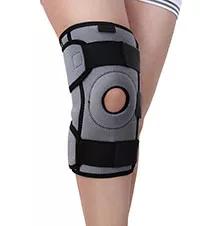
Image content: This image is available to view online.
View image online (https://assets.clevelandclinic.org/transform/905ae024-c6e3-4cab-a3e5-aabb1743cc2b/sleeveBrace-148495945-200x226-1_jpg)
Sleeve braces. People who have mild pain or stiffness that limits their activities can try a sleeve-type brace. These provide compression, which can reduce swelling and warm the joint. This might relieve the stiffness.
These braces also provide added support. “If your knee feels unsteady or wobbly, a compression-type brace can be helpful, Lorring says. Some of them have plastic stays or a hinge on the side, which provides a little more support. She recommends getting one that has an opening at the knee cap.
Sleeve braces aren’t covered by insurance, but they are relatively inexpensive, ranging from $10 to 100.
Advertisement
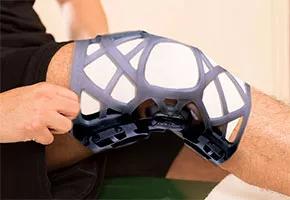
Image content: This image is available to view online.
View image online (https://assets.clevelandclinic.org/transform/bfede2b3-4974-49b9-bd76-038e92276bb2/webBrace-187593077-290x200_jpg)
Web brace. A more advanced brace is a sleeve with silicone webbing over the front. As you bend and straighten your knee, the webbing tightens in certain areas. This provides extra support to the knee.
A regular sleeve brace provides compression all over. “The brace with the webbing also provides guidance for how the knee cap moves,” Lorring says.
This type of brace might be the most helpful for someone with osteoarthritis beneath the knee cap. A web brace costs about $100.
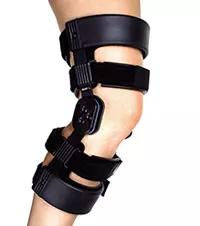
Image content: This image is available to view online.
View image online (https://assets.clevelandclinic.org/transform/3a677c70-40c8-473c-aaad-c6802b0536c5/unloaderBrace-174650776-200x226_jpg)
Unloader brace. When arthritic changes are between the femur and tibia, a device called an unloader knee brace may help, especially if one side is more arthritic than the other. These have a metal band that goes around the thigh and another one around the calf, connected by a hinged bar. This creates a frame that can be adjusted to shift pressure (unload) from one side of the knee to the other.
“If the inside of your knee hurts, the brace can be adjusted to put more force on the outside of your knee, unloading weight off the inside,” Lorring explains.
These are less beneficial if your arthritis symptoms are similar on both the inside and outside of the joint.
Unloader knee braces are expensive ($500 to $1,000), but they can be covered by insurance. You’ll need a doctor’s prescription and documentation that it is medically necessary.
Shoes and inserts. Various foot problems (like high arches or flat feet) or just the particular way you walk can affect the alignment of your body. That might be putting more pressure on your knee joints. You may get some relief by choosing better shoes or wearing shoe inserts (also called orthotics).
Because everyone is different, there’s no universal advice for shoes or inserts. Lorring recommends consulting a physical therapist or an expert in foot mechanics who can observe how you walk and help you pick out shoes or shoe inserts that match your needs. “I encourage people to look at running shoes because there are more support options,” she says.
“The goal with orthotics is to make sure your foot is moving in the best way it can so your knee isn’t getting more force than it should,” Lorring says. There are a wide variety of shoe inserts and heel wedges that you can buy in a drug store or online. You can also get them custom made or save some money and get semi-custom ones. Like with shoes, you need to get inserts and wedges that are specific to your needs.
“You can have an insert that doesn’t add much arch support but it adds cushion, which can be beneficial if you walk on the outside of your foot,” Lorring says. “However, if your foot rolls inward too much, you may need more arch support.”
Advertisement
You can get heel wedges that are sloped in one direction or the other, which is similar to the action of an unloader brace. It shifts pressure from one side of the knee to the other.
“Ultimately, you have to find what works for you,” Lorring says.
This article originally appeared in Cleveland Clinic Arthritis Advisor.
Advertisement

Sign up for our Health Essentials emails for expert guidance on nutrition, fitness, sleep, skin care and more.
Learn more about our editorial process.
Advertisement

Nighttime knee pain could be from inflammation, injury or another condition that gets worse with pressure and positioning

Work on building strength and flexibility to keep the joints moving
Don't let these aches and pains set you back

Consider these common reasons for knee pain
Joint noises are common and usually due to normal body processes, but seek care if you also have pain or swelling
Popping your knuckles should be safe as long as you do it carefully

Preventing flare-ups and treating the underlying cause are key to finding relief
The adjustable strap offers added stability that can reduce irritation to your patellar tendon

Managing your weight through physical activity may lower your chances of getting this common cancer

It typically starts in October and winds down in early spring, with cases at their highest in the middle of winter

Anxiety disorders, health conditions and past trauma can make driving nerve-wracking — help is available
 Search










