Locations:





Anxiety disorders, health conditions and past trauma can make driving nerve-wracking — help is available
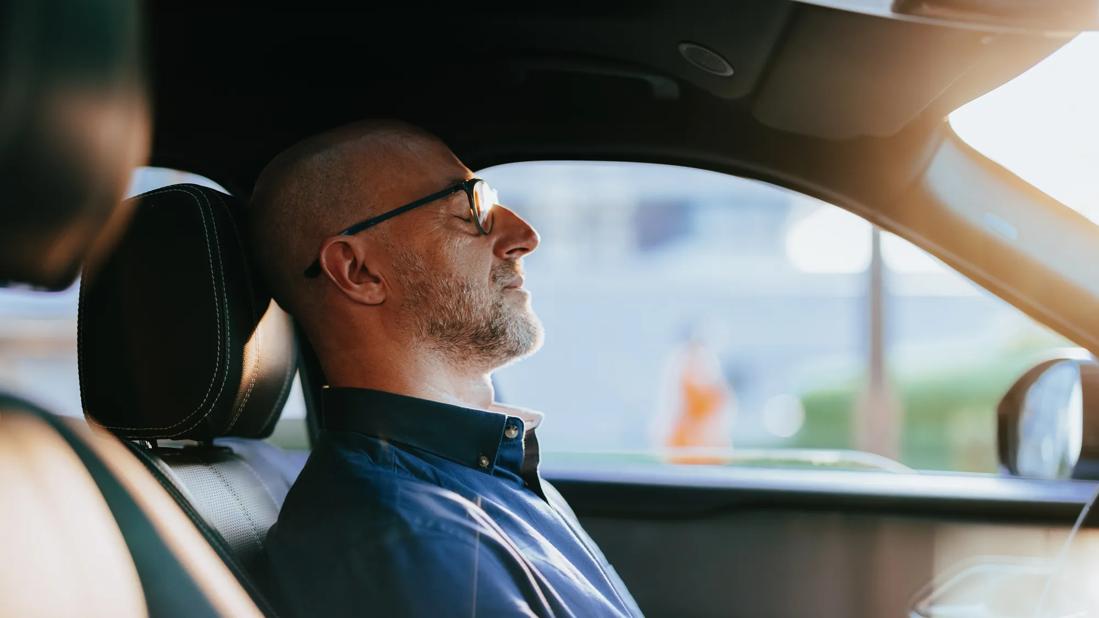
Image content: This image is available to view online.
View image online (https://assets.clevelandclinic.org/transform/390c25ac-a889-4275-9266-a954820eeb2b/DrivingAnxiety-2166802769)
Person sitting in driver’s seat of car, with eyes closed and head back
For some people, driving is an adventure. They roll the windows down, put on some tunes and enjoy the freedom of the open road. For others, it’s a means to an end — nothing more than a way to get from point A to point B.
Advertisement
Cleveland Clinic is a non-profit academic medical center. Advertising on our site helps support our mission. We do not endorse non-Cleveland Clinic products or services. Policy
But if you have driving anxiety, driving can be fraught with nerves. It can even be enough to keep you from getting behind the wheel at all.
Clinical psychologist Dawn Potter, PsyD, explains the reasons for driving anxiety and offers advice for coping.
Driving anxiety describes feelings like intense fear and outsized worries related to driving. It can be situational, like getting nervous about driving on the freeway or over bridges. Or it can be enough to make you not want to drive at all.
Anxiety exists for a reason — in small amounts, it can help keep you safe. So, if you feel a little nervous driving on icy roads or in unfamiliar areas at night, that can be a good thing. A healthy dose of anxiety can keep you from speeding or weaving in and out of traffic.
“Driving inherently comes with some degree of risk. We need to be alert in the vehicle and aware of things that could happen,” Dr. Potter acknowledges. “But there’s a point where an abundance of caution can actually become more dangerous.”
For example, if you’re anxious while driving down the freeway, you may drive much slower than the people around you.
“Other drivers can respond to that by doing unsafe behaviors, like passing you on the right or tailgating you — things that can make you even more anxious,” she adds.
Advertisement
It becomes a vicious cycle: You feel anxious, so you do your best to be extra cautious. When others respond aggressively, it cements your belief that driving is dangerous.
Driving anxiety doesn’t always look like one thing or another. It can have effects like:
There are many reasons people develop a fear of driving, and it can build over time. But you may be more prone to a fear of driving if you have certain conditions or experiences. That can include:
Advertisement
The best way to cope with driving anxiety depends a lot on what’s ... well, driving your anxiety.
“It’s helpful if you can recognize when you tend to have these feelings and why they come up,” Dr. Potter says. “From there, you can work on techniques to help manage your anxiety.”
Here’s what some of those strategies may look like:
Advertisement
Driving anxiety can get in the way of living the life you want. If it’s interfering with things like social interactions, work or school, it may be time to do something about it.
“A mental health professional can help you come up with a plan to systematically overcome anxiety,” Dr. Potter encourages. “They can help you come up with a specific plan for your individual fears.”
Advertisement

Sign up for our Health Essentials emails for expert guidance on nutrition, fitness, sleep, skin care and more.
Learn more about our editorial process.
Advertisement

This simple mindfulness exercise can help interrupt anxious thoughts by bringing your attention to your five senses

Challenging negative thoughts and making a game plan for future events can help

The terms are often used to describe intense feelings of fear and anxiety

Going home isn’t always easy, but there are ways to ease any stress you might feel

This fast-acting anxiety medication should never be taken with alcohol, despite what you may see on The White Lotus

Deep breathing, positive mantras and tackling negative thoughts can help get you out of your head and cool down your anxiety

Focusing on what you can see, feel, touch and hear can help you feel more present in the moment
Performance anxiety and stage fright are outsized stress responses that can creep up when you’re put on the spot

Managing your weight through physical activity may lower your chances of getting this common cancer

It typically starts in October and winds down in early spring, with cases at their highest in the middle of winter
Anxiety disorders, health conditions and past trauma can make driving nerve-wracking — help is available
 Search










