Locations:


Teen cycles are often ‘off-cycle’ for the first few years
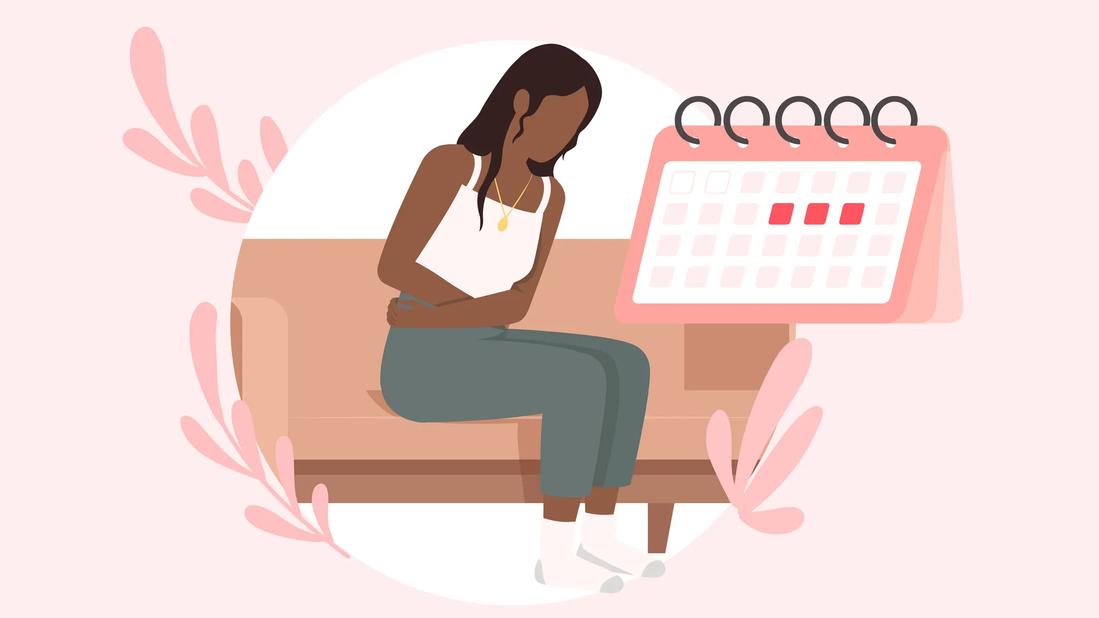
Image content: This image is available to view online.
View image online (https://assets.clevelandclinic.org/transform/69e371c7-590e-45d3-ac2c-8466f36d0c7a/Irregular-Menstruation-1387167411)
Female sitting on couch, holding stomach in pain, with oversized menstrual calendar nearby
There’s a wide range of “normal” when it comes to periods. And for teens’ cycles, there can be even more variation.
Advertisement
Cleveland Clinic is a non-profit academic medical center. Advertising on our site helps support our mission. We do not endorse non-Cleveland Clinic products or services. Policy
Long periods, short periods and periods that come seemingly at random — all are, frustratingly, common.
But how do you know when irregular menstruation in teens is a problem? And how can you cope?
Adolescent medicine specialist Ellen Rome, MD, shares insight and advice.
Periods don’t always follow the calendar, especially when they’re new to you. And irregular periods aren’t necessarily a sign that anything is wrong.
“In the first two years of having periods, only half of teens ovulate regularly,” Dr. Rome says. “That means that half don’t bleed regularly. And five years after starting their period, 1 in 5 teens still doesn’t ovulate monthly.”
So, yes, when your body is new to menstruating, you might have two periods in a month. Or go a couple of months without a period.
It can feel annoying, uncomfortable and downright unfair. But there’s a good chance that with time, it will become more predictable.
Irregular menstruation is often just a sign that your body is working out the kinks. But some health conditions can also be associated with irregular periods, including:
Advertisement
Knowing what’s normal in your family can be a clue.
“Genetics can influence a lot,” Dr. Rome says. “If your biological sister, mother and aunts bled like clockwork from the first time on and you’re not, it’s worth looking into.”
Periods aren’t always convenient, but they shouldn’t significantly derail your day either.
Specifically, Dr. Rome advises talking with a healthcare professional if:
“Basically, anything that worries you is a good reason,” Dr. Rome recommends. “If it’s ringing an alarm bell, it’s worth getting it checked out.”
Not sure where to start? Talk with a pediatrician, adolescent medicine physician or a gynecologist who treats teens.
You can’t always control when your period comes. But you can control how you prepare for it. And there are steps that may help.
Here’s what Dr. Rome recommends:
Bottom line: Irregular periods in teens aren’t a reason to panic, but they’re not something to dismiss either. Talk with a healthcare provider about your concerns. You’re not alone. And help is available.
Advertisement

Sign up for our Health Essentials emails for expert guidance on nutrition, fitness, sleep, skin care and more.
Learn more about our editorial process.
Advertisement

Very light bleeding halfway through your cycle is common and usually harmless

Stress, PMOS, perimenopause or hyperthyroidism may cause a low flow

Heat therapy, light exercise and anti-inflammatory medications can bring relief

The research isn’t clear, but it’s safe to try this essential mineral for relief
From medications and hormone imbalances to STIs, there’s a wide range of reasons Aunt Flo may overstay her welcome

Although it can be alarming, it’s normal to experience blood clots during menstruation
Reasons for spotting can include menopause, uterine fibroids, PMOS and birth control

Options for relief at any age
Researchers say components of a snail’s mucus could help hydrate your skin and minimize future wrinkles
Despite rumors, science hasn’t shown that creatine causes hair loss

Fad diets make big promises with little or no science behind them
 Search