Locations:





Eating too much salt can put extra pressure on your blood vessels and heart
Salt is in almost everything we eat, ranging from canned soups and burgers to chips and bagels. And there’s a chance you routinely sprinkle your meal with table salt to add flavor.
Advertisement
Cleveland Clinic is a non-profit academic medical center. Advertising on our site helps support our mission. We do not endorse non-Cleveland Clinic products or services. Policy
But does salt raise blood pressure?
It can. Too much salt in your diet can put extra pressure on your blood vessels and heart, primarily due to sodium — one of the two building blocks of salt. That’s why the American Heart Association recommends no more than 2,300 milligrams of sodium per day for most adults.
Cardiologist Luke Laffin, MD, explains how salt can increase your blood pressure and offers tips to lower your salt intake.
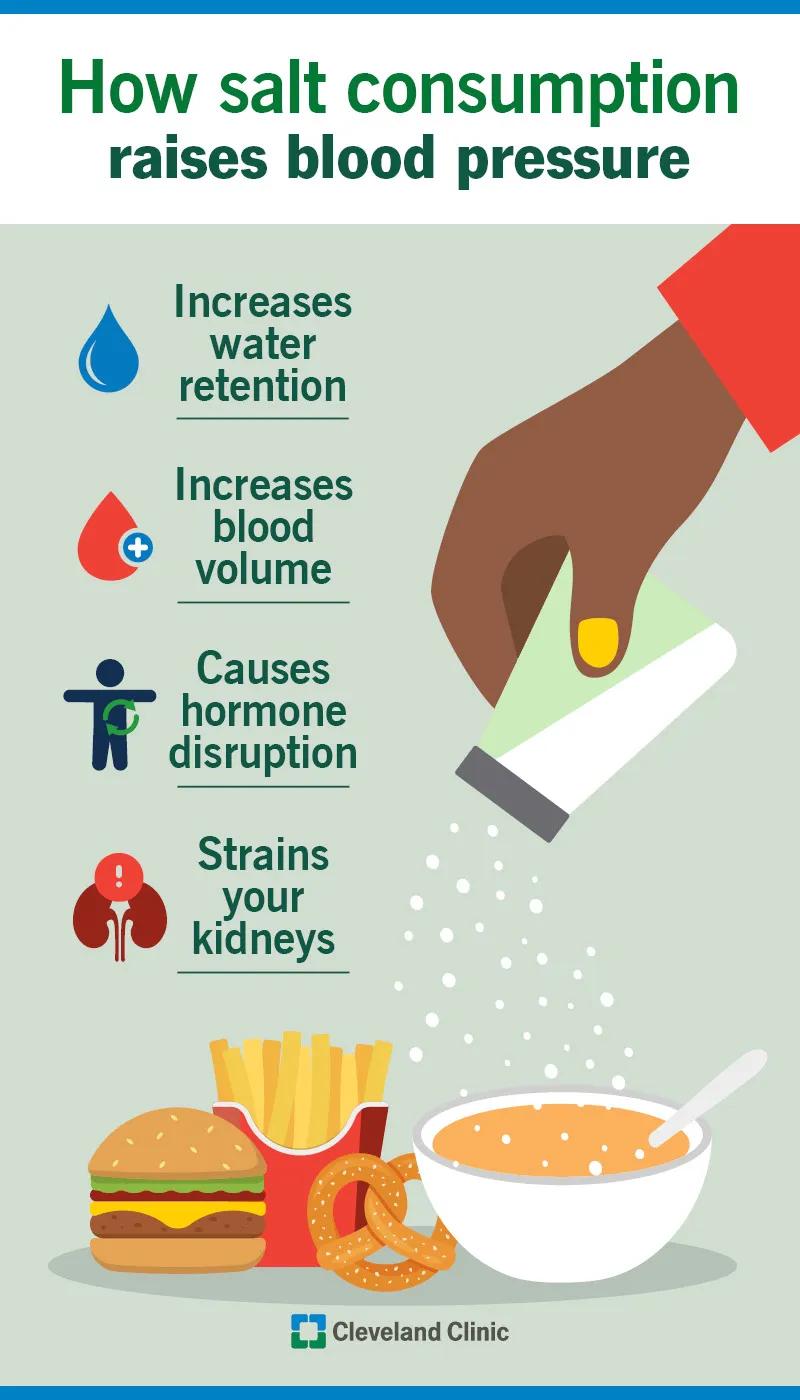
Image content: This image is available to view online.
View image online (https://assets.clevelandclinic.org/transform/f200d294-d6b0-4241-97e2-5d38c665647a/salt-raising-blood-pressure-infographic)
Salt can increase your blood pressure (BP) by causing your body to:
Advertisement
“If you indulge in some pizza or a cheeseburger, don’t be surprised if your blood pressure is higher later that day,” illustrates Dr. Laffin.
Over time, excessive salt intake may lead to high blood pressure (hypertension). This can stiffen and narrow blood vessels, decreasing blood and oxygen flow to key organs.
When that happens, your heart tries harder to pump blood throughout your body, which further increases blood pressure.
“Elevated blood pressure, particularly over a long period of time, puts an incredible strain on the heart,” says Dr. Laffin.
High blood pressure can enlarge your heart’s left pumping chamber and weaken the heart muscle (potentially leading to heart failure). Unchecked hypertension can also damage the artery walls, which can lead to heart disease and, potentially, heart attack or stroke.
But it’s important to know that salt affects people — and their blood pressure — differently.
“Some people can consume sodium with no effect on their blood pressure,” clarifies Dr. Laffin. “But for others who are ‘salt sensitive,’ even a slight increase in sodium intake wreaks havoc on their kidneys’ ability to regulate fluid and increases blood pressure.”
Salt sensitivity is most prevalent among people who are:
So, how can you cut back on how much salt you consume? Dr. Laffin offers the following tips:
Even with salt restriction and lifestyle changes like exercise, your blood pressure may remain elevated, Dr. Laffin notes.
In that case, medications may be needed to lower your blood pressure. Examples of BP-lowering medications include:
Watching your salt intake can help keep your heart healthy. And if you have questions about your blood pressure, don’t hesitate to talk to your healthcare provider.
Advertisement
“Working with your doctor to ensure that your salt intake isn’t raising your blood pressure and impacting your heart and kidneys can have a dramatic impact on your health and longevity,” concludes Dr. Laffin.
Advertisement

Sign up for our Health Essentials emails for expert guidance on nutrition, fitness, sleep, skin care and more.
Learn more about our editorial process.
Advertisement
Too much sodium can cause high blood pressure and increase your risk of heart disease
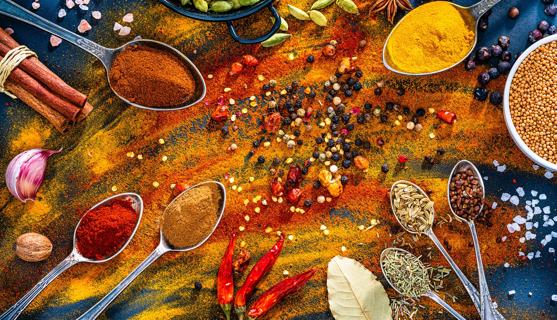
Keep the flavor and cut the sodium by using herbs, garlic, ginger, citrus and more in your cooking
Excess salt and sodium consumption is a worldwide health concern
Pass the (iodized) salt to support your thyroid, disinfect a wound and more

Two key electrolytes — sodium and chloride — are the building blocks of salt
Unproven and unregulated, they aren’t the best choice to boost performance
Too much salt in your diet? Here’s how to cut back
How to make your meals less salty and more flavorful

Managing your weight through physical activity may lower your chances of getting this common cancer

It typically starts in October and winds down in early spring, with cases at their highest in the middle of winter

Anxiety disorders, health conditions and past trauma can make driving nerve-wracking — help is available
 Search










