Locations:





Even when your prognosis is good, breast cancer can have a serious effect on your mental health and emotional well-being
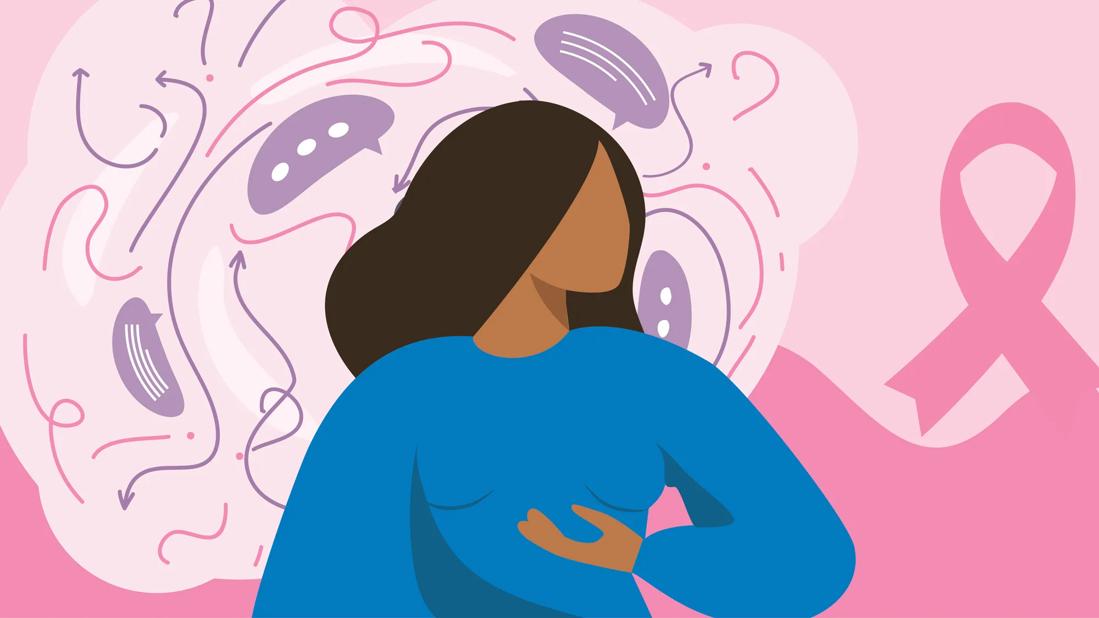
Image content: This image is available to view online.
View image online (https://assets.clevelandclinic.org/transform/98847b53-1021-43fe-a2c8-cde124840bbb/person-breast-cancer-anxiety-1338957778)
Woman wondering about breast cancer
When you hear the words “You have breast cancer,” your world can shift in an instant. Even if your doctor reassures you that it’s early-stage. Even if treatments are considered highly effective. Even if your prognosis is good.
Advertisement
Cleveland Clinic is a non-profit academic medical center. Advertising on our site helps support our mission. We do not endorse non-Cleveland Clinic products or services. Policy
Clinical psychologist Kim Oney, PhD, describes the emotional ripple effects that can follow a diagnosis — and how you can cope.
An early-stage breast cancer diagnosis may come with hopeful statistics, but that doesn’t erase the emotional toll it can bring. The psychological impact can begin before you’re even diagnosed and continue through treatment and into survivorship.
Many people describe the moment of their diagnosis as surreal. You might remember exactly where you were sitting and what you were wearing. The words your doctor said. The exact tone of their voice.
And even if your doctor immediately explains that your cancer is early and highly treatable, your body may still respond as if you’re in crisis. Dr. Oney explains that our brains naturally shift into stimulation mode.
“Our central nervous system is built to protect us against perceived threats,” she says. “When you hear something that sounds dangerous, your sympathetic nervous system reacts quickly.”
You may experience:
These reactions don’t mean that you’re overreacting. They mean that you’re human.
Advertisement
Treatment decisions can feel overwhelming: Surgery choices. Waiting for pathology results. Deciding on radiation or hormone therapy.
“Each step can bring a new wave of uncertainty,” Dr. Oney acknowledges. “Waiting for clarity in diagnosis and treatment planning allows for a lot of natural anxiety. This is often the worst part of the early cancer journey.”
It’s common to find yourself thinking:
Even routine follow-up calls or appointment reminders can trigger a spike of anxiety.
And physical side effects — like fatigue, sleep troubles and brain fog — can make emotional coping harder.
Dr. Oney emphasizes that all of these feelings are normal.
“It’s totally normal to feel anxious and worried when you’re dealing with something that feels so uncertain,” she adds.
When it comes to early breast cancer treatment, surgery is often the first major step. Whether you have a mastectomy or lumpectomy, with or without breast reconstruction, any changes to the way you look can affect how you feel about yourself.
You might grieve the loss of how your body looked before. You might feel self-conscious about scars. You might struggle with intimacy or feel disconnected from your body.
“The complexity of feelings at this time is very normal,” Dr. Oney empathizes. “For example, you can be thankful your cancer was caught early and still feel sadness about everything that has changed.”
Having breast cancer, she reiterates, doesn’t just affect your physical health. It can also affect your very sense of identity. And permitting yourself to acknowledge that change is part of the healing process.
Many people expect that once treatment ends, life will “go back to normal.” Instead, some find that anxiety increases.
“During active treatment, appointments can feel burdensome, but they also offer reassurance,” Dr. Oney explains. “But when treatment stops, you don’t have that same level of frequent contact with your medical team.”
Without regular visits, you may feel untethered. Follow-up scans and check-ups can trigger intense worry. A minor ache or new symptom may spiral into fears of recurrence.
Dr. Oney says it’s common for your brain to misinterpret normal bodily sensations as danger. “Anxiety is a warning system,” she explains. But sometimes, that protective instinct overshoots.
When you’ve experienced early-stage cancer, you may also feel like it’s not your place to consider yourself a cancer survivor — like if you didn’t go through the worst of circumstances, that title doesn’t apply to you.
Advertisement
“Every patient has a different breast cancer experience, and all are legitimate,” Dr. Oney states. “If your life was interrupted by a diagnosis, and you had to navigate the treatment and uncertainty that came afterward, then your experience qualifies.”
It’s common to worry about cancer recurrence (the cancer coming back).
“Even if it was caught early and treatment went smoothly, the memory of diagnosis and uncertainty can linger in your nervous system,” Dr. Oney notes. You might worry:
For some people, these fears gradually fade. For others, they stick around. You may find yourself:
“Breast cancer can be a traumatic experience,” Dr. Oney recognizes. “Medical trauma can sometimes result in post-traumatic stress symptoms that interfere with your ability to meet the normal demands of life.”
If fear of recurrence is interfering with your daily life, a therapist can help.
There’s no single “right” way to cope. But small, intentional steps can make a meaningful difference over time. Dr. Oney recommends giving yourself tools — not pressure.
Advertisement
It’s common to try to push fear or sadness away, especially if other people are telling you to “stay positive.” But ignoring your emotions can actually amplify them.
Instead, try putting simple words to what’s happening:
“Labeling emotions helps your brain process them instead of staying stuck in alarm mode,” Dr. Oney explains. “Just by saying ‘I’m scared’ or ‘I’m grieving,’ you may be able to reduce the intensity of those emotions.”
After a cancer diagnosis, your mind may automatically jump to worst-case scenarios. Any little ache or pain can quickly spiral into worries that the cancer has returned or spread.
When that happens, pause and gently ask yourself:
“This doesn’t mean ignoring symptoms,” Dr. Oney clarifies. “It means separating facts from fear-driven guesswork.”
Cancer can make life feel unpredictable. But simple daily routines can help restore a sense of stability.
“Even simple daily habits, like taking a morning walk or establishing a regular bedtime, can help restore some sense of control,” Dr. Oney points out.
Advertisement
You don’t need a major lifestyle overhaul. But consistency in small things helps signal to your nervous system that you’re safe.
Talking with a psychologist familiar with cancer-related stress can help you learn tools to manage anxiety and fear of recurrence. “You don’t have to wait until things feel unbearable to seek help,” she encourages.
Anxiety and depression can make you want to withdraw — but isolation can make emotional distress even worse. Talking with trusted friends, family members or support groups can normalize your experience and help you feel supported.
“Choose one or two trusted people and let them know how you’re really doing,” Dr. Oney suggests. “Let these people know how to help, and get specific about it. Ask a friend to join you on a walk, invite a friend over for coffee or plan for someone to attend an appointment with you.”
Support groups, whether in-person or virtual, can also help you feel less alone.
It’s natural to want answers. But constant online searching can increase anxiety, especially late at night.
“Consider setting boundaries around how and when you gather information,” Dr. Oney recommends. “For example, write down questions for your doctor instead of immediately searching them online.”
Choose trusted medical sources, rather than scrolling through forums filled with strangers whose situations may or may not reflect your own.
“When you’re coping with a breast cancer diagnosis, feeling anxious or sad sometimes is expected,” Dr. Oney says. “But persistent mental health symptoms may signal something more.”
In a 2005 study, nearly 50% of women diagnosed with early breast cancer experienced depression, anxiety or both in the year that followed. Consider reaching out for professional help if you:
If possible, look for a therapist who’s familiar with cancer-related stress. They can teach you skills to help you manage anxiety, improve sleep, reduce fear of recurrence and more.
“Just because something is common doesn’t mean you have to try to cope with it alone,” Dr. Oney urges.
Early breast cancer may come with encouraging statistics. But that doesn’t lessen its emotional impact.
You can feel grateful and afraid. Hopeful and overwhelmed. Relieved and grieving.
“All of those feelings can be true at once,” Dr. Oney reiterates. “Tending to your mental health is an essential part of recovery. And you don’t have to do it alone.”

Sign up for our Health Essentials emails for expert guidance on nutrition, fitness, sleep, skin care and more.
Learn more about our editorial process.
Advertisement

Managing your weight through physical activity may lower your chances of getting this common cancer
Not all breast lumps signal cancer, and not all breast cancer causes lumps — it’s important to know the facts
If you’re of Ashkenazi Jewish descent, these tests may be a reasonable starting point — but more thorough genetic testing can go much deeper
Breast cancer treatments can lower estrogen, which has a ripple effect on your bones

Breast cancer treatments can lower your fertility, but egg freezing and other preservation measures may be an option
Practical help and honest conversations can make a meaningful difference
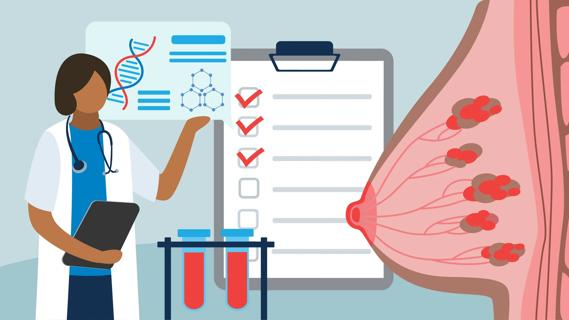
Your path lab report contains detailed information about your tumor — your care team can work with you to turn it into a care plan
Doctors look at stage, biology, genetic risk and more to recommend your treatment plan
Managing your weight through physical activity may lower your chances of getting this common cancer

It typically starts in October and winds down in early spring, with cases at their highest in the middle of winter

Anxiety disorders, health conditions and past trauma can make driving nerve-wracking — help is available
 Search










