Locations:





Calling 911 or emergency services should always be your first step
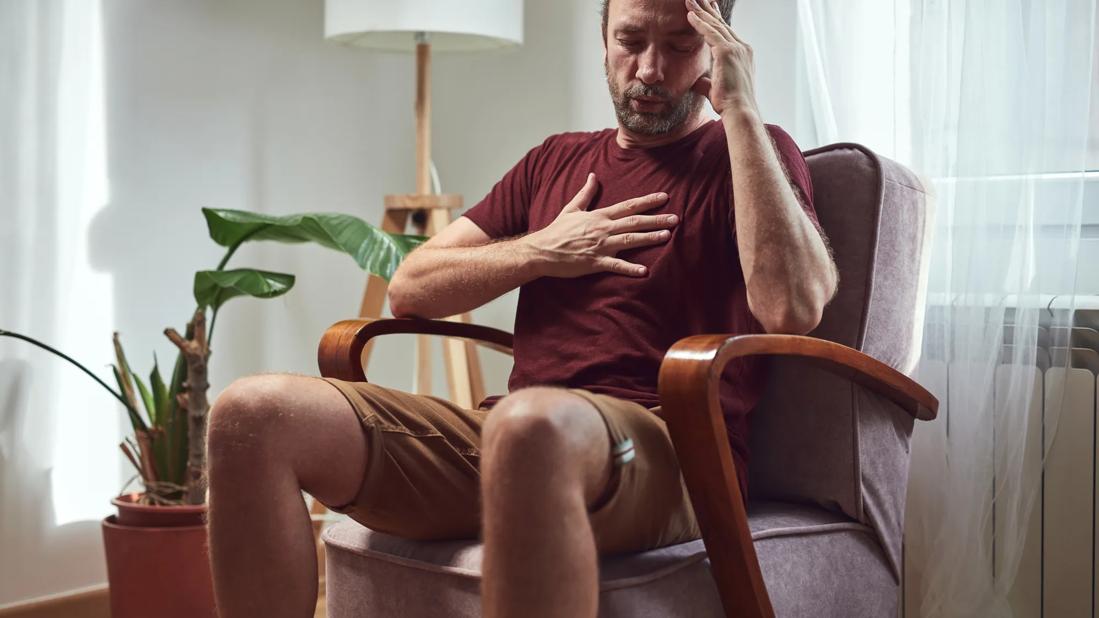
Image content: This image is available to view online.
View image online (https://assets.clevelandclinic.org/transform/6eea37e2-c3f1-47a8-b471-17fd53772717/heart-pain-1411844665)
Man sitting in chair, holding hand to chest, trying to relax and breath
If someone is showing signs of a heart attack, the first and most important step is to call 911 for emergency care.
Advertisement
Cleveland Clinic is a non-profit academic medical center. Advertising on our site helps support our mission. We do not endorse non-Cleveland Clinic products or services. Policy
“If you feel like something’s not right, start by seeking immediate medical care,” says cardiologist Jacqueline Tamis-Holland, MD. “Every minute matters when it comes to limiting damage to the heart.”
But as you wait for first responders to arrive, here’s what you can do if you’re dealing with a potential heart attack.
If you’re with someone who may be having a heart attack, stay with them after calling 911 or emergency services and follow instructions from the emergency dispatcher. If you’re alone and potentially having a heart attack, stay on the phone with your emergency dispatcher.
Until the rescue vehicle sirens reach your location, you may be advised to:
Advertisement
DO NOT get impatient and try to drive yourself to the hospital or ER. A heart attack can take a life-threatening turn on the way to the hospital, which is not when you want to be driving or even riding along.
If things escalate in the ambulance, on the other hand, treatment can begin immediately.
Cardiopulmonary resuscitation, or CPR, is NOT something you do on someone having a heart attack unless their heart attack triggers a cardiac arrest and stops their heart — a much more serious event.
“If someone is unconscious and doesn’t have a pulse, that would be the time for CPR,” clarifies Dr. Tamis-Holland. “Do not do CPR on an awake person who’s talking to you and saying they have chest pain. You could make their situation worse.”
A heart attack and cardiac arrest are different after all. In the simplest of explanations:
An AED, or automated external defibrillator, should only be used on someone in cardiac arrest — NOT for a heart attack. The device delivers an electrical charge to “shock” your heart back into its normal rhythm.
“Again, this is where it’s important to distinguish and understand the difference between a heart attack and cardiac arrest,” states Dr. Tamis-Holland.
Video content: This video is available to watch online.
View video online (https://cdnapisec.kaltura.com/p/2207941/sp/220794100/playManifest/entryId/1_ewhzwnxk/flavorId/1_5f3sgelj/format/url/protocol/https/a.mp4)
The faster you act on a heart attack, the better your chances of preventing long-term heart damage. Don’t wave off signs of a heart attack as nothing to worry about.
Nobody is immune to a heart attack after all, emphasizes Dr. Tamis-Holland. It can happen at any age, too. In fact, research shows an alarming increase in heart attacks for people under the age of 40 in the United States.
“Everybody is at risk,” she continues. “So, if you’re feeling chest pain and discomfort or other symptoms, listen to your body. Don’t ignore your heart telling you something.”
That message from your heart could be delivered by:
Heart attack symptoms typically linger, so if the above issues continue for 10 minutes (or more), it’s important to seek emergency care. Permanent heart damage may occur if blood flow is restricted for 30 minutes.
But know this: While a heart attack is a serious situation, the survival and recovery rates are extremely high with medical treatment that quickly restores blood flow to the affected area of your heart.
Advertisement
“The trick to surviving a heart attack is to get immediate care so we can open the blocked artery and restore blood flow to the heart,” explains Dr. Tamis-Holland. “That’s why it’s so important to be seen as soon as possible.”
Advertisement

Sign up for our Health Essentials emails for expert guidance on nutrition, fitness, sleep, skin care and more.
Learn more about our editorial process.
Advertisement
Strokes affect your brain, while heart attacks affect your heart — both can be life-threatening emergencies
There’s no way to stop a heart attack on your own — call for help immediately

Healthy choices involving food, exercise and more can help reduce your risk
Recognizing subtle signs, like unusual fatigue or fleeting episodes of chest pain, could be key to survival

Mild heart attacks may cause less damage, but they can still lead to serious complications and require medical attention

Congenital heart disease, genetic conditions and unhealthy lifestyle habits can put teens at higher risk for heart attack

Absolutely! In fact, in many ways, exercise is key to recovery
To help determine what you’re experiencing, focus on how the pain feels, the location of the pain, when it started and how long it lasts

Managing your weight through physical activity may lower your chances of getting this common cancer

It typically starts in October and winds down in early spring, with cases at their highest in the middle of winter

Anxiety disorders, health conditions and past trauma can make driving nerve-wracking — help is available
 Search










