Locations:





 Search
Most adults need seven to nine hours, while young children need around 10 to 14

Image content: This image is available to view online.
View image online (https://assets.clevelandclinic.org/transform/128c4435-b4aa-4633-ad52-904705045444/waking-up-sleep-499784755)
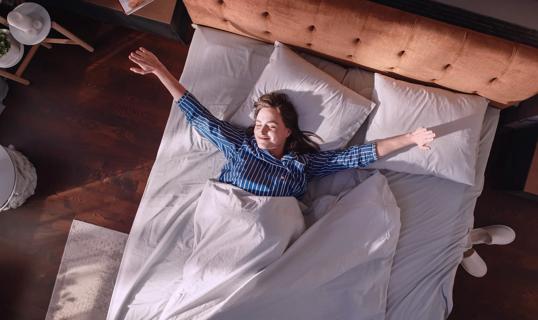
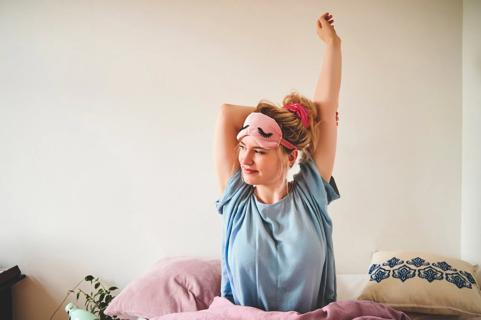
Smiling woman stretching, sitting in bed
“Oh man, I think I only got four hours last night.” This may be a phrase you’ve uttered after a night of tossing and turning. But getting fewer than seven hours of sleep isn’t something you should wear as a badge of honor or brush off.
Advertisement
Cleveland Clinic is a non-profit academic medical center. Advertising on our site helps support our mission. We do not endorse non-Cleveland Clinic products or services. Policy
We get it. It can be challenging to get just the right amount of sleep. According to the National Sleep Foundation, about half of all people in the U.S. feel sleepy from three to seven days a week. Even losing out on one or two hours of sleep can impact your mood and overall health.
“Two of the main factors that determine the amount of sleep you need are genetics and age,” says psychologist and sleep disorder specialist Michelle Drerup, PsyD, DBSM. Here’s how to find out if you’re hitting your target or if your bedtime needs a makeover.
As we age, the amount of sleep our bodies need changes.
“By adulthood, most healthy people need seven to nine hours,” says Dr. Drerup. The younger you are, the more sleep you need.
Here’s how much kids and adults need, on average:
| Age | Hours of sleep needed |
|---|---|
| 0-3 months | 14-17 |
| 4-12 months | 12-16 |
| 1-5 years | 10-14 |
| 3-5 years | 10-13 |
| 6-12 years | 9-12 |
| 13-18 years | 8-10 |
| 19-64 years | 7-9 |
| 65+ years | 7-9 |
| Age | |
| 0-3 months | |
| Hours of sleep needed | |
| 14-17 | |
| 4-12 months | |
| Hours of sleep needed | |
| 12-16 | |
| 1-5 years | |
| Hours of sleep needed | |
| 10-14 | |
| 3-5 years | |
| Hours of sleep needed | |
| 10-13 | |
| 6-12 years | |
| Hours of sleep needed | |
| 9-12 | |
| 13-18 years | |
| Hours of sleep needed | |
| 8-10 | |
| 19-64 years | |
| Hours of sleep needed | |
| 7-9 | |
| 65+ years | |
| Hours of sleep needed | |
| 7-9 |
Of course, it can sometimes vary. “There are people who are short sleepers, but it’s pretty rare,” Dr. Drerup notes. “We’re not very good judges of how sleep loss affects us, and most people who think they do well on little sleep would probably function better with a little more.”
One common misconception is that older adults don’t need as much sleep as they did in middle age. “Older adults have different sleep patterns. They tend to sleep more lightly and may wake earlier in the morning,” she adds. “But you still need the same amount of sleep over 24 hours, so if you sleep less at night, you might need a nap during the day.”
Advertisement
When you sleep, your body rests, recovers and rebuilds itself through four stages. An average sleep cycle lasts about 90 minutes. Ideally, you need four to six cycles of sleep every 24 hours to feel fresh and rested.
Each cycle contains four stages: three stages of non-rapid eye movement (NREM) sleep and one rapid eye movement (REM) stage. The time spent in each stage varies the longer you’re asleep and you might bounce between stages each night.
Here’s what happens in each stage and the rough length of each one:
This stage of light sleeping lasts five to 10 minutes. During this stage, you’re “dozing off,” as your body and brain activity begin to slow down. If you’re woken during this stage, you may feel as if you haven’t fallen asleep at all.
During this stage of light sleeping, your muscles begin to relax as your body temperature drops and your heart rate and breathing slow down. Your eye movement stops and your brain waves slow. Stage 2 NREM sleep accounts for about 45%-50% of your time asleep (the most of any stage).
During this stage, your body is repairing itself by regrowing tissue, strengthening your immune system and building bones and muscle. During earlier sleep cycles, this stage could last 20 to 40 minutes and gets increasingly shorter as your sleep cycles progress. As you get older, you spend less time in this stage and more time in lighter stages of sleep.
The majority of our dreams occur during this stage of sleep. Your brain activity greatly increases and can even match or exceed your usual brain activity when you’re awake. Your muscles enter a state of temporary paralysis, except for your eyes (which move rapidly during this stage) and the muscles you need to breathe.
Usually, the first period of REM sleep occurs around 90 minutes into your sleep cycle and lasts about 10 minutes. Each of your later REM stages gets longer the more hours you remain asleep.
Sleep benefits your physical, mental and emotional health. When you’re sleeping, your body rests and recovers — even on a cellular level. But getting enough sleep is a big part of this.
Some major benefits of getting the right amount of sleep include:
On the flip side, shortchanging your sleep long term can lead to an increased risk of a variety of issues, including:
Advertisement
If you’re not sure if you’re sleep-deprived or not, there are a few ways to find out:
Getting enough sleep should absolutely be a priority for your health. It’s not a waste of time, by any means, to make sure you’re getting the recommended amount of deep slumber each night. And losing precious time in bed can lead to larger health problems.
Advertisement
If you feel like you’re having trouble getting enough sleep (or you’re still feeling sleepy after getting enough sleep), talk to a healthcare provider. They can help you get to the root of the issue.
Advertisement

Sign up for our Health Essentials emails for expert guidance on nutrition, fitness, sleep, skin care and more.
Learn more about our editorial process.
Advertisement

These brief episodes of sleep last only seconds, but they can have serious consequences when they happen at the wrong time
Your chronotype reflects when your body naturally wants to sleep and wake — and why your energy peaks when it does
Putting on socks at night can help regulate your core body temperature to bring on ZZZs
The term refers to how long it takes you to fall asleep, which can be a key factor in overall sleep quality
A little ‘prep work’ before going to bed can help you get the quality sleep your body needs
Sleep masks can help you create total darkness so you can sleep better

To avoid sleep deprivation and shift work sleep disorder, try adopting habits that minimize light exposure and prioritize daytime sleep
Sleep disorders, mental health conditions and other health concerns can all affect the quality of your sleep

Gradually increasing your training, choosing proper footwear and listening to your body can help keep shin pain from sidelining your workouts

Self-stimulating behaviors can help you self-regulate or cope with intense emotions
At-home remedies may help calm symptoms and make it easier to relax at bedtime











