Locations:





Home remedies are unlikely to cure your contagious foot fungus — and they might even make it worse
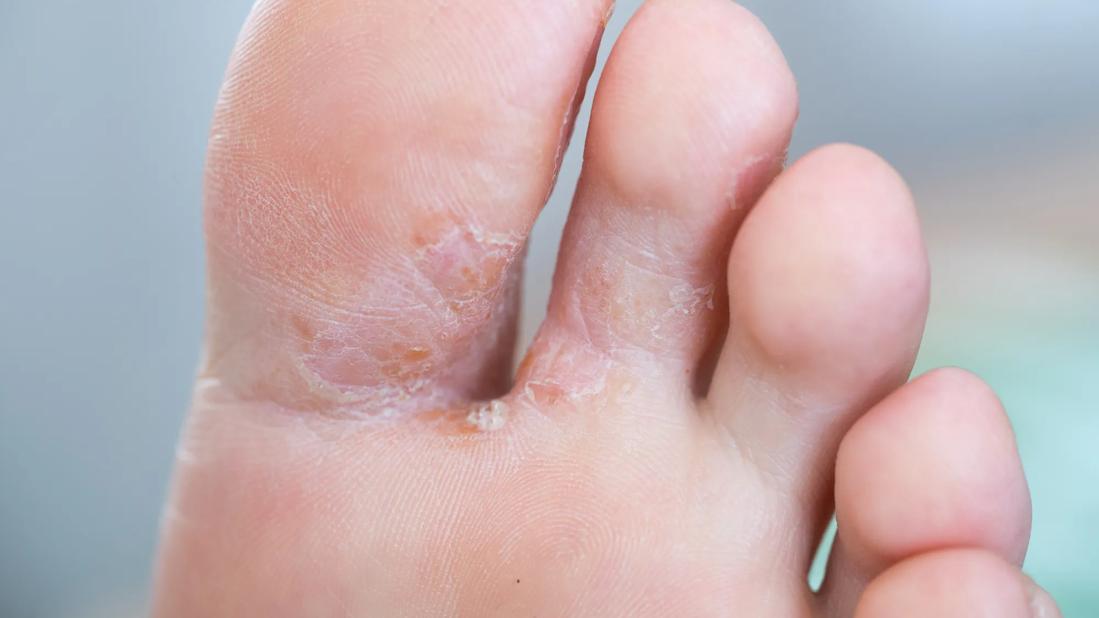
Image content: This image is available to view online.
View image online (https://assets.clevelandclinic.org/transform/ce24b07d-2bb5-40e6-9287-a2f07074ee7e/athletes-foot-1005603290)
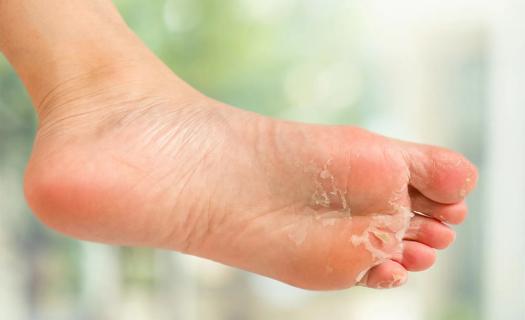
Toes with athlete's foot fungus, tinea pedis, on them
It’s a shocking statistic: At any given time, 15% to 25% of the world population has an active case of athlete’s foot (also known as tinea pedis). Some people walk around for years with this fungal infection without even realizing it!
Advertisement
Cleveland Clinic is a non-profit academic medical center. Advertising on our site helps support our mission. We do not endorse non-Cleveland Clinic products or services. Policy
If you think you’re part of that percentage, it’s important to do something about it. And that “something” should be a trip to your local pharmacy — not a home remedy. Home remedies aren’t well studied and are unlikely to work. In some cases, they even make the problem worse.
Family medicine physician Josue Limage, MD, explains.
There’s little evidence supporting the use of home remedies for athlete’s foot. And every day you aren’t treating your foot fungus with prescription medication is a day you risk it spreading or becoming infected. That risk goes up still higher if you have certain health conditions (more on that in a bit).
Here’s something else to keep in mind: Athlete’s foot is contagious. So, it’s not just your health you’re risking. The best and safest thing you can do is see a healthcare provider — or at least get some over-the-counter medication.
Foot fungus won’t just go away on its own. And using home remedies instead of proven treatments may cause more harm than good. Here are some common “quick fixes” that don’t belong on your feet:
Advertisement
The best way to treat athlete’s foot — or any other fungal infection, for that matter — is to let a professional do it.
Still tempted to go the home remedy route? That’s your choice to make. But it’s important to know the risks.
“Using home remedies for athlete’s foot instead of treating it with medication can be risky,” Dr. Limage emphasizes. “The fungus can spread to other parts of the body, like your hands or your groin. The damaged skin might also become infected, which can be extremely serious.”
Here’s another thing to keep in mind: There are several medical conditions that make our feet more vulnerable to infection and other serious complications, like:
If you have any of these diagnoses, opting for a home remedy is a dangerous move.
“If you think you have foot or toenail fungus, see your primary care provider or your dermatologist,” Dr. Limage advises. “There are several tests they can perform to identify exactly what’s going on — and the best treatment.”
If going to the doctor isn’t in the cards for you right now, Dr. Limage says that your next best option is an over-the-counter antifungal cream. That will help keep your athlete’s foot from spreading and keep your skin intact, reducing the risk of an infection.
“I like the creams better than the sprays or powders because the creams will completely coat the foot and treat the entire skin surface,” he explains. “Make sure that you get in between the toes because that’s really where we see the most problems — in those warm, moist areas.”
Continue using the cream for a week or so after the infection’s cleared to make sure it’s really gone and prevent reinfection. Foot fungus can be stubborn, even when you treat it with prescription medication. And it can spread. So, don’t let it get too far ahead of you.
Advertisement

Sign up for our Health Essentials emails for expert guidance on nutrition, fitness, sleep, skin care and more.
Learn more about our editorial process.
Advertisement
Not always — but wearing flip-flops too often for too long can leave your feet, legs and back feeling the strain
Cramps can creep up if your shoes are too tight, you’re dehydrated or you have poor circulation

Rethink your exercise routine to maintain — and maybe even gain — fitness during recovery
How to safely stay active if you have flat feet

Home remedies to reduce pain and water retention
While it may be no big deal, underlying conditions that need treatment can also cause cold extremities
Try seated and standing exercises to help lengthen and strengthen the muscles that support your plantar fascia
Causes can include dry skin, eczema, psoriasis, sunburn and fungal infections

Managing your weight through physical activity may lower your chances of getting this common cancer
It typically starts in October and winds down in early spring, with cases at their highest in the middle of winter

Anxiety disorders, health conditions and past trauma can make driving nerve-wracking — help is available
 Search










