Locations:





 Search
Early attention to skin wounds can help minimize their appearance later
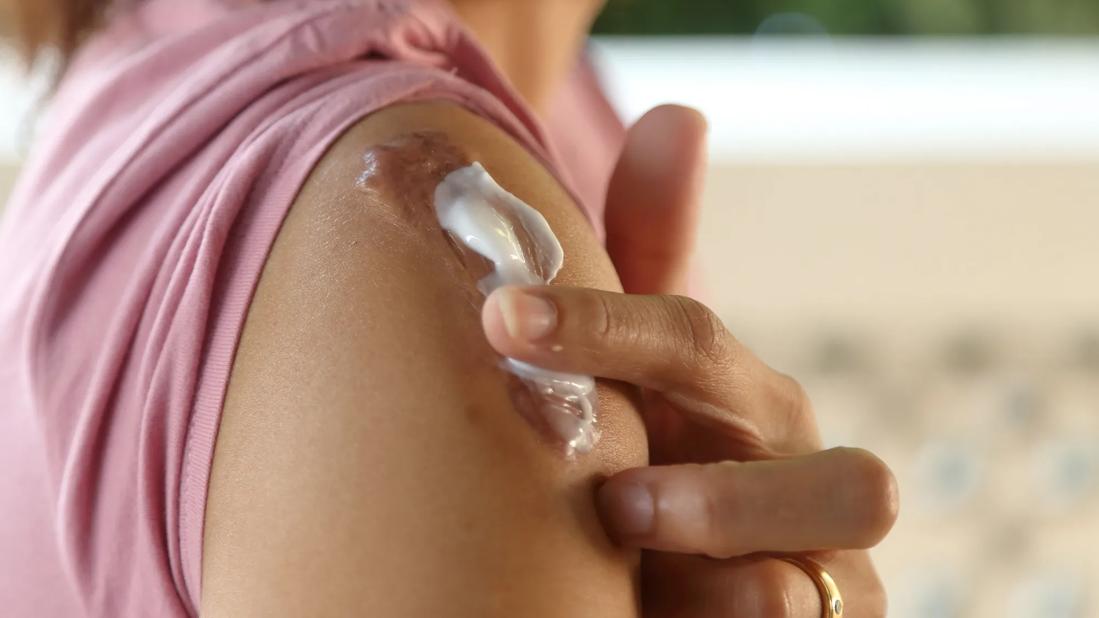
Image content: This image is available to view online.
View image online (https://assets.clevelandclinic.org/transform/402425d5-3763-43f4-ae7f-a90ec932ecee/moisturize-scar-1339286147)
Person applying moisturizer on scar on shoulder
From playground wipeouts and kitchen mishaps to surgical incisions, we all have scars with stories behind them. But most of us would rather our wounds heal without reminders of what went wrong.
Advertisement
Cleveland Clinic is a non-profit academic medical center. Advertising on our site helps support our mission. We do not endorse non-Cleveland Clinic products or services. Policy
So, what can you do to prevent or limit scarring when trouble leaves its mark? We asked dermatologist Shilpi Khetarpal, MD, for some advice.
Scars come from tearing a deeper layer of skin called the dermis. Your body produces collagen fibers to repair the area. While the fix is effective, it doesn’t quite restore your skin to its original state.
“It’s always going to be different from the original skin you had in that area,” says Dr. Khetarpal.
But the amount of difference can vary depending on what you do after the injury. Minimizing inflammation and guarding against additional trauma can lessen your chances of scarring.
Dr. Khetarpal shares these six tips to help your skin recover.
Cleaning a wound with mild soap and water washes out bacteria. How does that relate to scarring? Well, bacteria can trigger inflammation that disrupts your skin’s normal healing process, resulting in thicker and more noticeable scars.
Infection can also delay wound closure and increase the risk of raised scars known as hypertrophic scars or keloids.
You might’ve grown up learning to keep cuts dry and open, but the opposite is actually true. Moisture prevents a wound from drying out and forming a hard scab that can lead to increased tissue damage and scarring.
Advertisement
Covering the wound protects it from infection and irritants that can cause inflammation and more pronounced scars.
“Keeping a wound moist and covered is best to prevent a scar,” confirms Dr. Khetarpal.
Something as simple as petroleum jelly (for moisture) and a basic bandage works well. Silicone gel sheets may also be effective, particularly in the early stages of recovery.
Antibacterial ointments can add moisture while also guarding against infection. A word of caution, though: Watch for allergic reactions, which can inflame the wound and increase the chance of scarring.
Scabs serve as your skin’s natural bandages, so keep your fingers off them and let them do their thing. “Picking will only prolong your injury and keep it from healing,” emphasizes Dr. Khetarpal.
Think you’re picking at scabs in your sleep? Purchase a pair of cotton gloves to wear to bed.
Keeping a wound stable allows skin tissue on either side of the opening to better align and heal. “Every time the scar moves, it has a chance to tear and widen, which can lead to a thicker scar,” explains Dr. Khetarpal.
Bottom line? Do your best not to overexert the injured area.
Sunlight is notoriously rough on your skin — and that’s especially true if you have a potential scar forming.
The sun’s ultraviolet (UV) rays can darken scars by increasing pigmentation to make them more noticeable. UV rays can also damage collagen and slow the healing process to create more pronounced scars.
“Protecting scars from the sun’s damaging rays by using sunscreen or covering them can help minimize their appearance and promote better healing,” says Dr. Khetarpal.
Massaging a moisturizing cream into a scarred area can have an enormous impact on healing, says Dr. Khetarpal. Any simple over-the-counter moisturizer will do, too. You don’t need special “scar” creams.
“Within the first year after an injury, you can see benefits from doing a gentle massage on your scar for a few minutes a day,” she adds. “It helps break up any scar tissue for ones that are getting thick.”
If you have a wound that looks like it could leave a lasting mark, talk to a doctor as soon as possible about your options. Timing is important to minimize a scar’s appearance as your skin goes through its year-long remodeling process.
“If you’re concerned about scarring — like after a surgery or a major trauma — the earlier we intervene, the better,” advises Dr. Khetarpal. “We can actually influence how a scar heals versus waiting for it to heal and then trying to address it.”
Advertisement
You can explore scar-minimization options as early as a week after an injury (or once stitches are removed). In-office procedures such as lasering and microneedling — which trigger a controlled wound response — can reduce the appearance of scars by more than 50%.
“We can’t erase a scar,” notes Dr. Khetarpal, “but we can improve it.”
Advertisement

Sign up for our Health Essentials emails for expert guidance on nutrition, fitness, sleep, skin care and more.
Learn more about our editorial process.
Advertisement
Skip the butters, creams and oils and instead try tretinoin — or just let time work its magic

Stress, tight clothing and even sunlight can cause this itchy condition

Treatment is tailored to you and may involve medications like antihistamines, corticosteroids or antidepressants

OTC medications, loose clothing, sun protection and other health habits can help manage flares

Educate your child about body image, expectations and skin care first

The size, shape and color of moles may offer clues that point to melanoma
Help your ink heal by keeping it moisturized and protected from the sun

Coffee skin care products contain anti-aging and brightening benefits — but there may be better options

This ‘harm reduction’ approach to sobriety involves subbing one substance for another — a method that isn’t backed by research
Educate your child about body image, expectations and skin care first

A true chlorine allergy is extremely rare — it’s far more likely that you have a damaged skin barrier











