Locations:





Protect your teeth and ease strain with a nightguard, better sleep habits and other changes
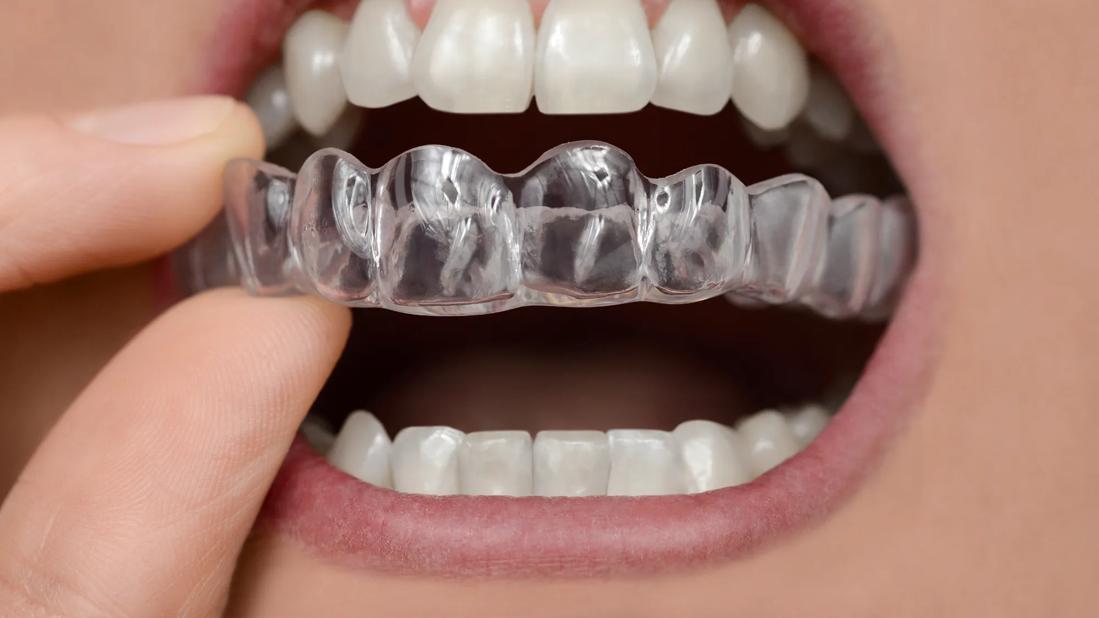
Image content: This image is available to view online.
View image online (https://assets.clevelandclinic.org/transform/e598320f-889b-485a-b095-7d03d0bf76ba/mouth-guard-teeth-night-2149437119)
Person inserting a mouthguard
Do you wake up with jaw pain? Headaches? A subtle jab from your significant other about how you transform into a human coffee grinder in your sleep?
Advertisement
Cleveland Clinic is a non-profit academic medical center. Advertising on our site helps support our mission. We do not endorse non-Cleveland Clinic products or services. Policy
Sounds like a case of bruxism, and it’s very common. It’s estimated that up to 10% of adults and 40% of kids clench or grind their teeth in their sleep.
But all that nighttime activity can have troubling effects on your sleep, your teeth, your jaw and more.
We asked dentist Karyn Kahn, DDS, for her best advice to help break the habit, or at least soften the impact.
Bruxism is a reflex that’s controlled by your central nervous system. You can’t just will it to stop. But there are practical ways to protect your teeth and minimize the damage.
But before you try to fix it on your own, it’s best to talk with a dentist.
Grinding your teeth can lead to:
“It’s very important to consult with a dentist or a TMD specialist,” Dr. Kahn advises. “A clinical exam is the most important step to figure out what’s causing your symptoms and how to treat them.”
Here’s what your provider may recommend to limit the damage, lower your pain and potentially dial down the intensity of nighttime grinding.
If you grind your teeth regularly, sleeping in a custom-fitted mouthguard is often the first line of defense.
Advertisement
“A properly made guard protects your teeth from wear and fracture and helps reduce muscle tension and joint strain,” Dr. Kahn explains.
She recommends skipping the boil-and-bite versions from the drugstore and instead considering a hard resin stabilization guard from a dental health provider. Why? Dentist-made guards can be adjusted to match your natural bite, which helps your teeth, muscles and joints all stay in better alignment when worn at night.
Chronic stress is one of the biggest contributors to bruxism. Unresolved stress during your day can keep your central nervous system on edge at night. That means more clenching, grinding and gnashing (not to mention a whole host of other effects stress can have on your body).
Even a small improvement in daytime tension can encourage less clenching at night. Try:
Anything that helps you manage stress in a healthy way may help reduce clenching and grinding at night.
“Caffeine, alcohol and nicotine can all affect the central nervous system,” Dr. Kahn says.
Cutting back — or avoiding these substances altogether — can help your nervous system to reset. So, when you go to sleep, it takes a break, too.
If stress and anxiety are fueling your bruxism, how you wind down at night matters. Dr. Kahn recommends creating a calming bedtime routine:
These simple changes can help calm your nervous system and promote better sleep with less clenching and grinding.
Sleeping on your stomach can push your jaw out of alignment and put more pressure on your TMJ. Sleeping on your back or side is better. The goal is for your head to stay in line with your spine.
And be aware of a common habit that can make things worse: Resting your head on your hand or fist while you sleep can put extra force on your jaw.
A supportive pillow can help, too. Your pillow should help keep your head and neck in alignment so your jaw and neck muscles are less contracted.
Physical therapy won’t stop bruxism, but it can help relieve the muscle tension and pain that come with it. It can be especially effective if you’re also dealing with TMJ issues.
“Your jaw and neck muscles work together,” Dr. Kahn explains. “Physical therapy can address both.”
In some cases, Botox® injections can help relax your masseter and temporalis muscles, both of which are involved in grinding.
Advertisement
Again, it’s not going to stop you from bruxing altogether, but it may help keep your muscles from working overtime and lower your pain.
Botox for bruxism isn’t U.S. Food and Drug Administration (FDA)-approved, so it may not be covered by insurance. And only consider Botox if it’s recommended and administered by a knowledgeable healthcare professional. Counterfeit Botox and injections administered by unqualified individuals can be dangerous.
If you're dealing with daily jaw pain, headaches or chipped teeth, seek help. A dentist can help you figure out what’s causing your symptoms and recommend the best strategies to help protect you from the pain and strain of bruxism.
“There’s no single cause, and there’s no one-size-fits-all solution,” Dr. Kahn reiterates. “A provider needs to look at the whole picture to figure out what’s contributing to your pain and help you develop ways to manage it.”
Advertisement

Sign up for our Health Essentials emails for expert guidance on nutrition, fitness, sleep, skin care and more.
Learn more about our editorial process.
Advertisement
Mewing is a tongue exercise that some believe can straighten teeth and sharpen jawlines (Spoiler alert: It can’t)
At-home products like whitening toothpaste, rinses and strips can bring bright results
Keep the nail file out of your mouth and leave any tooth shaving up to your dentist

Help and encourage them to brush and floss regularly, limit sugary foods and get routine dental checkups
Act quickly to increase the chances that your tooth can be saved

You can do damage to fillings, crowns and even your teeth themselves
No, oil pulling and vitamin D won’t fill or fix a cavity

Cavities, grinding or even a sinus infection could be behind your tooth pain

Managing your weight through physical activity may lower your chances of getting this common cancer

It typically starts in October and winds down in early spring, with cases at their highest in the middle of winter

Anxiety disorders, health conditions and past trauma can make driving nerve-wracking — help is available
 Search