Locations:





Why seeing a neurologist can save you time and money
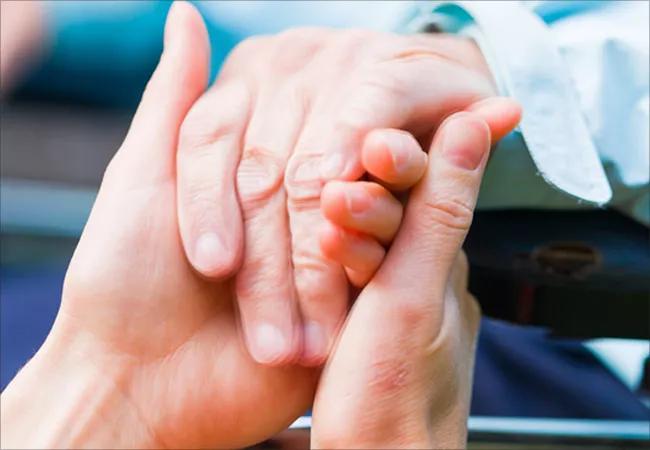
Image content: This image is available to view online.
View image online (https://assets.clevelandclinic.org/transform/dff34bd4-b57f-4001-a63e-272e36dfe697/tremorHand-686228658-650x450_jpg)
Trembling hand resting in another person's hands for comfort.
You may first notice a tremor in your hands. Or that you walk a bit unsteadily. Or that you feel stiff and slow.
Advertisement
Cleveland Clinic is a non-profit academic medical center. Advertising on our site helps support our mission. We do not endorse non-Cleveland Clinic products or services. Policy
If you check the internet, you may conclude you have Parkinson’s disease. Even your family doctor might diagnosis this chronic and progressive neurological disease.
But other conditions closely mimic Parkinson’s. And because they are treated differently, it’s important to get a correct diagnosis as soon as possible.
“For a couple of conditions, the prognosis, treatment and advice are totally different from Parkinson’s,” says Hubert Fernandez, MD, Director of the Center for Neurological Restoration.
A neurologist is your best bet for sorting out whether you have Parkinson’s or something else, he says. Treatment decisions made early in the illness can affect your long-term success in managing the condition.
Dr. Fernandez describes two main Parkinson’s mimics:
Essential tremor. Also known as benign essential tremor or familial tremor, this movement disorder causes brief, uncontrollable shaking.
It most often affects your hands, but can also affect your head and neck, larynx (voice box) and other areas. In rare cases, it affects your lower body as well.
But one clue can help distinguish essential tremor from Parkinson’s.
“This is not an absolute rule, but if shaking occurs at rest, it often is Parkinson’s. And if shaking occurs in action, such as when you’re writing or eating, it is essential tremor,” Dr. Fernandez says.
Advertisement
About half of those with essential tremor have a family history of the condition.
Unlike Parkinson’s, essential tremor is generally not perceived as a progressive disorder, and, if mild, may not require treatment.
Doctors can prescribe medications to reduce shaking, but they are not the same drugs used to treat Parkinson’s, he says.
Drug-induced Parkinson’s. Along with shaking, this condition may cause many symptoms similar to Parkinson’s disease, including stiffness, slow movement, a decrease in facial expression and a change in speech.
As the name suggests, taking certain drugs, most commonly antipsychotics and mood stabilizers, can trigger this condition. How long it takes to develop can vary greatly, depending on which drug you’re taking, how long you take it and the dosage.
Your doctor likely will treat drug-induced Parkinson’s by adjusting your medication.
“We always work with a psychiatrist as we taper off and try new drugs,” Dr. Fernandez says. “We want to do what is best for the body and what is best for the brain.”
Other neurological disorders fall into a category known as Parkinson’s plus syndromes, which can cause similar symptoms. Doctors typically treat these syndromes the same way they treat Parkinson’s disease.
“The medications we prescribe are about the same as what we use for Parkinson’s, but we expect different outcomes,” he says.
“However, a diagnosis of essential tremor or drug-induced Parkinson’s would call for a totally different treatment.”
Because the symptoms of Parkinson’s vary and often overlap other conditions, it is misdiagnosed up to 30% of the time, Dr. Fernandez says. Misdiagnosis is even more common in the early stages.
Patients who don’t know where to turn may make appointments with a rheumatologist, or an orthopaedic or heart specialist, and undergo MRIs, EMGs and other expensive tests.
But only a neurologist can distinguish Parkinson’s from essential tremor, drug-induced Parkinson’s and Parkinson’s plus syndromes, he says.
“If patients come to us with typical signs of Parkinson’s, we don’t need to order expensive tests,” he says.
Instead, neurologists base their diagnosis on a detailed patient exam and medical history, along with other information from the patient, family members or caregivers.
“That’s all stirred into the pot,” he says. “Sometimes we can diagnose Parkinson’s with one visit. Other times, several follow-up visits are necessary.”
Advertisement

Sign up for our Health Essentials emails for expert guidance on nutrition, fitness, sleep, skin care and more.
Learn more about our editorial process.
Advertisement

Start with taking your medication, then move on to gentle movements and simple tasks

Aerobic, strength training, flexibility and balance exercises are all important parts of maintaining movement

Speech therapy can help you communicate clearly, swallow safely and maintain important skills

Eat fruits, vegetables, legumes, whole grains, lean proteins and healthy fats to help manage symptoms of this degenerative brain condition

Poor air quality, pesticides and chemicals — along with genetic factors — can increase your risk of this brain condition

While depression and anxiety are common and can worsen other symptoms, focusing on your emotional health can help
Yes, there is a connection between this injury and disease, and not just for athletes who play high-impact sports
What to watch for and when to seek help

Hormonal changes, a slower metabolism and muscle loss can make weight gain more common around menopause — healthy habits can help you manage it

Life-threatening complications include sepsis, stroke, pneumonia and more

Fruity-smelling breath can happen when your body burns fat for energy, and in some cases, can signal a medical emergency
 Search










