Locations:





 Search
The upper lip discoloration is caused by factors like sun exposure, hormones and medications
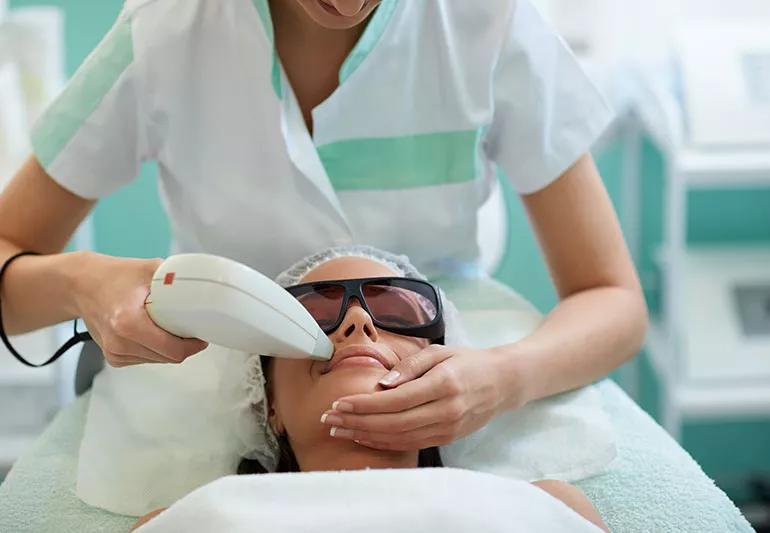
Image content: This image is available to view online.
View image online (https://assets.clevelandclinic.org/transform/e367bf87-beb1-4cd9-9c9d-b74e87fe32b3/SunMustache-587544640-770x533-1_jpg)
A person receiving a medical skin treatment above their lips at a doctor's office
If you’re an outdoor enthusiast, you know how important it is to protect your skin while you’re in the sun.
Advertisement
Cleveland Clinic is a non-profit academic medical center. Advertising on our site helps support our mission. We do not endorse non-Cleveland Clinic products or services. Policy
Not doing so can put you at risk for sunburn, photodamage, premature aging or even skin cancer. Another thing that can happen: You could end up with a melasma mustache, also known as a sun mustache.
While a melasma mustache isn’t on the same level as skin cancer or sunburn, it can still be bothersome and unsightly, leaving you wondering, Why is my upper lip dark?
Dermatologist Asfa Akhtar, DO, shares the science behind melasma mustaches and gives a few tips for how you can prevent them.
Before we go into the formation of melasma mustaches, we have to take a step back and talk about their main component — melanin.
“Melasma mustaches are the result of excess melanin. Melanin is the substance that gives our eyes and skin their color,” says Dr. Akhtar. “Melanocytes, which are pigment cells that reside in the innermost layer of the epidermis, are responsible for producing melanin. When excess melanin is produced, it causes the skin to darken. The result of this is known as hyperpigmentation.”
When you have upper lip discoloration after sun exposure, you’re left with a melasma mustache.
“Melasma is also known as chloasma or mask of pregnancy,” notes Dr. Akhtar. “But you don’t have to be pregnant to get melasma.”
Advertisement
She adds that melasma is a commonly acquired pigmentary disorder and is essentially hyperpigmentation. Melasma can appear as symmetrical or asymmetrical darkened patches on exposed areas of your body, especially your face.
So, what are some melasma mustache causes?
“A melasma mustache is caused by a complex interplay of sun exposure, family history, hormonal influences, thyroid disease and medications that lead to molecular signaling within the skin,” Dr. Akhtar explains. “The result is excessive melanin in the inner and outer layers of the skin.”
She also points out that skin care products can contribute to the development of melasma mustaches.
Excessive or improper use of ingredients like hydroquinone, retinol and alpha hydroxy acids can make melasma mustaches worse. If you’re using these products, she recommends talking to a board-certified dermatologist to determine a best course of action.
Melasma mustaches are often hard to treat because they can recur (come back) frequently. Dr. Akhtar suggests a multimodal approach to successfully treat this skin condition.
Treatment regimens usually include sun avoidance and/or sun protection, one or more topical agents, oral medications and light or laser therapy.
But she notes that some treatment options for melasma mustaches can actually make them worse.
“Treatment options for melasma can include whitening agents, chemical peels, lasers and light therapy,” Dr. Akhtar says. “However, some of these solutions can cause adverse effects like spots of hyperpigmentation, acne, irritation, as well as rebound hyperpigmentation — a form of the condition that is much harder to treat.”
Lastly, tranexamic acid is a promising treatment option for people whose skin doesn’t respond to the standard measures above. This off-label medication consists of amino acids and may be administered as a pill or cream, depending on your preference.
If you’re looking for ways to get rid of melasma, again, talk to a board-certified dermatologist first. They can help prevent additional complications and find treatment options that line up with your cosmetic goals.
Limiting sun exposure and wearing sunscreen, especially on your face, can help prevent melasma mustaches.
“When choosing a sunscreen, I recommend one that has physical blockers such as zinc oxide and titanium dioxide,” Dr. Akhtar says. “You can even find physical sunscreens that contain iron oxide as an inactive ingredient making them tinted so they won’t leave a white film on the skin. Physical sunscreen sits on top of the skin, so it physically shields it and deflects harmful UV rays.”
Advertisement
But she adds that just applying sunscreen isn’t enough protection. You’ll need to add a stylish, yet helpful, accessory as well.
“Hats with a wide brim that are rated for sun protection should be used. Look for an ultraviolet protection factor (UPF) of 50 plus.”
Advertisement

Sign up for our Health Essentials emails for expert guidance on nutrition, fitness, sleep, skin care and more.
Learn more about our editorial process.
Advertisement
You can turn down the redness and soothe the irritation with natural remedies like green tea, raw honey and aloe vera
Over-the-counter products and other remedies for keratosis pilaris
Learn about 5 common triggers, treatments & risk factors

Sunlight helps your body produce vitamin D, but be mindful of your sun exposure

Avoid at-home options and trust medical professionals to cut, burn or freeze off skin tags
Sweat less by using antiperspirant, wearing breathable fabrics and talking to a provider about medical options

Stress, tight clothing and even sunlight can cause this itchy condition

Treatment is tailored to you and may involve medications like antihistamines, corticosteroids or antidepressants

This ‘harm reduction’ approach to sobriety involves subbing one substance for another — a method that isn’t backed by research
Educate your child about body image, expectations and skin care first

A true chlorine allergy is extremely rare — it’s far more likely that you have a damaged skin barrier











