Locations:





Choosing certain kinds of fish to eat can help keep the mercury to a minimum in your meal
Fish has a long-standing reputation as one of the healthiest foods you can put on your plate. So, when talk turns to mercury levels in seafood, it can seem like your nutritious meal has a dark side.
Advertisement
Cleveland Clinic is a non-profit academic medical center. Advertising on our site helps support our mission. We do not endorse non-Cleveland Clinic products or services. Policy
But that doesn’t mean fish should be off your menu. Instead, focus on choosing certain kinds of fish to eat to limit potential exposure to the toxic metal, says registered dietitian Julia Zumpano, RD, LD.
Here’s what to know before your next bite.
Mercury is a naturally occurring metal that can build up in your body over time if you take in too much of it. At high enough levels, it can lead to mercury poisoning and harm your brain, nervous system or other organs.
For most healthy adults, occasional exposure isn’t likely to cause problems, says Zumpano. Your body can eliminate small amounts on its own.
But consuming large amounts over time can lead to issues. Mercury is especially concerning if you’re pregnant, trying to become pregnant or breastfeeding, as well as for babies and young children.
“Mercury is something where you want to minimize your exposure,” explains Zumpano. “If you’re eating more than your body can handle, it can start to be a problem.”
Mercury enters lakes, rivers and oceans through natural processes and pollution. Once it’s in the water, it moves up the food chain. Small fish absorb tiny amounts of mercury. Larger fish eat many smaller fish, causing the metal to accumulate in their bodies over time.
Advertisement
That’s why bigger, longer-living fish tend to have the highest mercury levels. “Size matters here,” notes Zumpano.
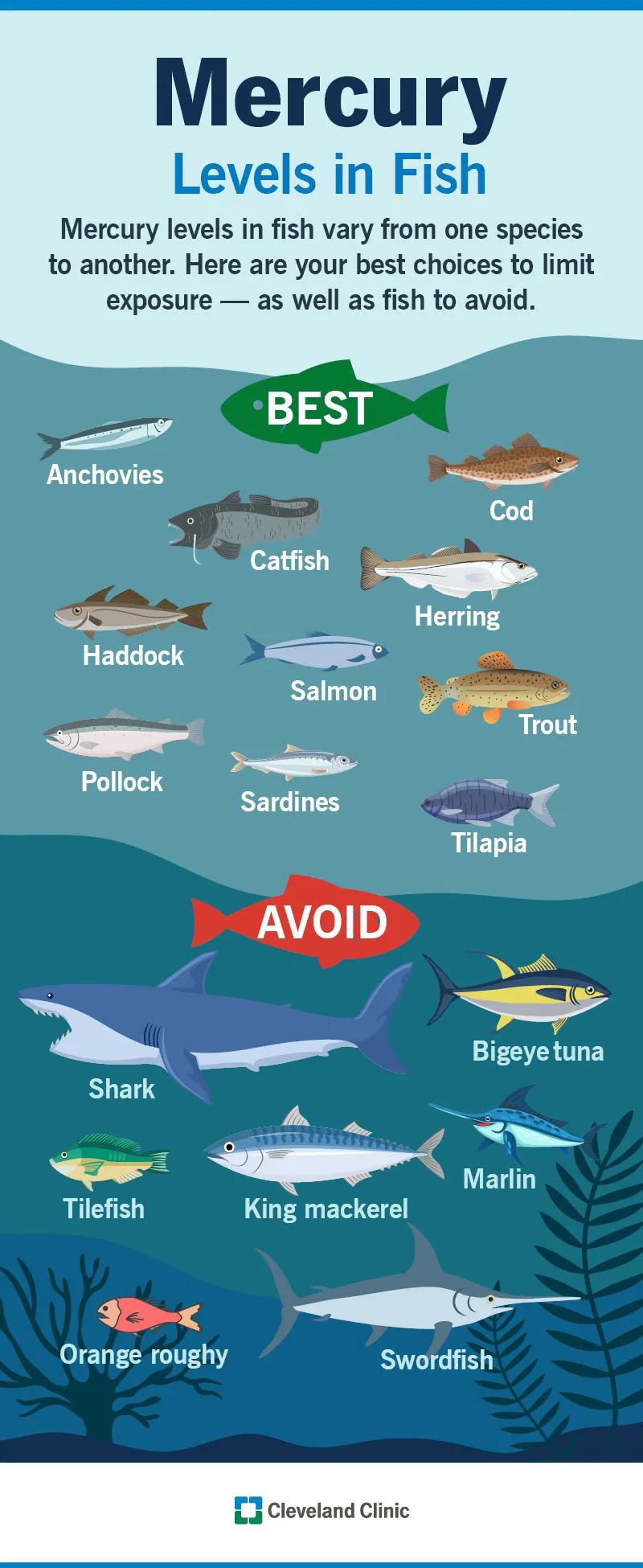
Image content: This image is available to view online.
View image online (https://assets.clevelandclinic.org/transform/472550f0-55f3-44e3-a71b-d281d93d5110/mercury-in-fish-infographic)
Mercury levels vary widely from one species of fish to another. The U.S. Food and Drug Administration (FDA) classifies seven types of fish as “choices to avoid” given their high mercury levels, says Zumpano. The list includes:
To limit mercury, opt for fish designated as “best choices” by the FDA. The list includes:
An assortment of fish is also listed as “good choices.” These fish have more mercury than the “best” category, but don’t need to be avoided. This group includes:
You can find the FDA’s full list here.
You don’t have to give up seafood because of mercury, but you should limit how much you eat per week, states Zumpano. She suggests following these recommendations.
In addition, try to mix up the types of fish you eat. Instead of eating the same fish every week, rotate among different “best” or “good” varieties. That helps limit repeated exposure to mercury from any one source.
Bottom line? Fish can be eaten safely. It’s just a matter of making educated choices.
“Fish is one of the most nutrient-dense foods out there, offering high-quality protein along with heart-healthy omega-3 fatty acids,” emphasizes Zumpano. “So, eat fish — but try to stay away from the ones that might have more mercury.”
Advertisement

Sign up for our Health Essentials emails for expert guidance on nutrition, fitness, sleep, skin care and more.
Learn more about our editorial process.
Advertisement

Leftovers can be kept in the fridge for three to four days or frozen for three to four months
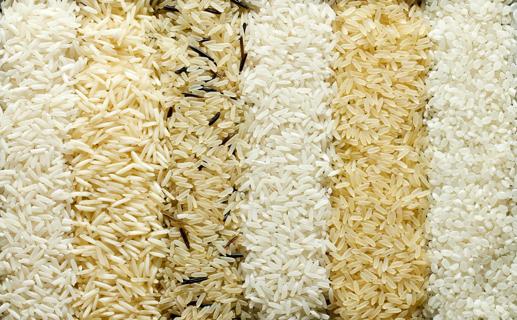
Ultimately, rice is safe to eat, but the type, where it’s grown and how you cook it may be factors to consider

Washing your hands, thoroughly cleaning kitchen tools and preparing meat separately can reduce the risk of foodborne illness

Rinsing raw chicken raises the risk of spreading harmful bacteria and causing foodborne illness

Extended outages lasting more than four hours can make food in your fridge unsafe to eat
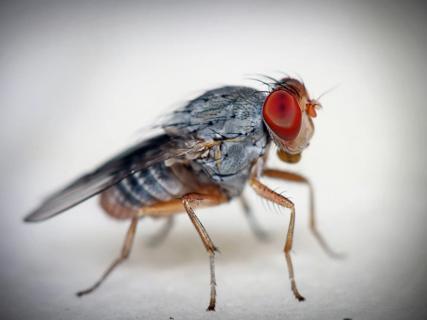
Make your home a no-fly zone by cleaning your drains, refrigerating your produce and DIYing a fruit fly trap

Microwaves use non-ionizing radiation and haven’t been shown to cause cancer — follow food safety practices and use microwave-safe containers

Once perishable food hits the table, it’s typically good for about two hours

Managing your weight through physical activity may lower your chances of getting this common cancer

It typically starts in October and winds down in early spring, with cases at their highest in the middle of winter

Anxiety disorders, health conditions and past trauma can make driving nerve-wracking — help is available
 Search










