Locations:





 Search
This lengthy and portentous name doesn’t necessarily mean a scary diagnosis
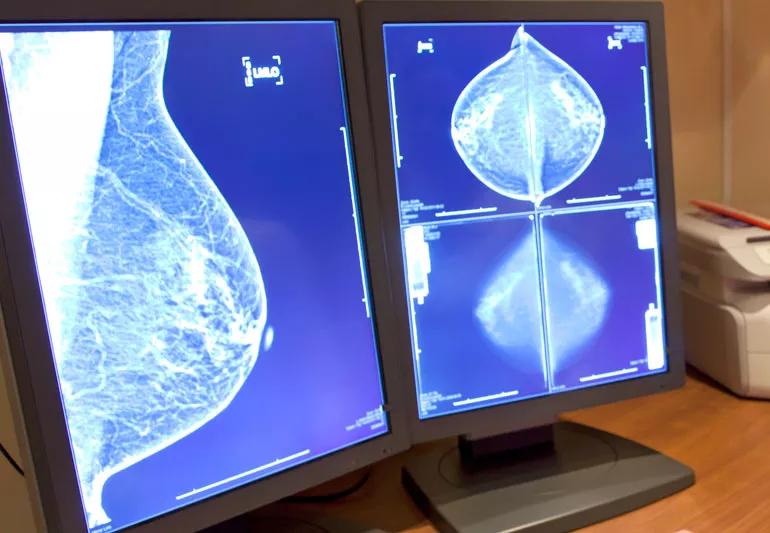
“We saw something on your mammogram and want to check it out.” The words every woman dreads to hear.
Advertisement
Cleveland Clinic is a non-profit academic medical center. Advertising on our site helps support our mission. We do not endorse non-Cleveland Clinic products or services. Policy
But what if your physician tells you that your mammogram and follow-up breast biopsy shows pseudoangiomatous stromal hyperplasia? What exactly does that mean?
“Pseudoangiomatous stromal hyperplasia is a long name that shouldn’t scare you,” says breast pathologist, Erinn Downs-Kelly, DO. “It’s a benign, non-cancerous finding.” Pseudoangiomatous stromal hyperplasia, referred to as “PASH” is a non-cancerous (benign) breast lesion that may (or may not) cause breast enlargement. PASH can sometimes be felt as a lump during a monthly self-breast exam, but is most often found during a routine mammogram. It can also be found during a biopsy for an unrelated breast condition.
PASH is not cancer and it doesn’t increase your risk for developing breast cancer in the future. One study found that some women with PASH actually had a lower risk of developing breast cancer than those without PASH.
Generally speaking, a lesion is a term used to describe anything abnormal. So when a radiologist sees a lesion on a mammogram, he or she flags it for follow-up, explains Downs-Kelly.
PASH is thought to have a hormonal link that can influence the size of the lesion. Most lesions that come to a doctor’s attention are between 1 and 3 centimeters. Most females with PASH are premenopausal or perimenopausal, meaning they are between the ages of 13 and 55. Other than being hormone related, the cause of PASH is unknown.
Advertisement
“When it comes to treatment, it’s really a personalized approach,” says Downs-Kelly. “It’s more tailored to the individual and the imaging findings.”
Sometimes no treatment is needed, other than follow-up imaging through your yearly mammogram. Some women may prefer to have the mass removed, especially if it’s causing symptoms ― or just making them worry. Recently, the American Society of Breast Surgeons has suggested that women without symptoms and with appropriate imaging results don’t need to have the mass removed.
The bottom line? PASH is found in up to 23% of breast specimens. And importantly, it’s not cancer.
If you find anything that feels different during your monthly self-breast exam, schedule an appointment with your doctor.
Advertisement
Learn more about our editorial process.
Advertisement

Dry skin, eczema, allergies and infections can all cause itchiness — but in some cases, itching may signify a more serious health condition
A breast abscess feels like a hot, hard and painful lump — seek support from a healthcare provider at first signs of an infection
Bacterial infections, breast abscesses and clogged milk ducts can all cause inflammation in your breasts
Any mass or abnormal area that you feel for more than three days should be checked out
It's a common complaint, but don't just ignore it
How to separate serious concerns from minor pain

If you have large breasts, wearing a bra may provide support that alleviates back pain — but if you’re comfortable without a bra, go for it!
They have no proven benefits but can cause infection, damage your pelvic floor muscles and get stuck inside you

Start having sex about 72 hours before ovulation, then at least every other day during your fertile window

Attachment theory suggests that your earliest relationships shape connections throughout your life

It isn’t a recognized mental health disorder, but research shows that problematic social media use can negatively affect your mental health, self-esteem and sleep











