Locations:





 Search
Olive oil is high in heart-friendly unsaturated fats
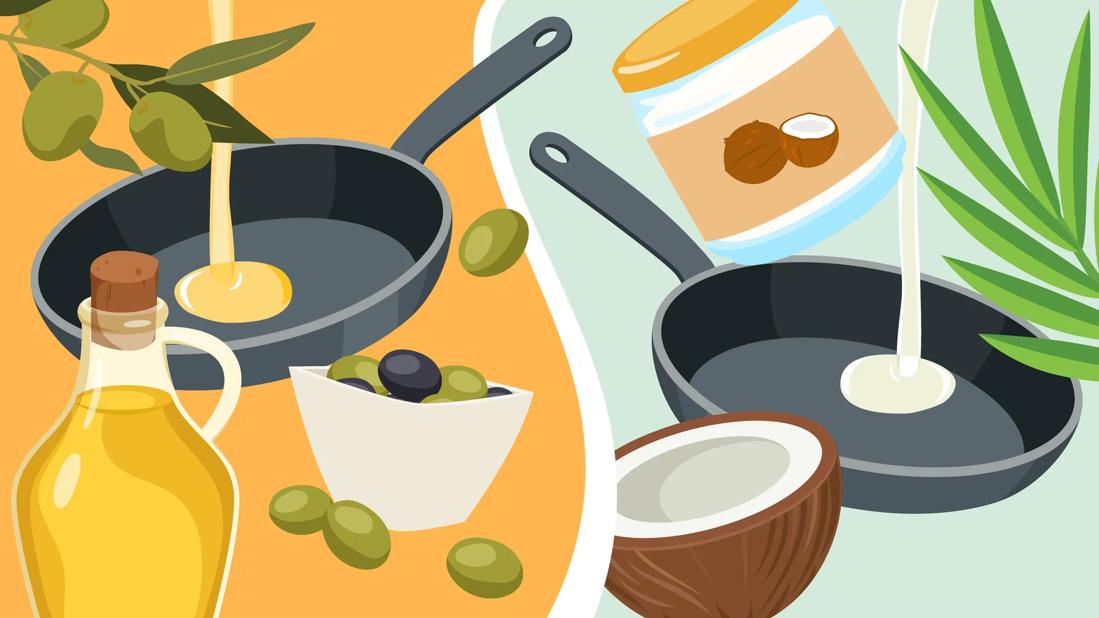
You might have read that coconut oil and olive oil are both good for your heart health. But if you put them in a head-to-head matchup — coconut oil vs. olive oil — which would win?
Advertisement
Cleveland Clinic is a non-profit academic medical center. Advertising on our site helps support our mission. We do not endorse non-Cleveland Clinic products or services. Policy
Registered dietitian Kate Patton, MEd, RD, CSSD, LD, sets the record straight.
A quick look at their nutrition labels might make you think coconut oil and olive oil are very similar. But when it comes to fat content, quality is just as important as quantity. And the main difference between coconut oil and olive oil lies in the quality of the fats they contain.
Coconut oil and olive oil have about the same number of calories (120 per tablespoon) and grams of fat (14 per tablespoon) — but olive oil is a far richer source of unsaturated fat. Patton says that’s the main reason olive oil is a staple of the heart-healthy Mediterranean diet and coconut oil isn’t.
| Olive oil | Coconut oil | |
|---|---|---|
| Calories per tablespoon | ~120 | ~120 |
| Grams of fat | 14 | 14 |
| Fatty acid composition | Mostly unsaturated (healthy) fat | Mostly saturated (unhealthy) fat |
| Heart health benefits | Protects against inflammation, decreases “bad” LDL cholesterol, reduces blood pressure | Rich source of medium-chain triglycerides (MCTs) |
| Heart health drawbacks | Calorie-dense | Calorie-dense, raises “bad” LDL cholesterol |
| Calories per tablespoon | ||
| Olive oil | ||
| ~120 | ||
| Coconut oil | ||
| ~120 | ||
| Grams of fat | ||
| Olive oil | ||
| 14 | ||
| Coconut oil | ||
| 14 | ||
| Fatty acid composition | ||
| Olive oil | ||
| Mostly unsaturated (healthy) fat | ||
| Coconut oil | ||
| Mostly saturated (unhealthy) fat | ||
| Heart health benefits | ||
| Olive oil | ||
| Protects against inflammation, decreases “bad” LDL cholesterol, reduces blood pressure | ||
| Coconut oil | ||
| Rich source of medium-chain triglycerides (MCTs) | ||
| Heart health drawbacks | ||
| Olive oil | ||
| Calorie-dense | ||
| Coconut oil | ||
| Calorie-dense, raises “bad” LDL cholesterol |
Unsaturated fats are often called “healthy fats.” Research suggests focusing on them instead of saturated fats may:
Saturated fats don’t have nearly as many benefits. Research suggests they may contribute to an increase in your “bad” LDL cholesterol, increasing your overall risk of heart disease.
“We don’t recommend completely avoiding saturated fats, but we do recommend swapping them out for unsaturated fats when you can,” Patton states.
Advertisement
Aim to keep your fat intake between 25% and 35% of your daily calories — and always prioritize heart-healthy unsaturated fats.
Experts recommend that saturated fat account for no more than 10% of your daily calories. That number is even lower (down to 6%) if you have high cholesterol (hyperlipidemia).
So, if you eat 2,000 calories a day, and your cholesterol is in a healthy range, you should limit your daily saturated fat intake to 22 grams. If your cholesterol is high, try to eat 13 grams or fewer of saturated fat per day instead.
Whatever oil you use, it’s important to remember that you aren’t doing so in a vacuum. Many of the other foods you eat have fat in them, too. So, it’s important to limit the total amount of oil you’re taking in.
“Even healthier oils like olive oil can add up quickly,” Patton notes.
Olive oil is the better choice for most day-to-day cooking, but there are a few details and exceptions worth knowing about before you hit the grocery store. In particular, while extra virgin or unrefined oils are generally less processed and more beneficial for your heart, they aren’t ideal for cooking.
When you’re choosing between oils, it’s important to balance flavor with cooking needs and nutritional benefits. Making an informed choice doesn’t just help you keep your heart healthy — it makes your meals tastier, too.
Is coconut oil better than olive oil? We can’t make that decision for you, but we can break down what’s what. As far as nutritional profiles go, olive oil:
Patton’s verdict is this: In an olive oil vs. coconut oil showdown, olive oil wins every time.
Advertisement

Sign up for our Health Essentials emails for expert guidance on nutrition, fitness, sleep, skin care and more.
Learn more about our editorial process.
Advertisement

Your body needs some saturated fat, but too much can contribute to health issues
It’s best to avoid regular use of the ‘beef drippings,’ given high levels of saturated fat

These common cooking oils are often found in ultra-processed foods and can contribute to inflammation in your body
This healthy oil is packed with nutrients and great for roasting, drizzling and even baking

The popular cooking method can help you cut down on fat without losing the flavor and texture of your favorite foods
EVOO is full of antioxidants and has anti-inflammatory properties, both of which aid your body in multiple ways

The oil some TikTokkers swear by can actually cause stomach and eye issues, as well as skin rashes
This powerhouse oil fights fine lines and wrinkles, soothes sunburn and a whole lot more

Even small moments of time outdoors can help reduce stress, boost mood and restore a sense of calm

A correct prescription helps your eyes see clearly — but as natural changes occur, you may need stronger or different eyeglasses

Both are medical emergencies, but they are very distinct events with different causes











