Locations:





Babies are born with very little of this vitamin, which plays a critical role in the blood clotting process
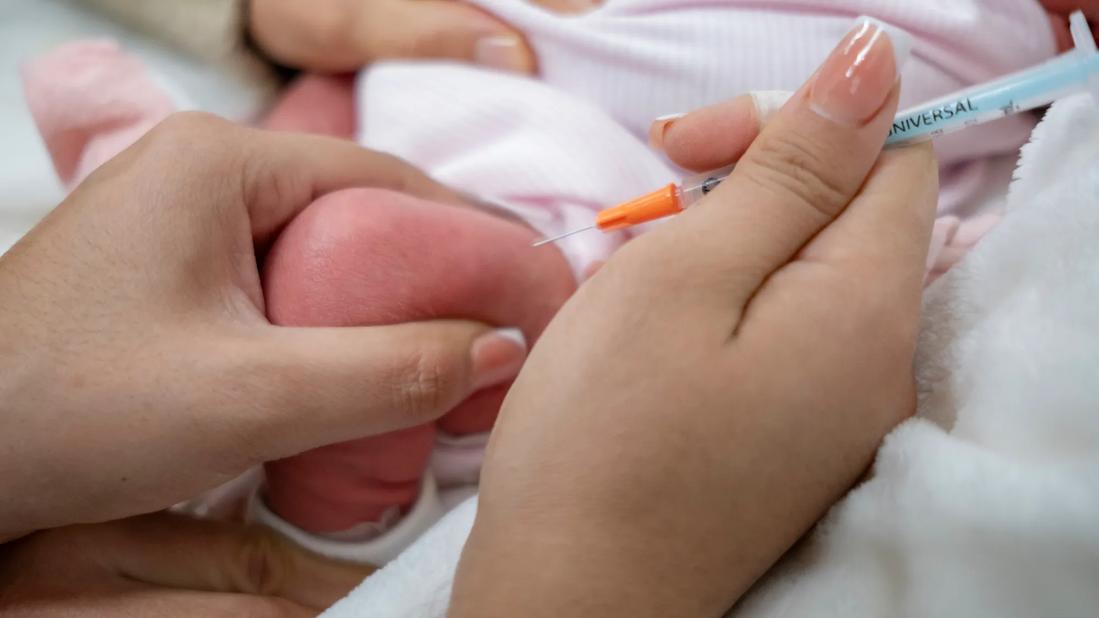
Image content: This image is available to view online.
View image online (https://assets.clevelandclinic.org/transform/c25eefff-fed4-4366-8e58-2d77a4262358/newborn-vitamin-k-shot-2226556998)
Healthcare provider giving newborn a shot in their tiny thigh
Soon after your baby makes their grand debut into the world, hospital staff will give them a vitamin K injection. It’s a small step with a big payoff — one that provides important protection for their little body as they adjust to life on the outside.
Advertisement
Cleveland Clinic is a non-profit academic medical center. Advertising on our site helps support our mission. We do not endorse non-Cleveland Clinic products or services. Policy
But you might wonder why this shot is offered so soon after birth and whether your newborn really needs it.
Pediatric hepatologist Kadakkal Radhakrishnan, MD, says understanding how vitamin K works can help you feel more confident about this early decision.
The vitamin K shot helps prevent a serious bleeding condition called vitamin K deficiency bleeding (VKDB), which newborns are vulnerable to in their first days and weeks of life. This condition is sometimes also called hemorrhagic disease of the newborn (HDN).
Vitamin K is responsible for making four of the 13 proteins that allow for proper blood clotting, the process that helps our bodies stop bleeding. Most adults get enough vitamin K through the foods they eat. But for a few reasons, newborns have very low levels of vitamin K:
“Because babies are born with very little vitamin K in their system, their blood doesn’t clot as well as it should,” Dr. Radhakrishnan explains. “That’s why vitamin K is offered right after birth.”
Advertisement
Without a vitamin K shot, babies are at a much higher risk of developing VKDB, a condition where bleeding occurs easily and is difficult to stop. It’s treatable if it’s caught early — but if not, it can cause permanent brain damage and even be life-threatening.
You might be thinking, If it’s treatable, then I’ll just wait and see. We can deal with it if it happens, right? But … not necessarily. VKDB can cause what’s called late-onset bleeding, which isn’t evident until weeks or even months into your baby’s life.
“Late bleeding often involves internal bleeding, including bleeding in the brain, and may not be obvious right away,” Dr. Radhakrishnan cautions. “It’s especially dangerous because parents may not see any signs until serious damage has already occurred.”
The most common side effects of the shot are mild and minor:
You might’ve heard that the vitamin K shot is associated with a risk of developing childhood cancer — specifically, leukemia. But as the American Academy of Pediatrics reassures, study after study has shown that isn’t the case.
You can set aside worries about allergic reactions to the shot, too. According to the U.S. Centers for Disease Control and Prevention (CDC), there’s only ever been one reported instance of such a reaction to the vitamin K shot.
“Most babies tolerate the vitamin K injection well,” Dr. Radhakrishnan states. “When side effects do happen, they’re usually very mild and short-lived, and they go away on their own.”
And, on the other hand, the risks associated with not getting the vitamin K injection are much higher. Without it, as many as 1 in 60 babies may develop VKDB. Among babies who receive the shot, that falls to fewer than 1 in 100,000.
If you’re wary of injections, you might be curious about oral vitamin K for newborns instead of the shot. But the U.S. Food and Drug Administration (FDA) hasn’t approved vitamin K drops for use in newborns. And critically, drops don’t provide the same type of protection against VKDB that the injection does.
“Newborns’ digestive systems can’t properly absorb oral vitamin K,” Dr. Radhakrishnan explains. “The vitamin K shot, on the other hand, is injected into the thigh, so it bypasses the digestive system and helps their body start making the right proteins for blood clotting right away.”
It’s understandable if hearing the word “injection” makes you nervous. Many parents want to know about vitamin K’s side effects in newborns before agreeing to the shot.
Among parents who are skeptical of the shot, common concerns include:
Advertisement
“When parents are concerned about vitamin K, it’s often because they don’t realize how serious vitamin K deficiency bleeding can be,” Dr. Radhakrishnan notes. “Once we explain that the risk involves internal bleeding — including bleeding in the brain — many feel differently.”
Giving vitamin K at birth turns a real, measurable risk into a rare one. It helps prevent dangerous bleeding in newborns at a time when their bodies can’t yet protect themselves.
“The vitamin K injection helps give babies a safer start during a very vulnerable period,” Dr. Radhakrishnan says. “It’s about preventing a serious problem before it has a chance to happen.”
Advertisement
Advertisement

Sign up for our Health Essentials emails for expert guidance on nutrition, fitness, sleep, skin care and more.
Learn more about our editorial process.
Advertisement
Both micronutrients support body functions, but there are key differences, like what foods have them and what jobs they do
It’s always best to talk to a healthcare provider before taking any supplements to avoid toxicity
From leafy greens to heart-healthy oils, the selection is abundant

Vitamin K2 foods aren’t the usual suspects

Vitamin K2 is gaining recognition for its effects on blood clotting, heart health and bone health
It helps your bones stay strong and your blood clot, but it may also do so much more
Massage, teething rings, chilled items and pain relievers can help dull the discomfort when baby teeth erupt

Clean their bottom using plain water and a soft washcloth, then apply an ointment — and let them go diaperless when possible

Managing your weight through physical activity may lower your chances of getting this common cancer

It typically starts in October and winds down in early spring, with cases at their highest in the middle of winter

Anxiety disorders, health conditions and past trauma can make driving nerve-wracking — help is available
 Search










