Locations:





Rest assured: Most headaches are not caused by brain tumors
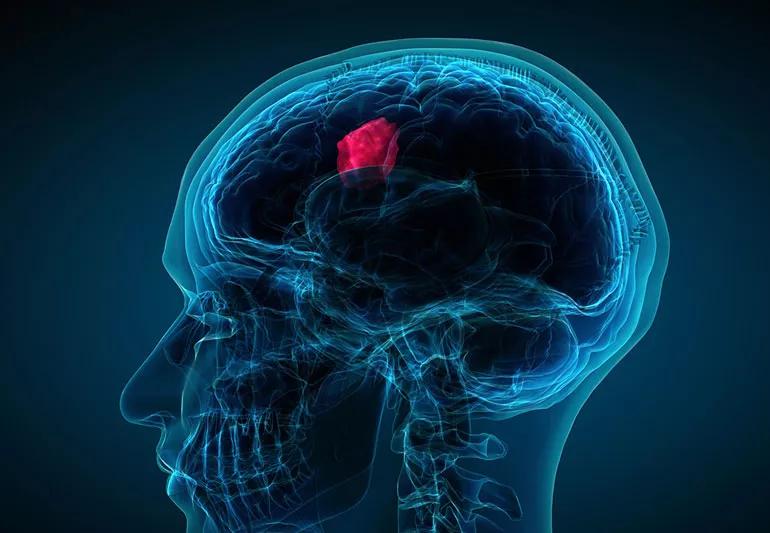
Image content: This image is available to view online.
View image online (https://assets.clevelandclinic.org/transform/c62983b2-bf80-476e-b361-7ff7a27d2ccf/brainTumor-475447149-770x533-1_jpg)
Ilustration of a tumor in the brain
Over your lifetime, the odds of developing a cancerous brain tumor are less than 1%. Usually, symptoms like a headache or confusion are just your body’s way of telling you to hydrate or sleep more.
Advertisement
Cleveland Clinic is a non-profit academic medical center. Advertising on our site helps support our mission. We do not endorse non-Cleveland Clinic products or services. Policy
But rarely, these symptoms can signal a bigger problem.
Unfortunately, the warning signs of a brain tumor can be as wide-ranging as the brain’s many responsibilities. “There is no specific sign for a brain tumor,” says neurosurgeon Gene Barnett, MD. “A brain tumor can present with many different signs and symptoms, depending on where it is located.”
With more than 120 types of brain tumors, symptoms run the gamut from none at all to major red flags. Ultimately, how your body sounds the alarm depends on:
But to know when a symptom really spells trouble, you need to know your own body. Changes in your health can be just as telling as the symptom itself.
If you experience one or several of these signs, Dr. Barnett recommends seeing a medical professional:
Advertisement
Video content: This video is available to watch online.
View video online (https://cdnapisec.kaltura.com/p/2207941/sp/220794100/playManifest/entryId/1_4511h3vv/flavorId/1_5f3sgelj/format/url/protocol/https/a.mp4)
Learn about the warning signs of brain tumors.
Here’s a surprising fact: The most common brain tumors don’t actually start in your brain. Brain metastases, or metastatic brain tumors, spread to your brain from other parts of your body — most often from your lungs, breasts, skin, kidneys or colon.
“A person with a known history of these cancers who develops any of these neurological symptoms should be evaluated,” Dr. Barnett says.
If you’re diagnosed with a brain tumor, Dr. Barnett says you’ll get the best care at a brain tumor center of excellence.
“These centers specialize in multidisciplinary treatment for brain tumors,” he explains. “You have neurosurgeons who treat patients with brain tumors every day of the week. You also have radiation oncologists and neuro-oncologists or medical oncologists who primarily treat patients with brain tumors.”
These centers usually offer opportunities to participate in clinical trials, too. So if a tumor has limited treatment options, a brain tumor center can give you access to promising new drugs or immunotherapies that may effectively treat it.
Advertisement

Sign up for our Health Essentials emails for expert guidance on nutrition, fitness, sleep, skin care and more.
Learn more about our editorial process.
Advertisement
Researchers are testing a new immunotherapy for brain cancer

Receiving this diagnosis can be scary, but there are ways to manage symptoms and reduce stress
Eyes typically increase to full size during two growth spurts in childhood

Pre-birth injections and monoclonal antibodies can help prevent serious complications

These medications help calm the overactive brain signals that cause involuntary movements

The right mask fit, pressure settings and machine adjustments can help make this treatment more comfortable

RSV is common and may cause serious complications, but there are ways to reduce your and your baby’s risk of serious illness

Don’t underestimate the power of a pause

Managing your weight through physical activity may lower your chances of getting this common cancer

It typically starts in October and winds down in early spring, with cases at their highest in the middle of winter

Anxiety disorders, health conditions and past trauma can make driving nerve-wracking — help is available
 Search










