Locations:





 Search
The right choice for you depends on your symptoms, but options like nasal sprays and antihistamines can offer relief
Wandering down the allergy aisle at the pharmacy can feel overwhelming. Various pills, sprays and combination products promise relief from allergy symptoms — but which one actually works best?
Advertisement
Cleveland Clinic is a non-profit academic medical center. Advertising on our site helps support our mission. We do not endorse non-Cleveland Clinic products or services. Policy
We asked allergist Dylan Timberlake, MD, for advice on the best allergy medication to quickly and efficiently tame allergy symptoms.
Video content: This video is available to watch online.
View video online (https://cdnapisec.kaltura.com/p/2207941/sp/220794100/playManifest/entryId/1_itsc8mya/flavorId/1_5f3sgelj/format/url/protocol/https/a.mp4)
Decongestants and antihistamines can both help you feel better but they work in different ways. Learn which to reach for depending on your symptoms.
Allergies kick into gear when your immune system overreacts to something that’s generally harmless — things like pollen, pet dander or dust. Basically, your body produces special antibodies that treat the substance like a threat.
That reaction triggers your system to release chemicals such as histamine, which leads to symptoms like:
“All of those symptoms appear because your body is overreacting to a stimulus that really shouldn’t cause alarm,” explains Dr. Timberlake.
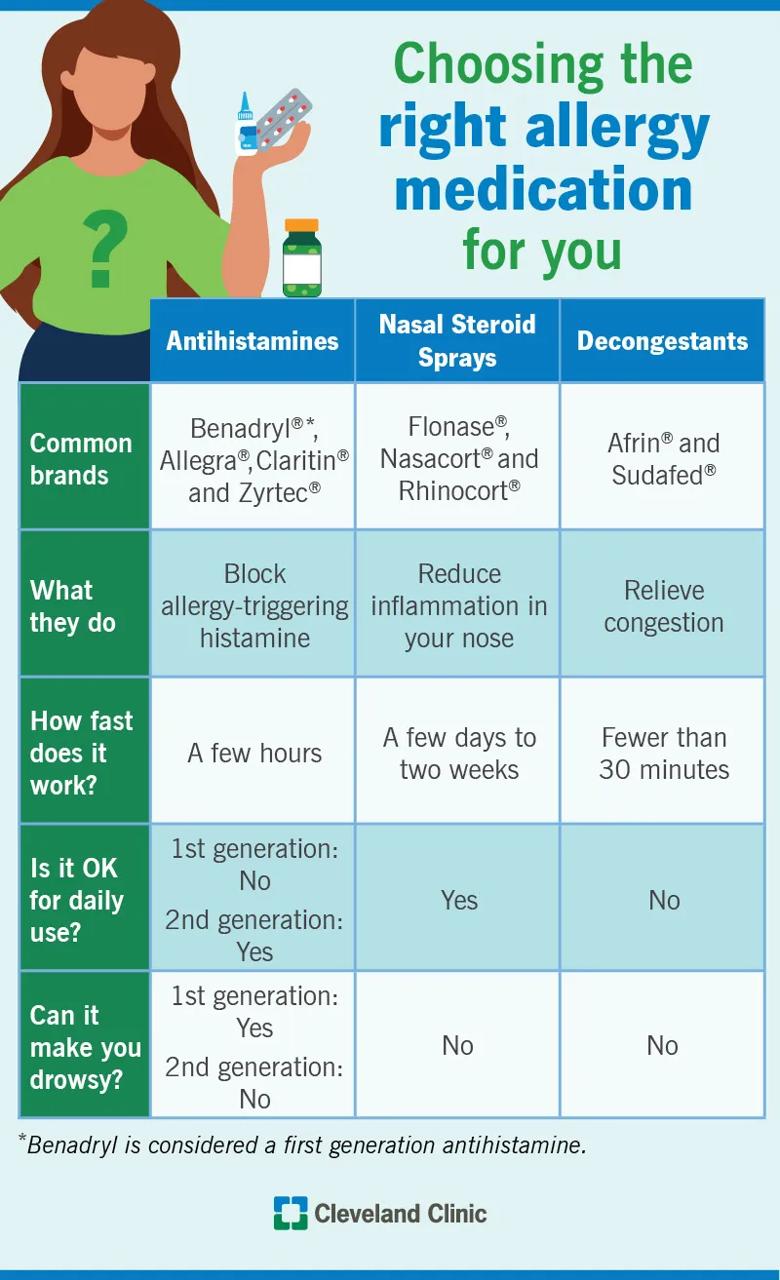
Image content: This image is available to view online.
View image online (https://assets.clevelandclinic.org/transform/6d708f20-ca75-49e6-a93a-8bf0dd7d9597/BestAllergyMedicine-infographic-800x1313)
The goal of an allergy medication is to interrupt your body’s overreaction to allergens or tame the resulting symptoms. The most common allergy treatment products found on pharmacy shelves include:
Here’s what you should know about each option.
Antihistamines are one of the most common allergy treatments. These medications block histamine — the chemical responsible for many allergy symptoms.
You’ll find many over-the-counter antihistamines in pill form, including:
Advertisement
Antihistamines have evolved — and the newer “second-generation” products tend to be preferred, emphasizes Dr. Timberlake. That includes medications like Allegra, Claritin, Xyzal and Zyrtec.
Older medications like Benadryl are considered first-generation antihistamines. While they still can work, they’re more likely to cause side effects, like significant drowsiness.
“We typically avoid recommending the first-generation antihistamines for regular daily use,” he notes. “The newer ones provide the same benefits with fewer side effects.”
So, of the second-generation options, does one stand out? Not really, says Dr. Timberlake. Zyrtec works a bit more quickly than the others, but beyond that, there’s little difference between them.
“I have some patients who say Claritin works best for them, while others swear by Zyrtec or Allegra,” he shares. “If one doesn’t seem to work well for you, switching to another may get you the results you want.”
Nasal steroid sprays reduce inflammation directly inside your nose. Many allergy specialists now consider them the most effective first-line treatment for frequent or seasonal allergies, says Dr. Timberlake.
“They’re effective and work right where the problem is,” he states.
Common sprays include:
Unlike antihistamine pills, nasal steroids take time to build up — so they may not offer immediate relief. You might need to use them daily for several days or weeks before seeing the full preventative benefit.
If you’re looking for fast relief out of a nasal spray, a newer option — azelastine (Astepro®) may be worth trying. It’s an antihistamine delivered directly into your nose.
As the name suggests, decongestants help relieve the severe congestion that can come with allergies. They can help relieve the pressure and pain that comes from being stuffed up.
Decongestants are best used only as a short-term solution, emphasizes Dr. Timberlake. That’s because long-term use of decongestant pills or liquid medication can raise your blood pressure and cause other side effects.
And using a nasal decongestant spray like oxymetazoline (Afrin®)for more than three to five days in a row can cause rebound congestion — meaning your symptoms get worse. (That’s not the result anyone wants.)
The “best” allergy medicine for you to use often depends on how and when your symptoms occur, clarifies Dr. Timberlake. For example:
Advertisement
It’s common to combine allergy treatments. For example, some people use a daily nasal spray and take an antihistamine pill if they’re experiencing severe symptoms when seasonal allergies peak.
Some over-the-counter products also combine different types of medications, like antihistamines and decongestants. (Examples of these two-in-one medicines include Allegra-D, Claritin-D and Zyrtec-D.)
Bottom line? Always read the instructions on any medication you’re taking to ensure you’re taking it properly. Talk to a pharmacist if you have unanswered questions.
Over-the-counter allergy medicines help many people manage symptoms effectively. But you may want to talk with a healthcare provider if:
Advertisement
An allergist can help identify triggers and recommend treatments that go beyond over-the-counter options. They may also suggest ways to reduce your exposure to triggers, which can help make medications work better.
“There are a lot of allergy treatments available,” says Dr. Timberlake. “Talk to your doctor about your options.”
Advertisement

Sign up for our Health Essentials emails for expert guidance on nutrition, fitness, sleep, skin care and more.
Learn more about our editorial process.
Advertisement

Keeping your windows closed, showering before bed and using OTC allergy meds may help keep summer sniffles at bay

When your allergies flare up depends on your location, immune health, personal triggers and more

Washing your sheets, rinsing your sinuses and running an air purifier are simple tricks for all-natural allergy relief

A variety of factors, including changes to your body as you age, may lead to new allergies later in life

Most antihistamines, like Zyrtec, are OK, but avoid decongestants for at least the first trimester

You can now get lifesaving epinephrine in a nasal spray and prefilled syringes

Drowsiness is a side effect of inflammation, disrupted sleep and, sometimes, your allergy medicine

If you’re sensitive to aspirin or other salicylates, limiting exposure is the best remedy

The virus that causes the so-called ‘stomach flu’ can cling to surfaces for days or even weeks

There isn’t clear evidence that melatonin harms your heart — but finding the cause of sleep issues is key to long-term heart health

Your dollar bills, coins and cards are covered in germs — but they’re very unlikely to make you sick











