Locations:





Déjà vu is a fleeting, false memory — it can be harmless or a sign of something more

Image content: This image is available to view online.
View image online (https://assets.clevelandclinic.org/transform/d8ed3712-1224-4f7b-bb9e-c972962116f0/deja-vu-2202803210)
Two people with blank faces, facing each other in a park, with people in background
Déjà vu is a fleeting sensation of having already lived a totally identical situation at some point in the past — though, in reality, you haven’t. Translated from French, déjà vu means “already seen.”
Advertisement
Cleveland Clinic is a non-profit academic medical center. Advertising on our site helps support our mission. We do not endorse non-Cleveland Clinic products or services. Policy
An estimated 97% of people have experienced déjà vu at least once in their lives. Most of the time, it’s nothing more than a quick sensation that gives you pause for just a moment. Then, it’s back to normal.
But are there times when that momentary off-kilter feeling is trying to tell you something?
“Déjà vu is a false sense of familiarity,” says neurologist Jean Khoury, MD. “Your brain creates a sensation as if you’ve been in a certain situation before, but you haven’t. So, you’re unable to retrieve it from your memory and can’t identify the actual situation.”
Maybe you know the feeling:
“There’s usually an incongruence between having this sense of familiarity but also knowing that the situation shouldn’t feel familiar,” Dr. Khoury notes.
Advertisement
“Déjà vu is caused by dysfunctional connections between the parts of your brain that play a role in memory recollection and familiarity,” Dr. Khoury explains. “It’s a misfire that blurs the line between memory and new experience.”
In other words, it happens when there’s a miscommunication between two parts of your brain: The one responsible for memories (your temporal lobe) and the one responsible for taking in new information ( your hippocampus).
“If there’s a problem with how the hippocampus interacts with its surroundings, it can create a false memory that we experience as déjà vu. Memories and new experiences get wrapped up in each other,” he continues. “It’s a disruption of the recognition and memory systems that gives you that false sense of familiarity.”
Though researchers aren’t exactly sure why, some suggest you may be more susceptible to déjà vu if you:
Some health conditions can cause déjà vu, including:
Occasional déjà vu is nothing to worry about. But if you experience it often, or if it lasts longer than a few seconds or comes with other symptoms, it’s worth getting checked out.
“Déjà vu is an occasional phenomenon in healthy individuals, usually occurring a couple times a year,” Dr. Khoury confirms. “If it happens often enough to make you wonder, it’s worth talking to your provider.”
You should also tell a provider if your déjà vu episodes are accompanied by other potentially troubling symptoms, like:
Bottom line? That occasional “been here, done this” experience probably isn’t anything to worry about. But don’t let persistent or worrisome déjà vu linger. If you have any doubts about the cause of your déjà vu, it’s important to consult with a healthcare provider or go straight to a neurologist.
Advertisement

Sign up for our Health Essentials emails for expert guidance on nutrition, fitness, sleep, skin care and more.
Learn more about our editorial process.
Advertisement
Your brain’s left and right hemispheres each have some specific jobs, but they’re constantly working together

Nothing in those bottles will work as well as healthy habits

Turn to foods that are high in polyphenols, antioxidants and omega-3 fatty acids

Physical activity can help preserve and improve your cognitive function and fend off dementia, stroke and other health concerns

When the familiar suddenly feels unfamiliar, it could be nothing — or something worth noting
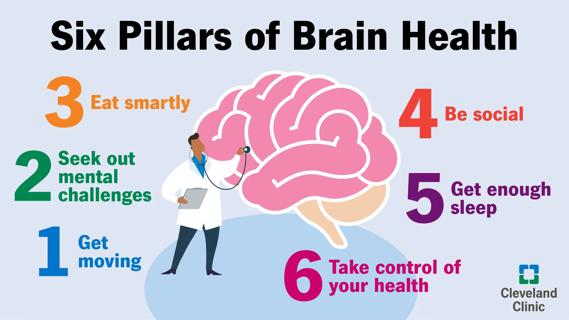
The ‘Six Pillars of Brain Health’ offers a game plan to maintain cognitive function
The tickling response may be more about protection than enjoyment
You can build mental muscle by challenging your mind and giving it new experiences

Hormonal changes, a slower metabolism and muscle loss can make weight gain more common around menopause — healthy habits can help you manage it

Life-threatening complications include sepsis, stroke, pneumonia and more
Fruity-smelling breath can happen when your body burns fat for energy, and in some cases, can signal a medical emergency
 Search










