Locations:





Eyes typically increase to full size during two growth spurts in childhood
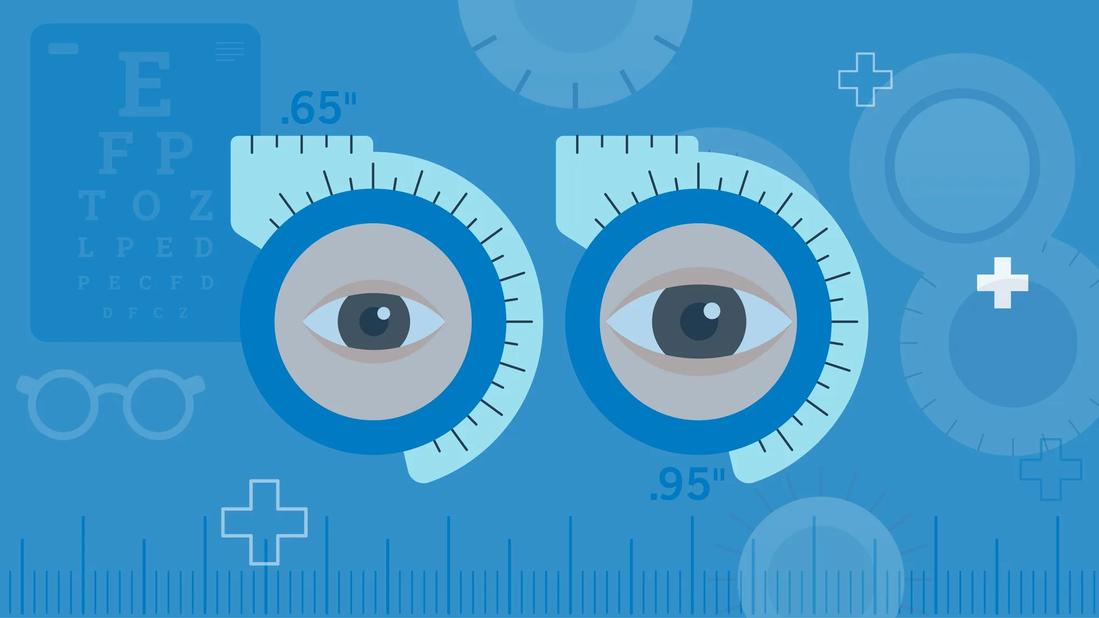
Image content: This image is available to view online.
View image online (https://assets.clevelandclinic.org/transform/fa875dff-f7a1-4f9b-86da-673b423c96ec/do-eyes-grow)
Child and adult eye sizes in phoropters, eye measuring tools
From head to toe, your body grows noticeably from childhood to adulthood. But what about your eyes? Your windows to the world always seem to be about the same size.
Advertisement
Cleveland Clinic is a non-profit academic medical center. Advertising on our site helps support our mission. We do not endorse non-Cleveland Clinic products or services. Policy
As it turns out, your eyeballs DO grow, particularly early in life. But the change is relatively subtle, especially compared to everything else that’s getting bigger. Let’s get some measurements with ophthalmologist Allison Babiuch, MD.
Most eyes grow roughly 50% between birth and adulthood. Your eyes are about 16.5 millimeters (0.65 inches) in diameter when you’re born. They reach about 24.5 millimeters (0.96 inches) at full size.
To put that in perspective, eye diameter starts around the size of a dime and ends around the size of a quarter.
“A lot of people don’t realize how much our eyes grow, especially in the first few years of life,” says Dr. Babiuch. “It’s one of those things you don’t really notice. It’s not as obvious as other changes.”
Plus, eyeballs start closer to their final size than other body parts do. So, even though they get larger, they don’t change as drastically. (Just think of how much your feet grow over that same time!)
Even other areas of your face, like your ears, nose and mouth, see more overall growth than your eyes.
Your eyes undergo two big growth spurts before early adulthood. After that, your peepers stop getting bigger but change in other ways as you age. (More on that in a bit.)
Advertisement
Here’s when your eyes grow the most.
Most of your eye growth takes place before your second birthday. By age 2, your eyeballs are usually around 22.5 millimeters (0.88 inches) in diameter. That’s three-fourths of the total growth you can expect overall.
There’s a reason for this accelerated process: “Vision is so important during early development,” says Dr. Babiuch. “We rely so much on our eyesight to function. It’s a big part of how we process the world.”
Blurry vision is the norm for babies through their first six months. As their eyes grow, everything around them comes into better focus. Close vision develops more quickly than distance vision.
The second significant period of eye growth usually starts around age 7 or 8, says Dr. Babiuch. Size adjustments during this period seek to balance your focus so you can see near and far equally well.
The process, called emmetropization, usually ends by your early teens.
“In an ideal world, our eyes would stop growing when they hit the perfect size and we’d see everything clearly,” says Dr. Babiuch. “But that’s not always the case — and those variations are why someone might need glasses to correct their vision.”
If the axial length of your eyeball grows too large, it causes myopia (nearsightedness) — meaning far-away objects look blurry.
It’s common for children to be first diagnosed with myopia during this second growth period.
Your eyes may stop growing by adulthood, but they don’t stop changing as time takes its toll. The natural lenses in your eyes become less flexible with age, which can make it more difficult to see things up close.
This condition, called presbyopia, often begins in your 40s and brings the need for reading glasses. The strength of those glasses often increases with age, too.
Other age-related eye changes could lead to common conditions like:
“I wish I could tell you that your eyes stayed the same once they stopped growing, but they continually change over time — and usually not for the better,” says Dr. Babiuch.
Eyes also tend to get heavier over time, though it won’t show up on your scale. Studies show that the lenses in your eye may gain about 1.38 milligrams (0.000048 ounces) per year from protein-rich fibers.
Your eyeballs may seem like they stay the same size, but that’s more illusion than reality. In truth, your eyes grow quickly in the first years of life and continue later in childhood — they just do it subtly.
Then, once adulthood arrives, changes to your eyes become less about sizing and more about function. Stiffening lenses, vision shifts and age-related conditions become more common with time.
Advertisement
“Your eyes may stop getting bigger,” notes Dr. Babiuch, “but they never stop changing.”
Advertisement

Sign up for our Health Essentials emails for expert guidance on nutrition, fitness, sleep, skin care and more.
Learn more about our editorial process.
Advertisement
This TikTok trend can cause injuries, infections and inflammation
Act quickly by locating the object, gently removing the debris and flushing your eye

Once your baby’s eyes are exposed to more light, they may start to deepen in hue or change color altogether, usually between 3 and 9 months
Many factors, like eyelid irritation, cosmetic lash procedures and underlying health conditions, can affect your eyelashes

A diet built around fruits, vegetables and healthy fats is a clear 20/20 benefit for your vision
It takes millions of moving parts within the eye to make the power of vision possible
Cosmetic procedures such as iris implants and corneal tattooing bring a risk of vision loss

It’s critical to have the proper eyewear if you plan to look up at the sun, especially during the total solar eclipse on April 8, 2024

Managing your weight through physical activity may lower your chances of getting this common cancer

It typically starts in October and winds down in early spring, with cases at their highest in the middle of winter

Anxiety disorders, health conditions and past trauma can make driving nerve-wracking — help is available
 Search