Locations:


Clean water or saline will often flush out the escaped eyelash, but resist the urge to rub your eyes
It’s natural to lose an eyelash or two. In fact, it happens at least once a day for most people. But what happens when your lovely lash gets caught in your eye, causing itching, burning and irritation?
Advertisement
Cleveland Clinic is a non-profit academic medical center. Advertising on our site helps support our mission. We do not endorse non-Cleveland Clinic products or services. Policy
Optometrist Robert Engel, OD, offers some advice.
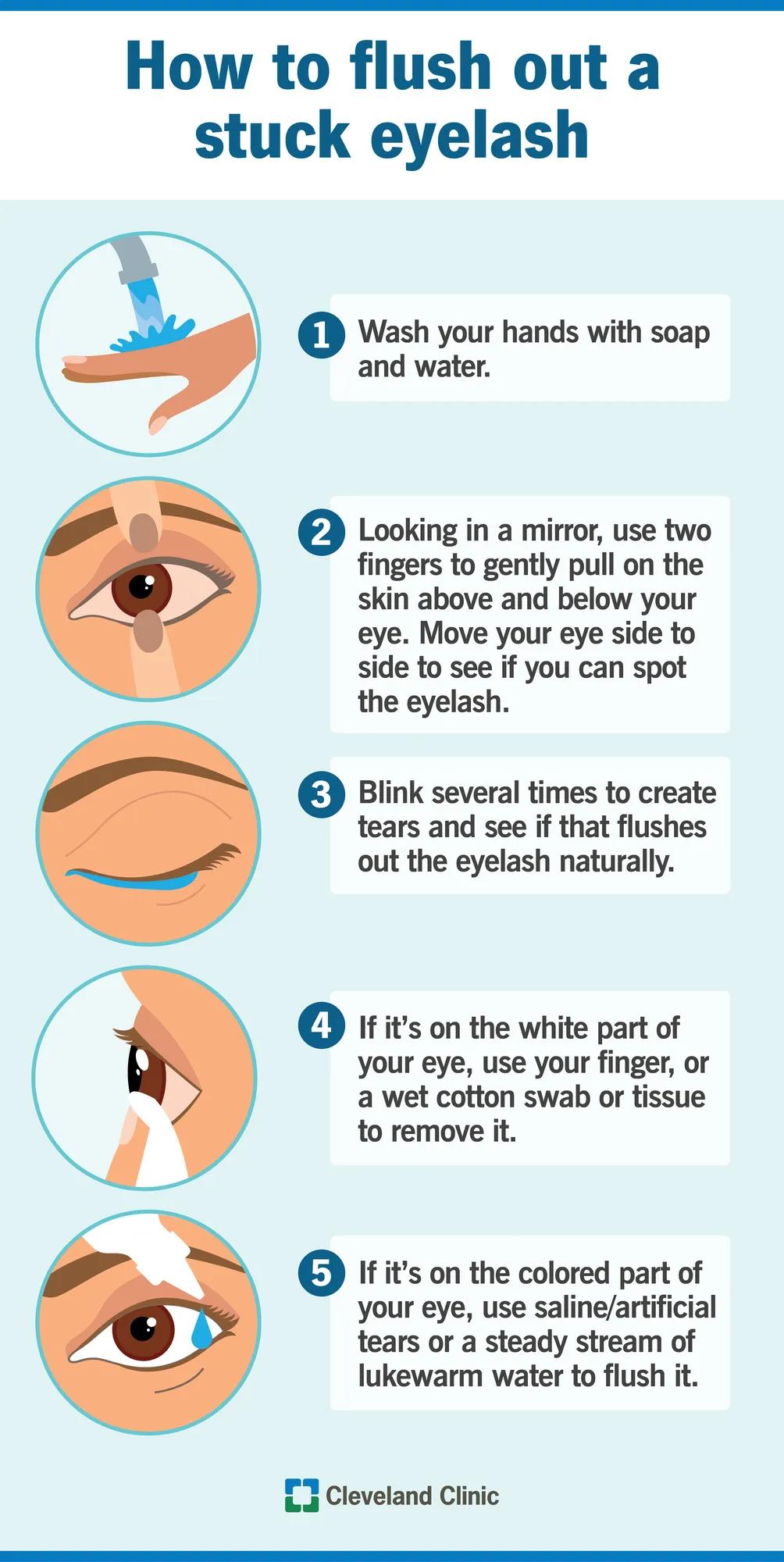
Image content: This image is available to view online.
View image online (https://assets.clevelandclinic.org/transform/8b0c71b0-e164-46b8-9a07-7ac67d3f4a4b/Eyelash-Flushing-infographic)
Sometimes, it’s hard to tell if it’s an eyelash that’s causing irritation or if it’s something else. Usually, a stuck eyelash feels gritty or stings. It may help to hold your eye open in front of a mirror and look side to side to locate it. But Dr. Engel warns you may not always find the eyelash you’re looking for.
“You might feel itching or burning on the inside of your eyelid, or it might feel like you’ve got sand in your eye,” he says.
If you suspect you have an eyelash in your eye, you can try flushing it out by following these steps:
Advertisement
Usually, a stuck eyelash is only temporary. It can work its way out with the help of natural tears, or you should be able to flush it out safely.
“You don’t have to worry about an eyelash getting stuck behind your eye,” says Dr. Engel. “Your conjunctiva is a thin, clear membrane that protects your eye and stops things like dust, sand or eyelashes from getting too deep.”
When you have an eyelash on your eyeball, do what you can to avoid causing injury or introducing bacteria into your eye. When trying to remove it, avoid:
Getting an eyelash stuck in your eye is a normal experience. But sometimes, what feels like an eyelash might be another cause for concern, like dry eyes or an infection.
Make an appointment with a primary care provider or eye specialist if you experience:
And if you’re thinking about trimming your eyelashes to avoid having this happen in the future, don’t. Doing so can increase your risk of other complications, such as eyelid inflammation and infection.
“If your eyelashes fall out often, that’s something worth looking at,” notes Dr. Engel. “Otherwise, an occasional eyelash that gets caught in your eye is fairly common and usually temporary.”
Advertisement

Sign up for our Health Essentials emails for expert guidance on nutrition, fitness, sleep, skin care and more.
Learn more about our editorial process.
Advertisement

Eye issues like presbyopia, cataracts, glaucoma, macular degeneration and dry eye become more common after age 40
Eyes typically increase to full size during two growth spurts in childhood
This TikTok trend can cause injuries, infections and inflammation
Act quickly by locating the object, gently removing the debris and flushing your eye

Once your baby’s eyes are exposed to more light, they may start to deepen in hue or change color altogether, usually between 3 and 9 months

Many factors, like eyelid irritation, cosmetic lash procedures and underlying health conditions, can affect your eyelashes

A diet built around fruits, vegetables and healthy fats is a clear 20/20 benefit for your vision
It takes millions of moving parts within the eye to make the power of vision possible

Researchers say components of a snail’s mucus could help hydrate your skin and minimize future wrinkles
Despite rumors, science hasn’t shown that creatine causes hair loss

Fad diets make big promises with little or no science behind them
 Search