Locations:





It’s best to allow yourself to sneeze naturally, and cover your mouth and nose with a tissue or turn into your elbow to help prevent the spread of germs
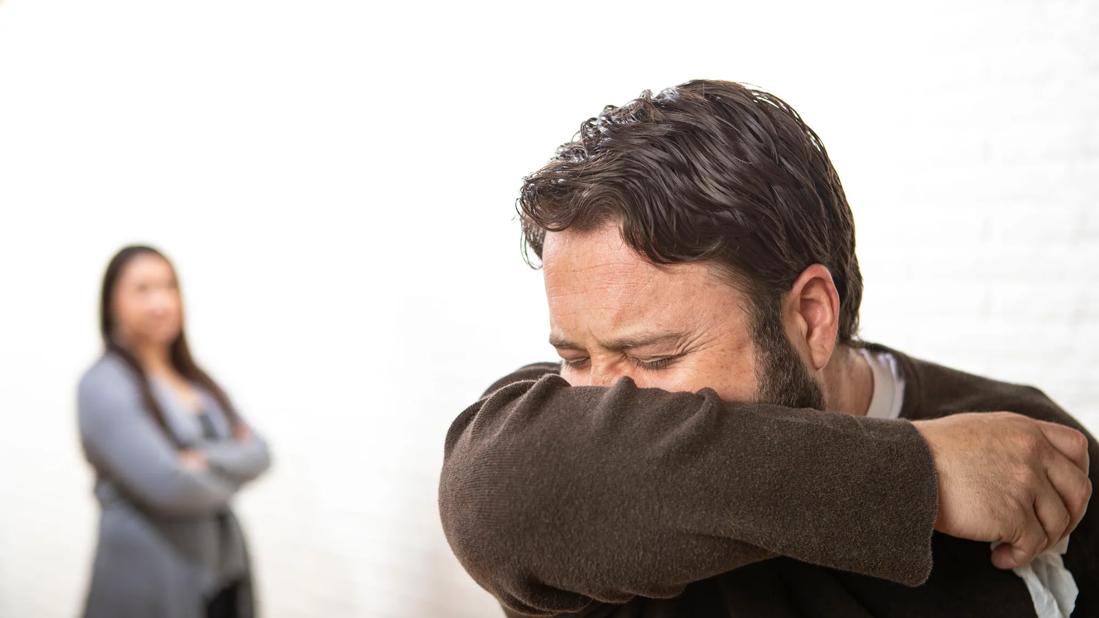
Image content: This image is available to view online.
View image online (https://assets.clevelandclinic.org/transform/1387b6ca-b358-4596-bef6-37d46aab9974/coughSneeze-MC_2033-040120-770x533-1-jpg)
Person sneezing into arm, holding tissue, blurry person in background
Once you feel that tickle in your nose, you know there’s no turning back. A sneeze can sometimes hit you at the worst possible moments, like during a meeting, in church or while you’re carrying something and can’t cover your face! Regardless, it’s got to come out.
Advertisement
Cleveland Clinic is a non-profit academic medical center. Advertising on our site helps support our mission. We do not endorse non-Cleveland Clinic products or services. Policy
And it’s understandable to want to stop a sneeze so you don’t spread germs around. But holding back your “Achoo!” may actually cause more harm than good.
“While sneezing plays a major part in the spread of infection, it’s also necessary for removing irritants, allergens and other foreign debris from your sinuses,” says allergy and clinical immunology specialist, DeVon Preston, MD. “If we didn’t sneeze, our bodies could allow potentially damaging substances into our sinuses or lungs.”
Dr. Preston breaks down why you shouldn’t hold your sneeze in, and what to do instead.
While your intentions may be good, you should avoid holding in your sneezes. We could spend days outlining the physics, mathematics and dynamics of a sneeze, but we’re not going to do that to you. But we’ll say this: A sneeze can travel over 70 miles per hour, with incredible force behind it. That’s why holding in a sneeze can lead to all sorts of damaging outcomes.
Think back to the last time you sneezed. Oftentimes, it feels like your head spins for a second with how fast it happens. When you sneeze, your body releases a powerful burst of air through your nose and mouth to force out irritants or outside particles.
Advertisement
But if you try to suppress or hold in a sneeze, it can potentially lead to various issues, including:
The pressure created by holding in a sneeze can force air and mucus into your eustachian tube, which connects the back of your nose to the middle of your ear. (These tubes open when you swallow or sneeze so air pressure or fluid won’t build up in your ears.) But holding in a sneeze creates pressure that can cause damage to your eardrum or lead to ear infections.
“Pushing infected mucus back into the eustachian tubes could cause a middle ear infection,” warns Dr. Preston. Middle ear infections can lead to holes in your eardrum — and those holes tend to require surgical repair.
A sneeze is just your body’s way of kicking out unwanted material from your system. And for good reason! Suppressing a sneeze can cause the mucus and irritants to be pushed back into your sinuses, potentially leading to sinus pain, congestion and even sinus infections.
Holding in a sneeze can temporarily increase your intraocular pressure (the pressure inside your eyes). While this usually isn’t harmful for most people, it may cause issues for individuals with certain eye conditions like glaucoma.
In extreme cases, forcibly holding in a sneeze can lead to the rupture of blood vessels in your head or neck. That’s because when you hold in a sneeze, the pressure that would normally be released through your nose and mouth gets trapped in your respiratory system.
While there are some known negative consequences of holding in a sneeze, there aren’t any reported cases of death due to holding in a sneeze.
Stopping sneezing can be challenging, especially if it’s triggered by irritants like dust, pollen or pet dander (if you live with seasonal allergies, you know what we’re talking about!).
But there are a few strategies you can try to safely alleviate the urge to sneeze:
Advertisement
Even though they catch you by surprise, your sneezes are doing your health a lot of good. “Some people might sneeze because of viral or bacterial infections. If you don’t sneeze, mucus can accumulate and be forced back into the eustachian tubes,” Dr. Preston reiterates.
As all of us want to make a conscious effort to stop the spread of respiratory illnesses, you might be afraid to let out those forceful sneezes. But don’t stop your body from doing its job. Just make sure you cover your mouth and nose during those sneeze bombs with a tissue or by sneezing into your elbow. Also, be sure to wash your hands thoroughly and wipe down nearby surfaces once those sneeze sessions are over.
Advertisement

Sign up for our Health Essentials emails for expert guidance on nutrition, fitness, sleep, skin care and more.
Learn more about our editorial process.
Advertisement

The photic sneeze reflex is a surprisingly common reaction to bright lights

No, but it momentarily slows down during this involuntary body function
If you’re sneezing, you’re definitely awake — you just don’t realize it

Keeping your windows closed, showering before bed and using OTC allergy meds may help keep summer sniffles at bay

Germs spread quickly and easily, so covering your face, washing your hands and avoiding close contact are key

Exercises and medical treatments can help you regain control of your bladder

Consider the severity and location of your arthritis to decide on the right support
Eyes typically increase to full size during two growth spurts in childhood

Managing your weight through physical activity may lower your chances of getting this common cancer

It typically starts in October and winds down in early spring, with cases at their highest in the middle of winter

Anxiety disorders, health conditions and past trauma can make driving nerve-wracking — help is available
 Search










