Locations:





Warm up the affected area slowly and seek care for severe burns
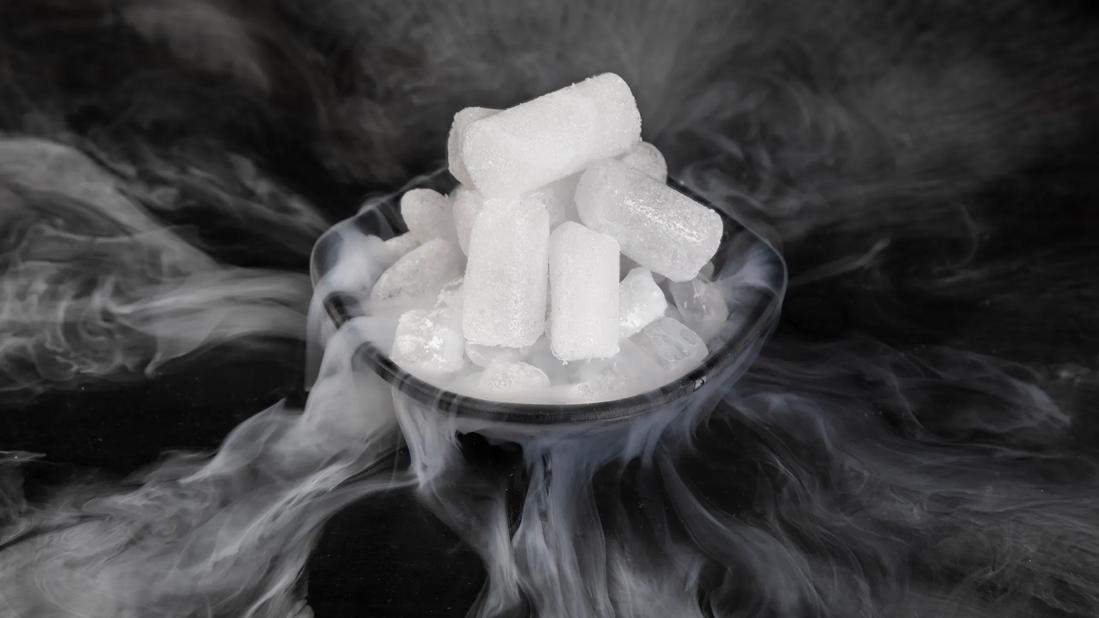
Image content: This image is available to view online.
View image online (https://assets.clevelandclinic.org/transform/44ffd86c-c574-4591-b33f-a3d505724a6d/dry-ice-fog-1447340412)
Dry ice in a bowl, with carbon dioxide gas being released
Dry ice has a kind of magical quality about it. It keeps your food ice-cold as it’s shipped across the country. It freezes warts at your doctor’s office. And it’s a crowd-pleasing special effect for handcrafted cocktails, spooky Halloween displays and high-tech concerts.
Advertisement
Cleveland Clinic is a non-profit academic medical center. Advertising on our site helps support our mission. We do not endorse non-Cleveland Clinic products or services. Policy
The results of coming into contact with dry ice can be equally dramatic — just not in a good way.
Dry ice burns can cause a surprising amount of damage from even minor contact. So, caution is key.
Family medicine physician Colleen Clayton, MD, explains what happens during a dry ice burn, how to treat one safely and when it’s time to get medical care.
Dry ice is the frozen form of carbon dioxide. It’s extremely cold — minus 109 degrees Fahrenheit (-78 degrees Celsius). It’s so cold that it doesn’t melt into a liquid, as an ice cube does. Instead, it transforms straight from a solid to a gas. That process is called sublimation.
If you touch dry ice in its solid state, it can freeze the top layer of your skin almost instantly. Your skin cells can’t survive that level of cold, so they start to break down. It’s similar to what happens in frostbite.
But the way a dry ice burn looks and feels can closely resemble a thermal burn, like you get if you touch a hot pan. A dry ice burn can cause:
Your symptoms may not show up immediately, which is another thing dry ice burns share with frostbite. “Sometimes, the damage isn’t seen for up to a day after the original injury,” Dr. Clayton notes.
Advertisement
The risk doesn’t end with your skin. Perhaps even more damaging than touching dry ice is the danger that comes with inhaling it.
As dry ice sublimates, it releases carbon dioxide gas, which gives you that foggy wow-factor. Without proper safety precautions, you can end up breathing in more of that gas than is safe.
“You can get pretty significant damage to your lungs if you’re in a non-ventilated area,” Dr. Clayton warns. For that reason, you should also take care not to get your face up-close-and-personal with dry ice smoke.
Even minor inhalation in a contained space can cause symptoms like:
If you accidentally touch dry ice — even for just a second — you’ll want to act quickly to minimize the damage. Here’s what to do.
If your burn blisters and opens, you can apply a simple protective ointment, like petroleum jelly (Vaseline®). Dr. Clayton recommends avoiding medicated ointments if possible. Cover the area with clean gauze, and seek medical attention.
Also, contact a healthcare professional if:
Mild dry ice burns should heal within a few days. More severe burns — especially those that blister — may take weeks to heal.
Dry ice burns are typically preventable with the right protection. If you handle dry ice for your job, follow all safety precautions they recommend.
If you’ll be in contact with dry ice, be sure to:
Dry ice can certainly look impressive, but always put safety first. Handle it with care, and seek help if your magic trick goes awry.
Advertisement
Advertisement

Sign up for our Health Essentials emails for expert guidance on nutrition, fitness, sleep, skin care and more.
Learn more about our editorial process.
Advertisement
Follow the 4Cs — cooling, cleaning, covering and comforting — to start the healing process

Ice and ice-cold water can damage tissue, restrict blood flow and delay the healing process

Cold compresses, aloe vera and colloidal oatmeal can all help you find relief

Moisturizing, running a humidifier and adjusting your shower routine may help keep itchiness and irritation at bay

This multitasker can help keep your skin clear, support wound healing and disinfect surfaces around your home
To lower the risk of infection, any bite that breaks skin should be treated by a healthcare provider as soon as possible — ideally, the same day
The first step is flushing out the cut with clean, cold water

Start with the basics: Wash your hands well and clean the affected area with soap and water

Managing your weight through physical activity may lower your chances of getting this common cancer

It typically starts in October and winds down in early spring, with cases at their highest in the middle of winter

Anxiety disorders, health conditions and past trauma can make driving nerve-wracking — help is available
 Search










