Locations:





Cold, wet conditions can weaken your immune system, which makes it easier for illnesses and infections to spread
If you were a science-minded kid, you may have asked yourself: Are parents everywhere onto something when they say, “Come inside before you catch a cold”? Does cold, wet weather make you sick — or is that just a myth? And if there’s any truth to it, what sickness can you get from cold air, specifically?
Advertisement
Cleveland Clinic is a non-profit academic medical center. Advertising on our site helps support our mission. We do not endorse non-Cleveland Clinic products or services. Policy
Primary care physician Neha Vyas, MD, puts it best: “Winter weather can’t make you sick if you’re prepared and your immune system is working well. The name of the game is dressing for the weather and knowing your body.”
Respiratory season usually hits in the fall and winter months, but you won’t get sick just because the weather’s colder or wetter. It happens because you’re being exposed to more germs than usual, at a time when your immune system may not be at its strongest.
Dr. Vyas says colder months are peak times for:
“Those are the kinds of infections we usually see when someone thinks they’re getting sick from the weather,” she adds. They’re miserable, for sure, but they aren’t created by cold, wet conditions. They just happen to thrive in them.
The idea that you can catch a cold by being cold isn’t quite right. But it’s true that cold weather can weaken your immune system. Add all the extra time you’re spending indoors to the mix, and you’ve got a recipe for cold-weather crud.
Dr. Vyas says infections can be harder to fight off when it’s chilly and damp outside because:
Advertisement
All this to say, the weather isn’t infecting you. What it is doing is making you more vulnerable.
Cold weather doesn’t just lower your body’s natural defenses against illness — it also changes your behavior. And a lot of the things we do (or don’t do) when temperatures plummet can make us more likely to come down with an infection.
Dr. Vyas explains the biological and social factors behind the myth that cold air can make you sick.
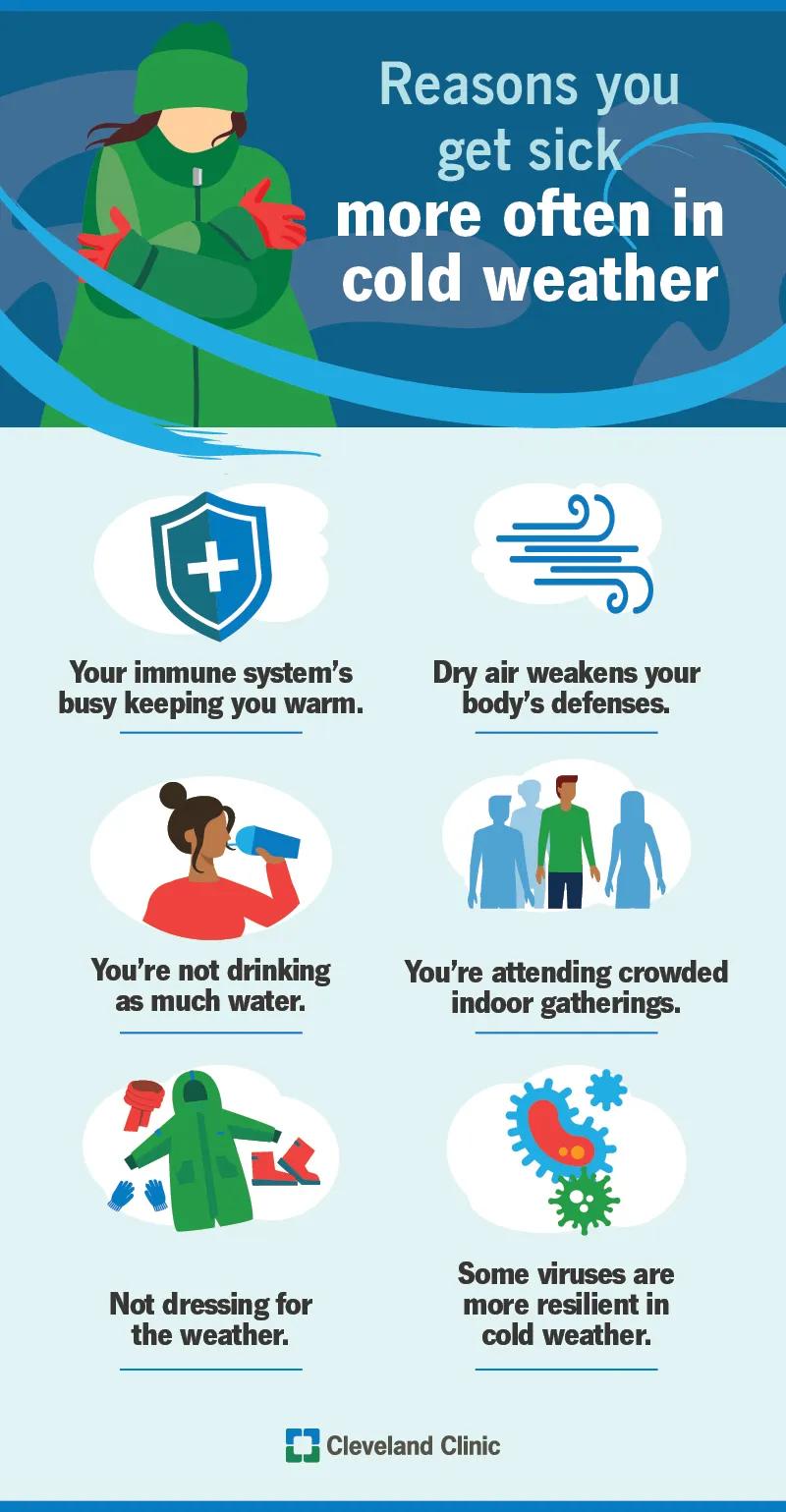
Image content: This image is available to view online.
View image online (https://assets.clevelandclinic.org/transform/a1b30bb2-3830-40a7-9185-eef9c8b17711/Reasons-get-sick-cold-weather-infographic-800x1539)
We’ve already talked about how cold, dry weather can make it easier for infections to get a foothold. But that’s not the only way it creates conditions that wintertime bugs need to thrive. Dr. Vyas notes that some viruses even form stronger protective shells in dry, cold conditions.
Your furnace is in on it, too. It blows around dust, mold spores, pet dander and pollen that have been collecting in your vents. Indoor allergies tend to be at their worst during the fall and winter months. And an immune system that’s already overwhelmed by allergens may struggle to keep infectious diseases at bay.
The good news? You can take steps to boost moisture levels — both in your environment and in your body.
“You can run a humidifier and drink more water. That will help get your mucus membranes back to normal again,” Dr. Vyas advises. And don’t forget to keep your skin barrier strong with a robust moisturizer. Dry, cracked skin is more likely to get bacterial infections and break out in rashes.
The indoor gatherings you attend when it’s cold out are a chance to interact with friends and loved ones — but you’re also interacting with all of their germs. And their high-touch surfaces. And if it’s the holiday season, you might be snacking from a … questionable buffet.
Your immune system needs to be in tip-top shape to handle all the time you spend indoors sheltering from the cold, wet winter weather.
You probably know that one of the most important sources of vitamin D is the sun — which we tend to see a lot less in the winter. But that doesn’t mean you need to run out and buy a supplement.
“There’s no need to supplement vitamin D if your level is fine,” Dr. Vyas says. “There are a few studies linking vitamin D and immune function, but they really haven’t played out clinically. And we care about what happens in real life, not in a lab.”
Consider having your vitamin D levels tested if you:
If your primary care provider finds out you’re deficient, they may prescribe a short-term, high-dose vitamin D supplement to get you back on track.
Advertisement
The hot chocolate may be flowing, but you still tend to drink fewer fluids in the wintertime, which only adds to immune system-sapping dehydration.
“People don’t recognize that they get thirsty in the cold, just like they do in summertime,” Dr. Vyas reports. “The thirst mechanism isn’t as prevalent, but you still need that water.”
She suggests trying warm herbal tea or hot water with lemon if you don’t love kicking back a cold drink during winter.
Staying healthy in cold, wet weather doesn’t have to mean staying indoors all the time. In fact, staying fit with winter sports is a great way to keep your immune system humming along despite plunging temperatures.
“You can do things in the cold and wet, but you have to be prepared and know your own body,” Dr. Vyas emphasizes. Good nutrition, hydration, plenty of rest and appropriate clothing are always a good idea, but they’re extra important if you’re:
One last note: Extreme winter weather can cause harm if you’re out too long and not dressed appropriately. You could develop a “cold stress” condition, like frostbite or hypothermia.
Advertisement
So, take the puffy jacket and wool socks the next time a loved one pushes them on you. They may just come in handy!
Advertisement

Sign up for our Health Essentials emails for expert guidance on nutrition, fitness, sleep, skin care and more.
Learn more about our editorial process.
Advertisement

Options like fatty fish, citrus fruits and sunflower seeds can help keep you well and heal faster

From boosting foods to lifestyle changes to a healthy attitude
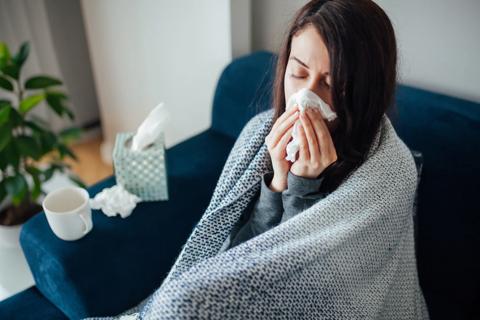
It typically starts in October and winds down in early spring, with cases at their highest in the middle of winter

This antiviral medication can help curb symptoms and may shorten recovery time

Hydrating and focusing on nutrient-rich foods are key for recovery

Life-threatening complications include sepsis, stroke, pneumonia and more
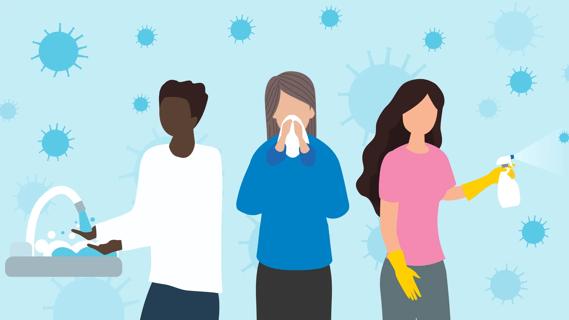
From poor hand hygiene and ventilation issues to contaminated food, many factors can make infectious diseases spread quickly
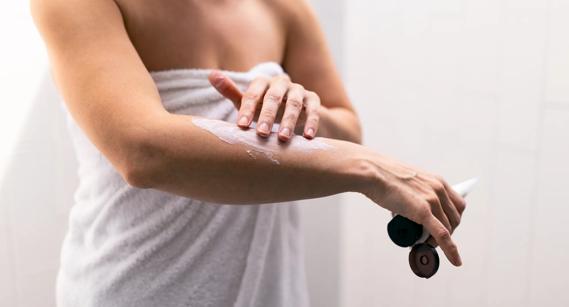
Moisturizing, running a humidifier and adjusting your shower routine may help keep itchiness and irritation at bay

Managing your weight through physical activity may lower your chances of getting this common cancer
It typically starts in October and winds down in early spring, with cases at their highest in the middle of winter

Anxiety disorders, health conditions and past trauma can make driving nerve-wracking — help is available
 Search










