Locations:
Search IconSearch

How To Do Dumbbell Rows Properly

Good form is essential for dumbbell rows, which work out your mid- and upper back
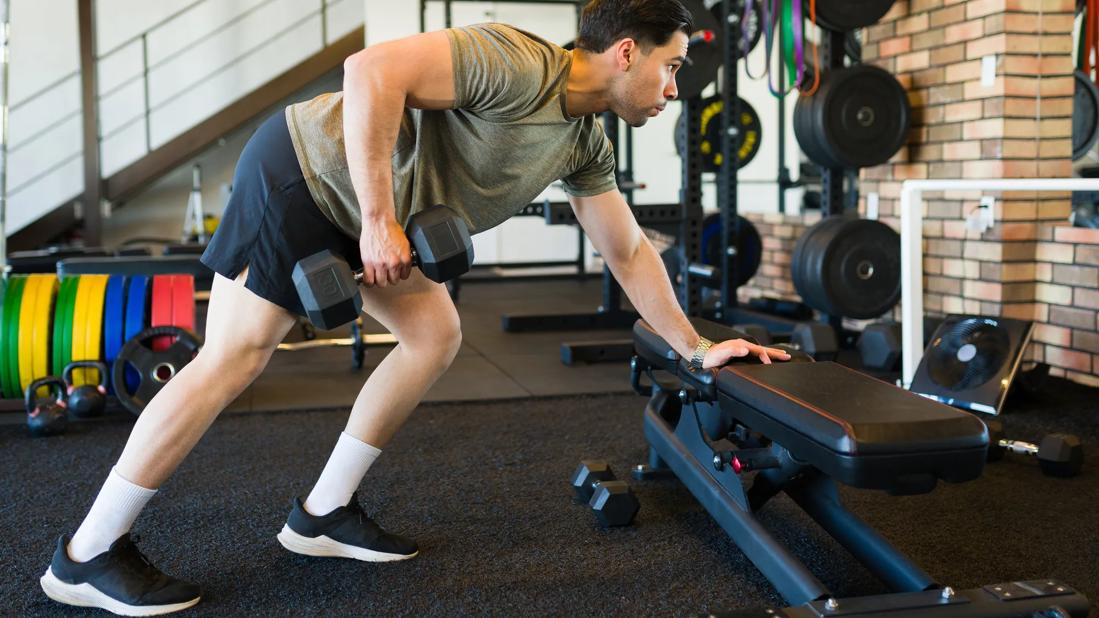
Person doing dumbell rows in gym

Hunched over a desk all day? Sore after chest day at the gym? Dumbbell rows can help that and more.

Advertisement

Cleveland Clinic is a non-profit academic medical center. Advertising on our site helps support our mission. We do not endorse non-Cleveland Clinic products or services. Policy

“People tend do a lot of pushing movements in their days, and exercises like dumbbell rows encourage you to balance that out — pulling, rather than pushing,” says exercise physiologist Ben Kuharik.

Even sitting for long stretches or looking down at your phone encourages your body to push forward. So, dumbbell rows can be beneficial for the workout crowd and desk jockeys alike.

Kuharik explains the benefits and how to do them.

How to do dumbbell rows

Proper form is essential for targeting the right muscles and getting the most out of your dumbbell row workouts. Here’s what to do.

  1. Place a workout bench in front of you, length-wise. Stand with your feet hip-width apart.
  2. Steady yourself with your right hand on the bench. Pick up a dumbbell in your left.
  3. Keep your body in a straight, diagonal line, with your shoulders slightly higher than your hips.
  4. Keeping your left arm hugged tight to your body, pull your elbow toward the ceiling. Keep your spine neutral. That means not moving your hips, shoulders or head — only your arm and shoulder should move.
  5. Slowly and with good control, lower your arm back so it’s dangling below you.

You’ve just completed one repetition! Complete between 10 and 15 repetitions per arm for one set. Break for a minute or two between sets and complete three to four sets per workout.

Advertisement

Tips for proper dumbbell row form

Dumbbell rows may seem simple. So much so that any ... well, “dumbbell” can do them. Chances of injuries are low, but the details matter. They can mean the difference between a workout that gets your back buff and a workout that gives you a stiff neck the next day.

Kuharik offers these pointers:

  • Keep your head in position. Set your gaze on a spot on the floor about 3 feet ahead of you. That keeps you from putting extra pressure on your neck.
  • Choose a starting side. Kuharik suggests starting with your weaker arm, if you have one. That helps make sure you focus on that side when your energy level is highest.
  • Breathe. Inhale first, then exhale as you’re pulling up. Or even better, hold your breath as you pull and exhale at the top or as you lower. “That creates more intra-abdominal pressure, which helps keep your core tight and your spine stable,” Kuharik points out. Note: If you have high blood pressure, don’t hold your breath.
  • Choose the right weight. Start by using a lighter weight and work your way up. “The last rep should be challenging — but not to the point where you’re swaying around and using your whole body to lift,” Kuharik advises.
  • Try alternate angles. You can flare your elbow out a bit to get to your shoulders and mid-back, between your shoulder blades. “Play around with the angle to see where works for you. Try one variation for about six weeks and get that established before you switch it up to something else,” he suggests.
  • Work smarter, not harder. Look for the sweet spot between getting in a good workout and going too hard. “Some soreness is good, but there’s a point of diminishing returns,” Kuharik cautions. After all, if your workout leaves you too sore to hit the gym for five days, what did you really accomplish?

Dumbbell rows muscles worked

Dumbbell rows can help strengthen your mid- and upper back muscles, like your:

  • Lats (latissimus dorsi), the large muscles that help keep your back stable and help your shoulders move properly
  • Traps (trapezius), the muscles in your neck and upper back that help move your head and maintain good posture
  • Rhomboids, the upper back muscles that help stabilize your shoulders

Benefits of dumbbell rows

Back pain is among the top reasons people go to the doctor. It’s that common.

Dumbbell rows encourage you to purposefully use your muscles in a different way. That can help you build strength in your back, which, in turn, can:

  • Decrease back pain
  • Improve posture
  • Encourage more lean muscle mass
  • Improve range of motion

Dumbbell rows can be a boon for your body. But before starting a new workout routine, talk with a healthcare provider — especially if you have health concerns, recent or nagging injuries or chronic conditions.

Advertisement

Cleveland Clinic icon
Health Essentials logo
Subscription icon

Better health starts here

Sign up for our Health Essentials emails for expert guidance on nutrition, fitness, sleep, skin care and more.

Learn more about our editorial process.

Related Articles

People in fitness class using aerobic steps
February 20, 2026/Exercise & Fitness

How SMART Fitness Goals Keep You On Track

Goals that are specific, measurable, attainable, relevant and time-bound can support improvement in your health and wellness

A couple exercising in their living room in front of tablet, doing squats
January 16, 2026/Exercise & Fitness

Squats: How To Do Them and Why They Rock

Squats are foundational for building strength in your legs, glutes, quads and core muscles

Person holding drink and leisurely walking dog outside
January 9, 2026/Weight Loss

Positive Steps: How Walking Can Help You Lose Weight

A consistent walking program is an effective way to drop pounds and lose body fat

Person lifting weights, standing in front of oversized periodization training phases chart
December 16, 2025/Exercise & Fitness

How To Make Periodization Training Work for You

You can improve your athletic performance over time by breaking up your workout regimen into focused cycles

People exercising in gym on elliptical and rowing machine
October 13, 2025/Exercise & Fitness

Easy Does It: Why You Should Target Zone 2 Cardio Workouts

Lower-intensity workouts can deliver high-quality health and fitness results

Person adding weights to a barbell while kneeling on the floor
October 7, 2025/Exercise & Fitness

Your Simple Guide to Progressive Overload Training

Incremental changes in your exercise routine can improve your strength and endurance over time

Person checking their heart rate on smartwatch
October 6, 2025/Exercise & Fitness

What To Know About Exercise and Heart Rate Zones

Understanding heart rate zones can help you tailor your workout to reach your goals

Hands measuring a leg thigh
September 29, 2025/Exercise & Fitness

A How-To Guide on Muscle Hypertrophy

Increase the size of your muscles by bulking up on protein and focusing on slow, intense movements with progressive overloading

Trending Topics

Beef tallow in jar on counter, with spatula

Beef Tallow for Skin: Is It Useful?

Although it could be used as a moisturizer, this new trend is not recommended

Person holding a giant pencil, drawing a boundary line between two cliffs

How To Set Healthy Boundaries

Communicating clear limits helps protect your time, energy and emotional well-being

Older man with hand on chest while talking with healthcare provider in exam room

What To Know About High Cholesterol That Runs in the Family

High cholesterol can be genetic, but testing and treatment can lower your heart disease risk

Ad