Locations:





Understanding dizzy spells, what causes them and how to exercise if you get them

Image content: This image is available to view online.
View image online (https://assets.clevelandclinic.org/transform/33b41ad9-96f4-4dfc-95ba-570db09175ee/standDizzy-YKL-060520-770x533-1_jpg)
Dizzy when stand up too fast
It’s common to feel light-headed when you stand too quickly from lying down or sitting, as well as after exercise. Fainting or dizzy spells can occur from a simple shift in body positioning that pulls your blood flow downward.
Advertisement
Cleveland Clinic is a non-profit academic medical center. Advertising on our site helps support our mission. We do not endorse non-Cleveland Clinic products or services. Policy
“It’s called orthostatic hypotension or postural hypotension, and it’s essentially a form of low blood pressure,” says exercise physiologist Michael Crawford, ACSM-CEP.
In its acute (or short-lived) form, dizziness occurs from lying or sitting for long periods of time and then standing quickly, or when you’re dehydrated, like when you’re sick or when you exercise. There can be other underlying triggers for dizziness, but during exercise, a quick change in the exercise position, difficulty or suddenly stopping may result in low blood pressure, causing dizziness.
With some forms of exercise, you may be shifting the areas where your blood flows. Simply standing from a lying or seated position (more often during exercise) makes blood rush and gather down in your legs and abdomen. This means less blood is circulating and getting back to your heart, causing the decrease in your blood pressure.
Cells called baroreceptors near your heart and neck detect this low blood pressure and send signals to your brain. Once your brain hears the news, it tells your heart to pump faster to pump more blood to get your blood pressure back to normal. Until your blood pressure returns to normal, you may feel lightheaded.
Advertisement
Dehydration is known to decrease your blood volume and can also make you feel lightheaded as your brain sends messages to your heart to stabilize your blood pressure. Exercises that produce higher amounts of sweat are more likely to result in dehydration.
Dizziness can also be a sign of postural orthostatic tachycardia syndrome (POTS). This condition most frequently affects young women who may struggle to stay active. People with POTS who exercise can feel dizzy or even pass out.
But there are ways to help offset these challenges. Crawford emphasizes it’s important to find ways to exercise because it increases blood volume, the size and strength of the heart and its pumping action.
“Most people I work with see some sort of improvement with exercise — they may still have symptoms, but they occur less frequently,” he says.
The important thing is to follow all of your treatment strategies if you have POTS. This includes taking your medication, increasing fluids, wearing compression stockings and gradually increasing physical activity over time.
Newer research suggests that aerobic exercises that are not as gravitationally challenging are best for people with POTS.
The ultimate goal is to progress over time to fully upright exercises so you can manage symptoms. Staying in a semi-recumbent position doesn’t do that.
“You can use semi-recumbent cycling, rowing machines and a seated stair-stepper to decrease the risk of syncope (passing out),” Crawford suggests. If weightlifting, work your lower body in seated positions with a leg press or seated abdominal exercises. Strengthening your lower body reduces blood pooling in the legs.
For the first three to four weeks, try a semi-recumbent work at a moderate intensity level. You can gradually increase that intensity, then progress to something more upright, like a stationary cycle, for another three or four weeks.
“If that works well, I transition people to a treadmill or elliptical machine. You’ll need to make sure you aren’t working too intensely. Once you’re feeling better, you can begin to work out normally,” he adds. He also recommends staying away from free weights because a dizzy spell can increase the chances that you might drop the weight. Also, avoid high-intensity work or exercises with a rapid change in position.
Here’s how people with POTS can build up their workout schedule:
“Go for 20 minutes a day and add five minutes to that every two to three weeks. Eventually, you can exercise 40 to 45 minutes most days in line with what’s recommended for everyone,” Crawford says. And remember these tips:
Advertisement
“If you need help getting into exercise, start with getting an evaluation from a cardiologist or neurologist to make sure there aren’t underlying issues causing the condition,” Crawford says. “Once that’s sorted out, you should see an exercise physiologist who knows about POTS.”
Not drinking enough fluids, fever, vomiting or severe diarrhea can also cause dehydration and dizziness.
Advertisement
And some medical conditions can prevent your body from responding rapidly enough to pump more blood when standing up, such as:
There are also several nervous system disorders that can disrupt your body’s normal blood pressure regulation system, such as:
Endocrine problems that can cause dizziness:
“In general, orthostatic hypotension can range from a few seconds to several minutes, but if it happens frequently, it can be a flag for more serious medical conditions,” Crawford emphasizes. “See your doctor if you feel light-headed when standing up on a regular basis.”
Advertisement

Sign up for our Health Essentials emails for expert guidance on nutrition, fitness, sleep, skin care and more.
Learn more about our editorial process.
Advertisement
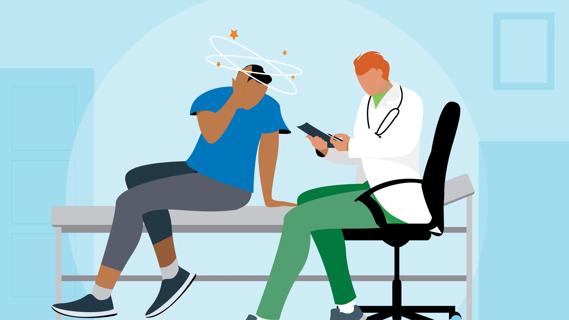
While similar, one may make you feel lightheaded, while the other can cause a spinning sensation

Dizziness typically falls into two categories
Mornings can be hard enough without feeling dizzy, too

The short answer from a cardiologist

Stay afloat with bicycle kicks, alternating punches and water jogging
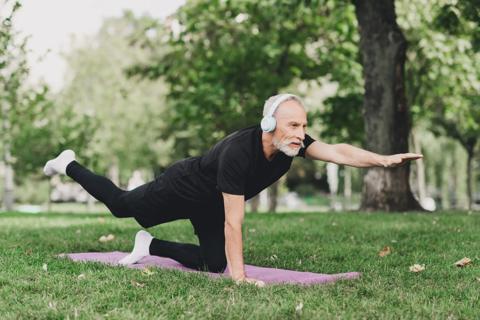
Aerobic, strength training, flexibility and balance exercises are all important parts of maintaining movement

Plyometric training uses explosive movements to improve speed, power and agility

The general rule is 1.2 to 1.6 grams of protein per kilogram of body weight — but that may not be exactly right for you
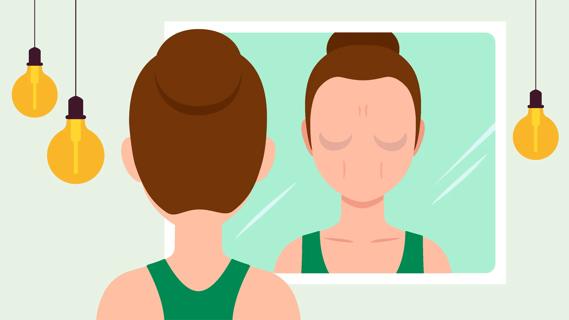
Rapid weight loss can cause loose skin, facial volume loss and body contour changes

Swallowing too much air, certain foods and drinks, and digestive conditions can all make you belch more

From poor hand hygiene and ventilation issues to contaminated food, many factors can make infectious diseases spread quickly
 Search