Locations:





Plaque psoriasis builds over time, while GPP can appear suddenly with symptoms that may require urgent care
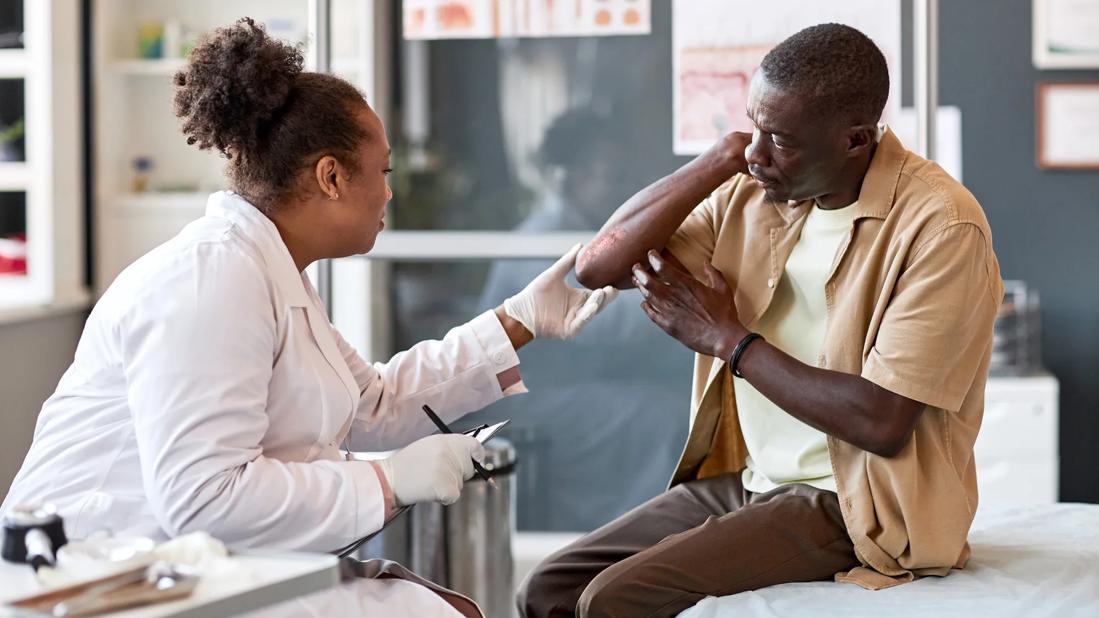
Image content: This image is available to view online.
View image online (https://assets.clevelandclinic.org/transform/cf1c91e8-b481-4a50-902f-e4d12ae50cb7/diagnosis-psoriasis-2186297721-r)
Healthcare provider examining plaques on patient's elbow
Not all psoriasis looks or behaves the same. So, knowing which type you have matters.
Advertisement
Cleveland Clinic is a non-profit academic medical center. Advertising on our site helps support our mission. We do not endorse non-Cleveland Clinic products or services. Policy
Generalized pustular psoriasis (GPP) and plaque psoriasis are both long-term, inflammatory skin conditions. But they affect your body in different ways, says dermatologist David Xiong, MD.
One is frustrating, itchy and gets in the way of daily life.
The other can become serious quickly and, in some cases, can be life-threatening. It can even lead to organ damage or require care in an intensive care unit.
Dr. Xiong explains how understanding differences in GPP vs. plaque psoriasis can help you spot important warning signs and know when to get care right away.
Video content: This video is available to watch online.
View video online (https://cdnapisec.kaltura.com/p/2207941/sp/220794100/playManifest/entryId/1_sjhoj0di/flavorId/1_5f3sgelj/format/url/protocol/https/a.mp4)
Learn the key differences between GPP and plaque psoriasis and know when to seek urgent care.
“The biggest difference between GPP and plaque psoriasis is appearance,” Dr. Xiong says. “And often, people with GPP already have plaque psoriasis.”
General pustular psoriasis is much rarer, too. The National Psoriasis Foundation estimates GPP affects about 1 in every 10,000 people in the U.S. Globally, that number is between 1 and 7 in every 1 million.
When you hear the word “psoriasis,” you likely picture plaque psoriasis. It’s the most common type, causing red patches of skin with silvery-white scales, called plaques.
These patches often show up on your:
Generalized pustular psoriasis can look like plaque psoriasis at first. But it can quickly turn serious, Dr. Xiong says.
Advertisement
“You’ll have red, raised patches of skin, along with what look like pimples on the surface,” he explains. “People may confuse them with other conditions, like an allergic reaction, a skin infection like cellulitis or insect bites.”
These fast-spreading, pus-filled bumps are called pustules. They’re often painful, but they aren’t contagious. And it all happens because one of your immune signals isn’t working the way it should. They can push your immune system into overdrive, forming plaques and painful pustules that can rapidly spread.
While both types of psoriasis start with an overactive immune system, they don’t develop the same way. And there’s ongoing talk in the medical community about what type of immune disorder these two conditions are. Some medical professionals believe plaque psoriasis is an autoimmune disease, while GPP is autoinflammatory.
“An autoimmune condition happens when your immune system mistakenly attacks your own body because it sees it as something foreign,” Dr. Xiong explains. “With GPP, the immune system doesn’t target specific cells or parts of the body. Instead, it causes increased, inappropriate inflammation throughout.”
But whether these two conditions are autoimmune or autoinflammatory is under scrutiny.
“These conditions have features of both autoimmune and autoinflammatory disorders, although it’s up for some debate in the literature,” he notes.
Experts believe changes in certain genes may affect how your body manages inflammation. These changes don’t always run in families and can happen at any time. Instead of responding to a specific threat, the immune system activates without a clear trigger.
This may explain how GPP appears suddenly and affects large areas of the body. Plaque psoriasis, on the other hand, tends to develop more slowly and stay in certain areas. These genetic changes aren’t caused by anything you did and aren’t something you can control.
Plaque psoriasis usually develops slowly and follows a long-term pattern. It may flare at times, then improve. Along with visible plaques, your skin may feel itchy, tight or sore. You may also notice flaking or bleeding from dry, cracked areas. Your nails may pit, thicken or lift from the nail bed.
Generalized pustular psoriasis affects your body in a more sudden and widespread way. It comes on quickly and involves large areas of inflamed skin with painful pustules that may burn and peel as they dry.
It can also affect more than your skin, leading to symptoms throughout your body, like:
Advertisement
“If you have skin symptoms, along with some of these other signs and you’re starting to feel sick overall, it’s important to seek urgent medical care,” Dr. Xiong states.
He also stresses that GPP is unpredictable and flares without warning. Sometimes, episodes can last for just a few days or linger for months. Some people can go years between flares, but Dr. Xiong cautions that this isn’t typical.
Living with psoriasis isn’t just about managing symptoms. It can also affect how you feel and move through your day. While GPP is less common than plaque psoriasis, it can affect your body in a much more intense and widespread way.
GPP can lead to serious complications beyond your skin. In some cases, these complications can be life-threatening. They may include:
GPP and plaque psoriasis can overlap. You may have both or develop one after the other. People with either type of psoriasis are more likely to have other health conditions, including heart disease, arthritis and mental health conditions. Research suggests these and other related conditions may be more common in people with GPP than in those with plaque psoriasis.
Advertisement
Generalized pustular psoriasis is rare and often misunderstood. It can resemble plaque psoriasis at first, but it behaves differently and can worsen quickly. And it’s not always easy to predict when a flare will happen. When one does occur, you’ll need care at the emergency department — and possibly a hospital stay.
That’s why recognizing the signs and getting care right away is important. You can start treatment sooner, get your symptoms under control and lower your risk of complications.
It can feel scary when GPP symptoms come on quickly, but understanding what’s happening in your body can help you stay calm and focus on getting the immediate care you need.
Advertisement

Sign up for our Health Essentials emails for expert guidance on nutrition, fitness, sleep, skin care and more.
Learn more about our editorial process.
Advertisement

Signs like fever, breathing problems and muscle weakness, along with red patches and pus-filled bumps, mean it’s time for emergency treatment
Understanding what sets off this serious skin condition can help you recognize when you need urgent care

Moisturize often, take oatmeal baths, use Epsom salts and follow a healthy diet to help reduce your symptoms
The common skin condition isn’t contagious, but it can pop up anywhere on your body during a flare

A well-balanced diet with anti-inflammatory foods can help reduce flare-ups and severity of psoriasis symptoms

Caused by inflammation, psoriasis itch can be managed with a variety of treatments, like moisturizing and taking cooler and shorter showers

Stress, infections, skin injuries and environmental factors can trigger an onset of psoriasis symptoms
Learn your triggers, stay moisturized, quit smoking, prioritize sleep — and avoid scratching
Eyes typically increase to full size during two growth spurts in childhood
To start, opt for calorie-dense foods that are rich in protein and healthy fats
Pre-birth injections and monoclonal antibodies can help prevent serious complications
 Search










