Locations:





 Search
Complications related to the implanted device leads may go unnoticed

Image content: This image is available to view online.
View image online (https://assets.clevelandclinic.org/transform/511ea73a-ce2d-49db-b318-675c1d1e747b/pacemakerSick-1291179392-770x533-1_jpg)
older man sick on bed with phone in hand
A pacemaker is a lifesaver. It faithfully keeps your heart beating at a normal rhythm and helps manage your health condition. But in rare cases, an infection related to your pacemaker can put your life at risk.
Advertisement
Cleveland Clinic is a non-profit academic medical center. Advertising on our site helps support our mission. We do not endorse non-Cleveland Clinic products or services. Policy
And because the infection is sometimes internal, you may not realize you’re in danger.
Cardiologist Bruce Wilkoff, MD, answers questions on what you need to know about pacemaker-related infections.
A: Implanted pacemakers normalize your heartbeat with a steady stream of electric impulses. In most cases, the device sends these impulses through leads (wires) attached to your heart.
Some pacemakers, called leadless pacemakers, don’t use leads. But most pacemakers have leads. Infection related to the leads is rare, but possible.
Not everyone is a candidate for a leadless pacemaker. Currently, the device is available only for people with specific medical conditions and a slow heart rate (bradycardia). Ask your doctor if you’re a candidate for a leadless pacemaker.
A: Pacemakers are implanted and replaced through small incisions. Most infections occur after surgery.
The infection rate is slightly higher for replacements: About 0.5% of initial implants develop infections, with infections occurring in about 2% of replacement surgeries.
A: Most infections start in one of two places: at the incision site or where the leads connect to your heart.
Internal infection can spread unnoticed, typically from various types of staph bacteria. A sticky film develops that makes clearing the infection impossible — even with antibiotics — unless the pacemaker and leads are completely removed.
Advertisement
A: Many of the symptoms are subtle and mimic regular infections. You may notice:
If the infection goes untreated, you may eventually notice more severe symptoms, including:
A: Infection symptoms may go unidentified for many months.
About half of the people who develop an infection talk to their doctor about their concerns within a year of surgery. Nearly an equal number might not recognize that anything is wrong for more than a year.
If you notice you’re still not feeling well after you’ve had time to recover from your implant surgery, you should talk to your healthcare provider. They may diagnose the problem with examination of the implant site, blood tests, blood cultures and an echocardiogram.
A: Your doctor must address the infection once it’s identified. Pacemaker-related infections are a special type of bacterial infection called endocarditis. It’s the same life-threatening infection that affects the lining of your heart valves.
These infections aren’t immediately lethal. But over time, the infection attacks your heart valves and can spread to your lungs and brain through your bloodstream. If it isn’t treated, it’s sometimes fatal.
A: There’s a slight infection risk for all people who’ve received or will receive an implanted device.
You’re at higher risk if you:
A: The only treatment option is removal and replacement surgery.
Your doctor will remove all the leads and any infected tissue. They’ll carefully remove any part of the device that has adhered to your heart tissue or veins to avoid tearing.
Your care provider will then implant a new device in a different location (such as in the opposite shoulder). They’ll also prescribe a regimen of antibiotics.
Sometimes, a new device isn’t needed. Or in some situations, a leadless or traditional pacemaker that just goes under your skin is an option. Ask your provider if this is possible.
A: Although there’s no sure-fire way to avoid infection, you can improve your chances of finding problems early. To reduce the risk of infection after a pacemaker or implantable defibrillator change/replacement operation, we often use a new antibiotic envelope (a bioabsorbable mesh infused with antibiotics) that has proven to reduce the risk of infection by about half. Otherwise, an antibiotic is also given at the time of every pacemaker operation.
Advertisement
Watch your pacemaker site and do careful checks each month. Notice: Does it look the same as it did before? If you think something is changing, contact your provider.
Also, be sure to see your provider annually for regular check-ups. And if other problems arise or you notice something different about your pacemaker, don’t hesitate to contact them as soon as possible.
Advertisement

Sign up for our Health Essentials emails for expert guidance on nutrition, fitness, sleep, skin care and more.
Learn more about our editorial process.
Advertisement
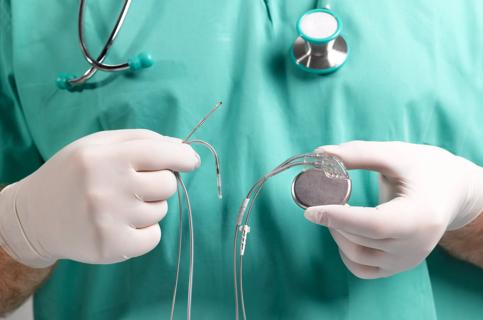
Pacemakers keep a slow heartbeat steady, while defibrillators reset the heart when rhythms turn life-threatening

Recovery takes about 12 weeks, but you’ll likely feel a lot better by six weeks after surgery

Your scar will heal best if you keep the area clean, dry and covered for an appropriate amount of time
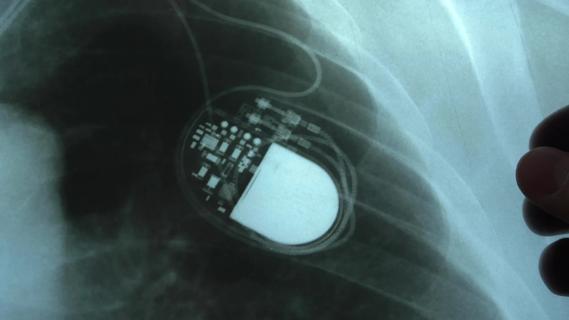
Fainting, heart palpitations and shortness of breath are just a few signs your heart may need help

Glitches are possible but unlikely
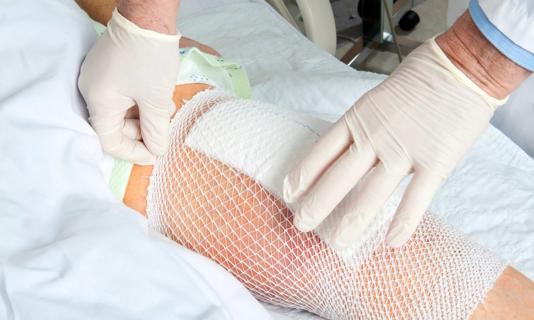
Keep the area clean and monitor your incision site for discharge, odor or a change in appearance

Making healthy lifestyle changes ahead of surgery can help you avoid AFib after
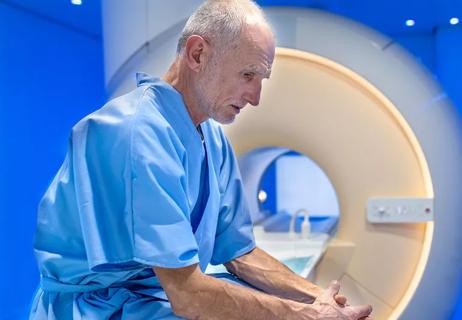
What to know about cardiac implants and imaging tests

Your period may occasionally line up with someone else’s, but science suggests coincidence is responsible — not a mysterious biological connection

Most penis-enlargement products, devices and procedures deliver only modest (if any) gains

Make meals with lean proteins, non-starchy vegetables and complex carbohydrates











