Locations:





Breaking down digestion speed
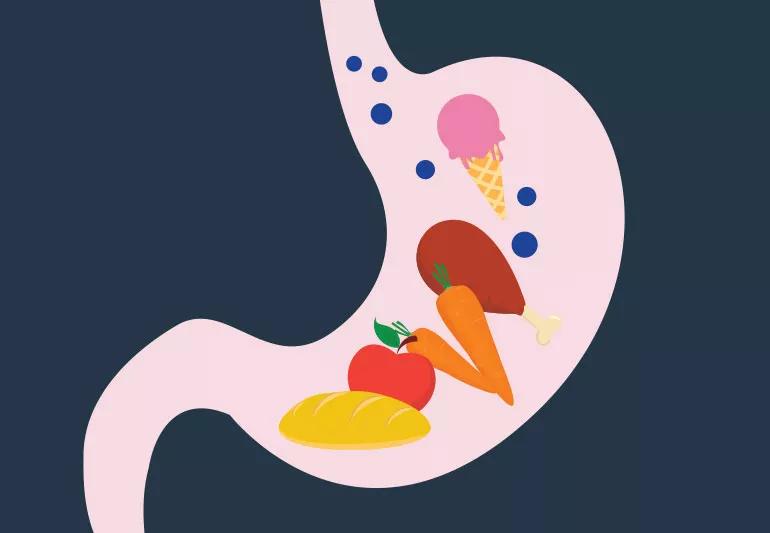
Image content: This image is available to view online.
View image online (https://assets.clevelandclinic.org/transform/609d9140-58bf-482e-8335-2fc2984c4ee6/digestFoods-1148808945-770x533-1_jpg)
illustration of stomach with food inside
Why is it after eating certain foods, you can feel full for hours, but after others, you’re looking for a snack within minutes?
Advertisement
Cleveland Clinic is a non-profit academic medical center. Advertising on our site helps support our mission. We do not endorse non-Cleveland Clinic products or services. Policy
It’s all about your body’s digestion of food and several other factors that affect how long the process can take. To get a better sense of those factors and how long it takes for you to digest food, we spoke with gastroenterologist Christine Lee, MD.
“Digestion is the process of breaking food down into the nutrients your body can use. It starts at your mouth and finishes at the end of the terminal ileum (small intestine),” explains Dr, Lee.
“Seeing and smelling food is what kick-starts the process. In response, your body starts making extra saliva, which contains enzymes that initiate digestion,” she adds. “Once you get the food chewed and swallowed, the real work begins in the stomach.”
In your stomach, the food mixes with those digestive juices, creating a watery concoction that passes into the small bowel. “The small bowel’s walls absorb needed nutrients and water,” says Dr. Lee. “The colon (large bowel) then takes what your body didn’t use and prepares to get rid of it through a bowel movement.”
Dr. Lee says the entire digestive process can take several hours. Food generally stays in your stomach between 40 and 120-plus minutes. Then add another 40 to 120 minutes for time spent in the small bowel.
Advertisement
“The denser the food, meaning the more protein or fat it has, the longer it takes to digest,” notes Dr. Lee.
“Simple carbohydrates, such as plain rice, pasta or simple sugars, average between 30 and 60 minutes in the stomach,” she adds. “But if you put a thick layer of peanut butter on toast, or layer avocado and eggs, it can take upwards of between two to four hours to leave your stomach. Throw in a piece of bacon and it’s even longer.”
Liquids leave the stomach faster because there is less to break down:
Dr. Lee cautions, though, that these times are estimates. How long it takes to digest food varies depending on:
“Genetics and age matter, too. Some people are born with faster metabolisms,” says Dr. Lee. “And as we get older, our metabolism and motility slow down. People also start developing medical conditions, such as high blood pressure, diabetes and atherosclerosis. Medications for these conditions can delay digestion.”
Medications and supplements that may affect how long digestion takes include:
Just because you feel hungry doesn’t mean your stomach is on “E,” says Dr. Lee.
“Our hunger cues can be hormonally regulated, so if you have a high level of hunger hormones floating around, you may feel hungry — even if your stomach is full,” she says.
“Some medications, like prednisone, increase your appetite by increasing the appetite-stimulating hormones. That means you may feel hungrier more often when taking these medications, even if you had enough to eat.”
Your perception of these sensations is also highly individual. “The classic example is a heart attack,” Dr. Lee adds. “Many people have bonafide heart attacks but didn’t notice any chest pain. Likewise, some people experience chest pains without having had a heart attack. Similarly, some patients feel hunger, but their stomach is not empty.”
Advertisement

Sign up for our Health Essentials emails for expert guidance on nutrition, fitness, sleep, skin care and more.
Learn more about our editorial process.
Advertisement
Your gut never really stops working — and that’s not even the most incredible thing about it

No, it doesn’t stay in your stomach for seven years

They’re usually a sign of a common illness, like a cold or the flu, but they can occasionally signify certain types of cancer
They claim to boost energy and improve longevity, but there’s currently not enough research to confirm these benefits
Your body naturally produces the protein that’s essential for breaking down and digesting food
Your skeleton has a lot of moving parts, jobs and abilities!

That cup of joe may help decrease inflammation and remove damaged cells in the vital organ
After a cholecystectomy, your body may temporarily have a hard time processing fat and fiber

Hormonal changes, a slower metabolism and muscle loss can make weight gain more common around menopause — healthy habits can help you manage it

Life-threatening complications include sepsis, stroke, pneumonia and more
Fruity-smelling breath can happen when your body burns fat for energy, and in some cases, can signal a medical emergency
 Search










