Locations:





Find relief by keeping a neutral spine, trying a medium-firm mattress and using pillows for support
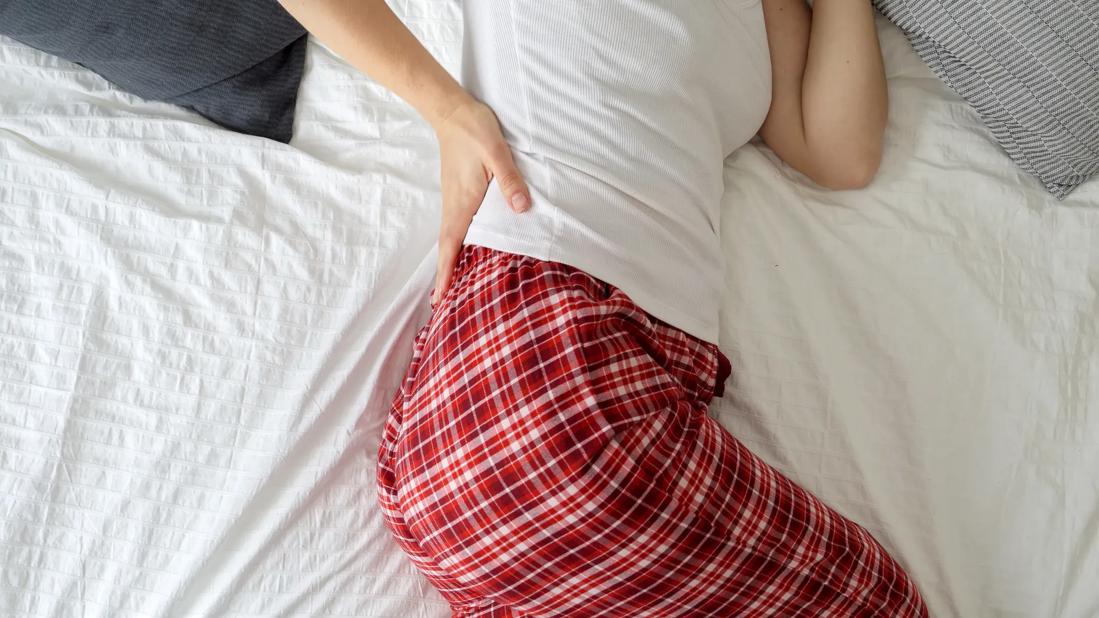
Image content: This image is available to view online.
View image online (https://assets.clevelandclinic.org/transform/b3c14711-96ce-4992-89b4-d8bc58da2b47/sciatica-sleeping-1605616329)
Person lying on their side in bed, with hand pressed against lower back
The pain of sciatica can make it hard to sleep. Like, really hard to sleep. Fortunately, there are adjustments you can make and steps you can take to ease your pain and finally get a better night’s sleep.
Advertisement
Cleveland Clinic is a non-profit academic medical center. Advertising on our site helps support our mission. We do not endorse non-Cleveland Clinic products or services. Policy
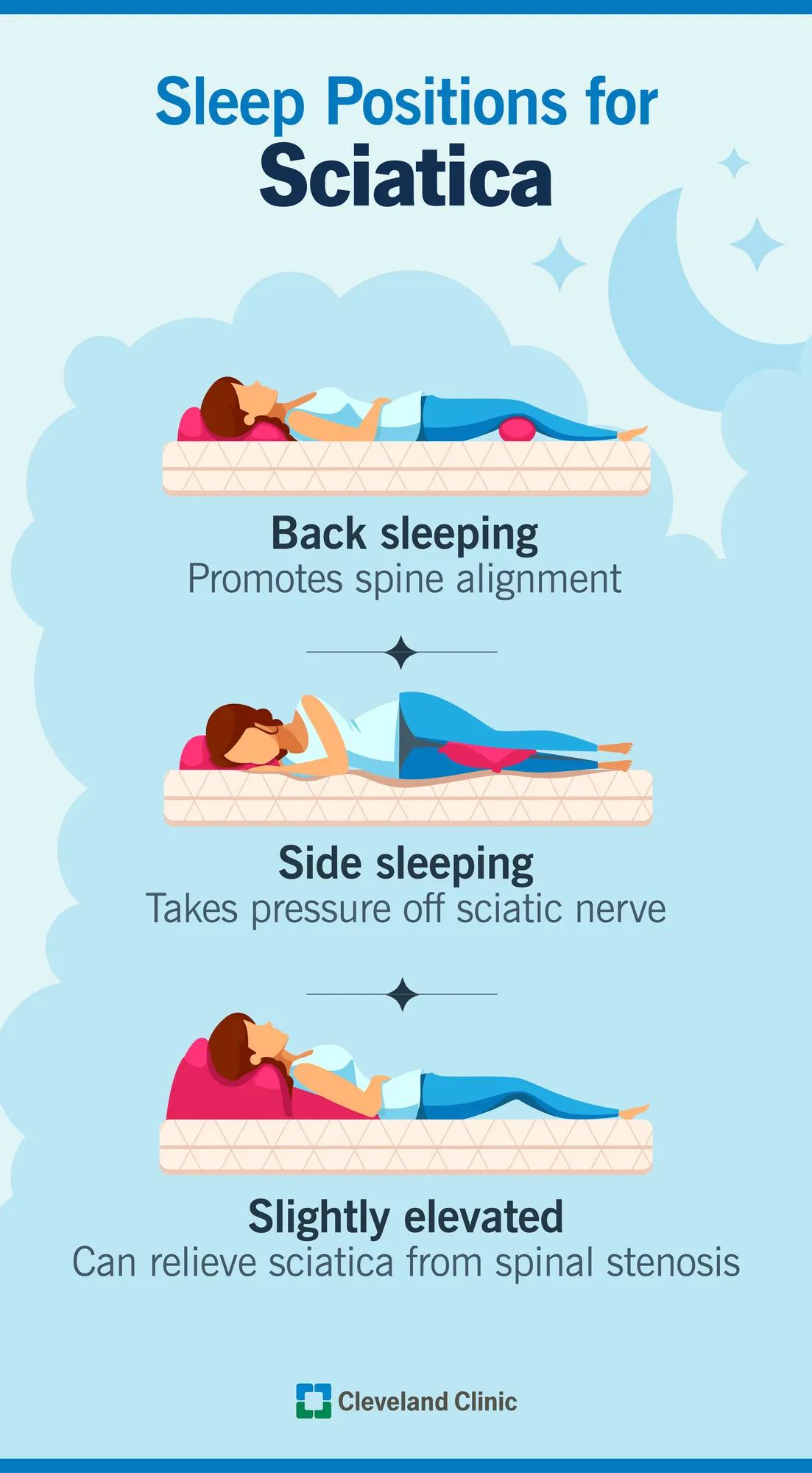
Image content: This image is available to view online.
View image online (https://assets.clevelandclinic.org/transform/8ed36392-8457-4ffa-9914-8c9ce9d797c6/sleeping-with-sciatica-infographic)
There’s no perfect sleeping position for sciatica pain. But you may find that one of these options works best for you.
Sleeping and sciatica often don’t mix. It can be impossible to get a good night’s rest when your back or legs are throbbing or tingling! But physical therapist Cara Sieberth, PT, says there are steps you can take to find relief from sciatica and finally get some shut-eye.
Getting your spine into a neutral position may help alleviate some of your sciatica pain while you sleep.
When you lie down, ensure that your head, shoulders and hips are in a straight line. Put a small pillow under your neck and head, but not your shoulders. You may also need to put a pillow under your knees to keep your back from arching too much.
“Once you get in this position, think about what hurts or what feels good,” Sieberth suggests. “Then, you can tweak your sleeping position from there.”
Advertisement
If you’re sleeping on your side, try placing a pillow between your knees.
“This aligns your hips and takes pressure off the pelvis,” Sieberth explains. “Another option is to place a pillow behind your back for support, which also keeps you from rolling.”
Regular pillows work fine. But a body pillow is a great option, too, because they’re designed to mold to your body and stay in place while you sleep.
If spinal stenosis is at the root of your sciatica, it can be helpful to sleep in a slightly rounded position. This can help open the narrowed spaces in the spine.
To mimic this position while you sleep:
A warning, though: If spinal stenosis isn’t the cause of your sciatica, these positions may cause you more pain instead of bringing you relief. If it hurts, switch it up.
Sleeping on your stomach forces you to arch your back and turn your head to one side. For the most part, it’s not great for your back, and it’s typically best to avoid it when you’re dealing with sciatica pain.
But … not always. In some cases, stomach sleeping could be the one position that brings you the most relief.
“For a few people, arching their back actually provides relief from sciatica,” Sieberth notes. “In general, stick with the sleeping position that feels best for you.”
Sleeping on the wrong mattress can make sciatica pain worse, or at least keep it from getting better.
“Try to find a comfortable position on the mattress you already have,” Sieberth says. “Use your pillows or even a mattress topper to make some small changes. Then, once you figure out what gives you some relief, you can decide whether a firmer or softer mattress might work for you.”
So, what should you look for if you do decide you need a new one? A review of studies found that a medium-firm mattress is best for bringing relief from lower back pain.
Look for something that doesn’t create a lot of extra curve to your spine so you can maintain a normal, neutral spinal alignment.
Stretching your back and strengthening your abdominal muscles (aka your core) helps take pressure off your spine. To alleviate sciatica pain, try stretches like the piriformis stretch and cobra pose.
“Try both, and if one helps relieve your symptoms more than the others, focus on that,” Sieberth recommends. “Spend one to two minutes stretching three to five times a day, including right before bed.”
Advertisement
Tap into other pain relief options before bedtime to help relieve mild sciatic symptoms.
Your sciatica pain may feel more noticeable at night. But what you do during waking hours can affect how bad your pain gets at night. Here’s what Sieberth suggests:
Advertisement
To find the greatest relief from your sciatica — both at night and during the day — you need to figure out what’s behind it.
“The cause of your sciatica affects what positions or activities bother you,” Sieberth explains. “This also determines which sleeping positions work best for you. For instance, if you have a bulging disk, you may find back sleeping comfortable. If you have spinal stenosis, you might prefer side sleeping.”
Whatever’s causing your sciatica, don’t assume you have to live with it. If it interferes with your quality of sleep, talk with a healthcare provider about solutions. With the right medical treatment, you can get relief from sciatica pain — and head off to dreamland again.
Advertisement

Sign up for our Health Essentials emails for expert guidance on nutrition, fitness, sleep, skin care and more.
Learn more about our editorial process.
Advertisement
Try these moves to relieve butt pain and numbness

Fibromyalgia causes widespread pain — and now we know more about the root cause

Nighttime knee pain could be from inflammation, injury or another condition that gets worse with pressure and positioning
There’s limited research on whether the supplement can help you snooze — adopting proven sleep habits may be a better place to start
Head to bed in a bra to reduce breast pain, nipple irritation and stretch marks
At-home remedies may help calm symptoms and make it easier to relax at bedtime
These brief episodes of sleep last only seconds, but they can have serious consequences when they happen at the wrong time
Your chronotype reflects when your body naturally wants to sleep and wake — and why your energy peaks when it does

Most breast pain isn’t a sign of cancer, but certain symptoms deserve a closer look

It’s a myth that you should avoid sleep (or have someone wake up throughout the night) after a head injury

The color and shade of your urine offer a window to your health
 Search










