Locations:


Correct usage of a condom is key to its effectiveness at preventing STIs and pregnancies
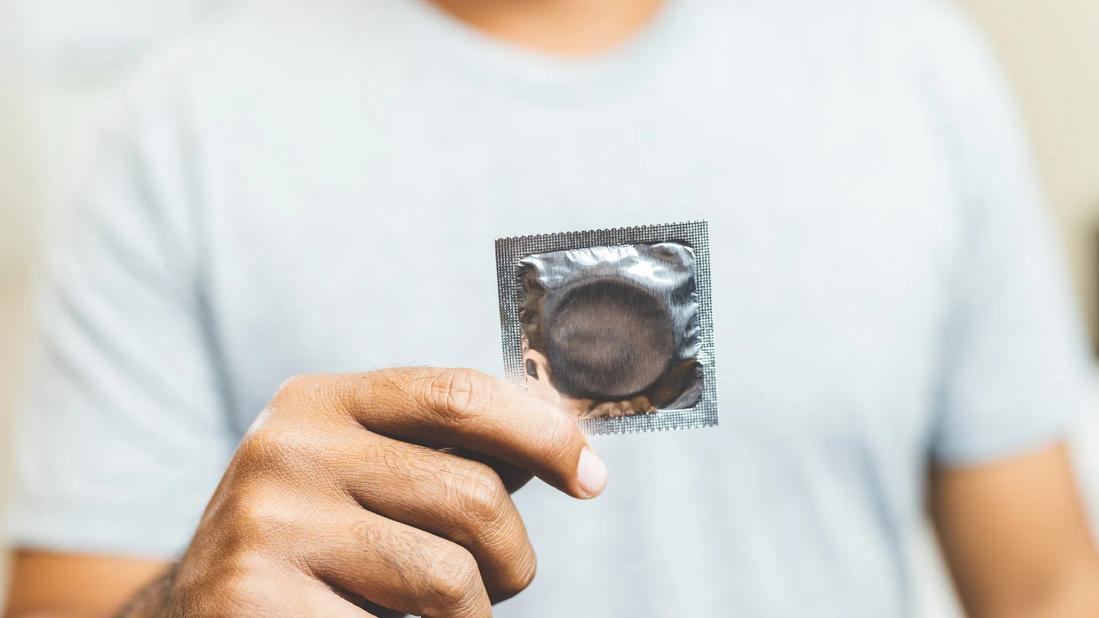
Image content: This image is available to view online.
View image online (https://assets.clevelandclinic.org/transform/8aba7594-35b1-4fa4-b4b6-7a80b2cc7753/condom-1142358179)
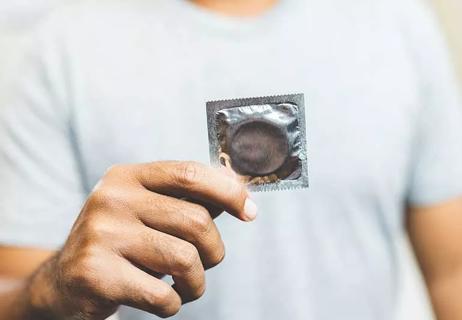
Person holding up a sealed condom
Wearing a condom during sex helps protect you and your partner against sexually transmitted infections (STIs) and greatly lowers the chance of an unplanned pregnancy. But for a condom to work effectively, it needs to be put on correctly.
Advertisement
Cleveland Clinic is a non-profit academic medical center. Advertising on our site helps support our mission. We do not endorse non-Cleveland Clinic products or services. Policy
Let’s walk through the process with urologist Raevti Bole, MD.
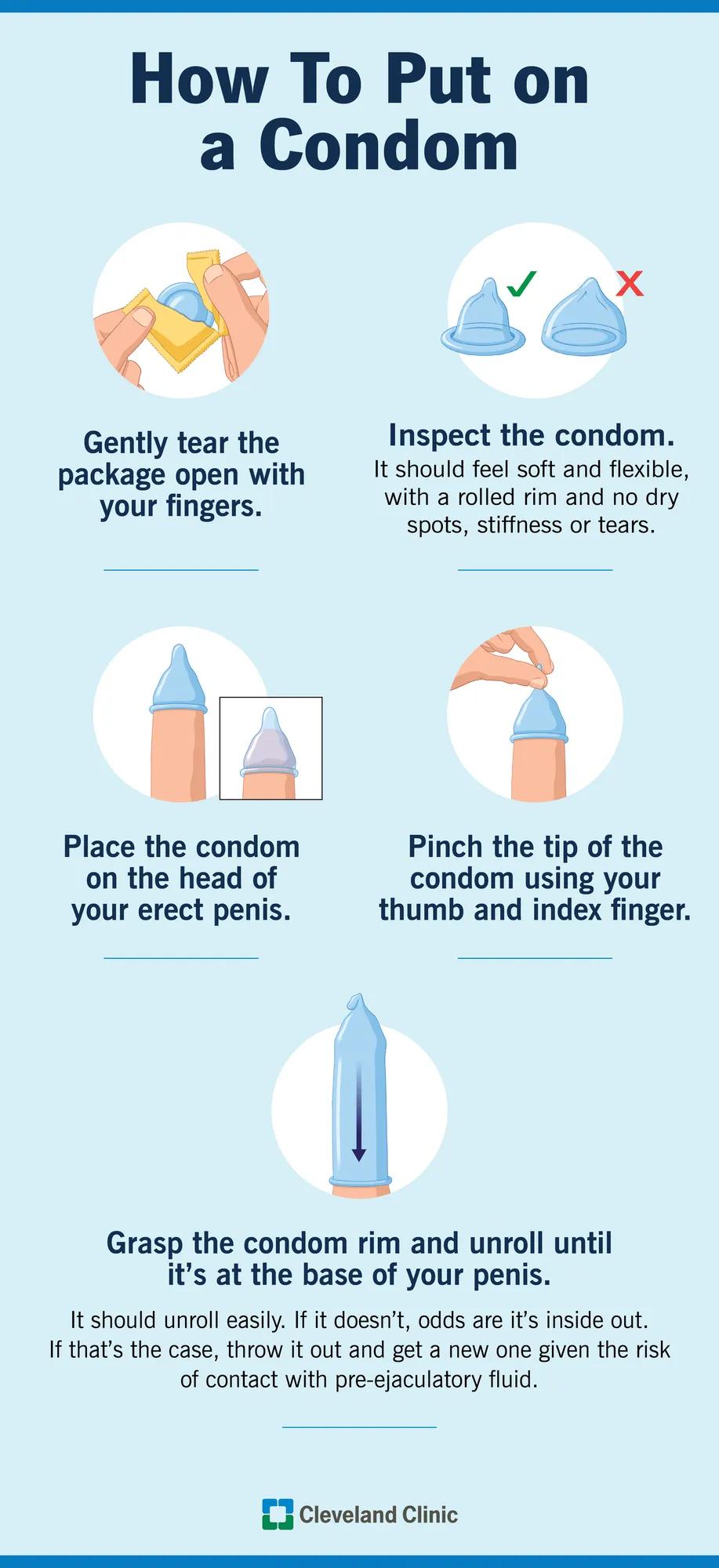
Image content: This image is available to view online.
View image online (https://assets.clevelandclinic.org/transform/502b7658-b3a1-4a29-bf5d-7aa8b2ae871f/how-to-put-on-condom)
The most common type of condom is an external latex condom. Putting one on seems simple enough. There are only two things involved, after all: The condom (a thin and stretchy sheath) and an erect penis.
But there’s room for error, which is why it’s important to follow these steps while putting on a condom before intercourse:
Advertisement
Once the condom is securely on, you’re ready for intercourse.
Wear the condom until after you ejaculate. Once you’re done, hold the base of the condom and pull your penis out of your partner while it’s still erect. Holding the base keeps the condom from slipping off and spilling semen.
Carefully slide the condom off your penis, then tie off the open end so no semen spills out. Wrap the used condom in a tissue and throw it away. Do not flush a used condom down the toilet, as it can clog pipes.
If used correctly and consistently, condoms are highly effective for birth control and protecting against STIs. For example:
“Condoms can greatly reduce your risk of pregnancy or getting a sexually transmitted infection, but only if they are used correctly,” emphasizes Dr. Bole. “If condoms fail, it’s most often because of human error.”
Advertisement
How you put on a condom matters, but that’s not the only way to potentially undermine their effectiveness. Dr. Bole offers these additional tips to get protection from your condom.
Advertisement
Sometimes, despite best efforts, a condom may break or slip off. If that happens, stop intercourse right away. Pull your penis out carefully to minimize any potential leakage.
Check to see whether any semen got inside or near the vagina or anus. Afterward, your partner should wash the outside of those areas gently with water. (Avoid douching or trying to flush anything out. It doesn’t lower risk and can irritate tissue.)
If there’s concern about a potential pregnancy, prevention options include:
If there’s concern about STI exposure:
Advertisement
Dr. Bole also urges you and your partner to stay calm.
“A condom breaking is common, and there are good options if you act quickly,” she says. “Time matters for both emergency contraception and HIV prevention, so reach out to a healthcare provider or clinic the same day if you can.”
Condom use as a form of contraception dates to ancient times. But even though they’ve been around a long time, they may be new to you.
If so, consider practicing on your own before you’re in the moment. Going through the steps once or twice can help you feel more comfortable and confident later when you put one on with your partner. You’ll get a sense of how a condom feels, too.
“A little practice ahead of time makes the real thing feel a lot less awkward,” encourages Dr. Bole.
Advertisement

Sign up for our Health Essentials emails for expert guidance on nutrition, fitness, sleep, skin care and more.
Learn more about our editorial process.
Advertisement
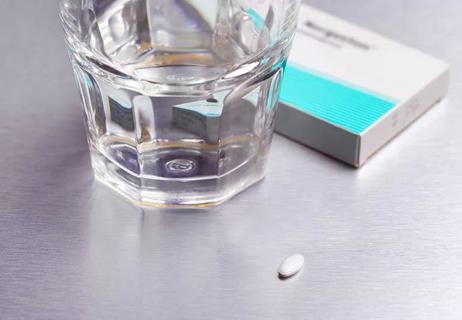
Turn to emergency birth control and STI tests
Most condoms will fit most people, but other factors matter, too
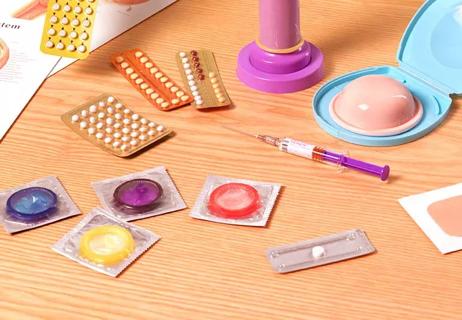
Yes, there is a condom that will fit
Go for latex-free options if you experience sensitivity

‘Safer sex’ means STI prevention, avoiding unintended pregnancies and psychologically safe practices for everyone
Some birth control methods — and how you use them — may lighten or stop your period
Changing hormone levels can mean more cramping, even between periods

From ages 1 to 3, toddlers typically need about 19 grams of fiber a day — you can help them get their fill with fresh fruit and whole-grain foods
This low-impact activity could boost your cardiorespiratory health

The advice dates to 1574, but it falls a little short given what we know today

Most tongue pain isn’t too serious, but seek help if it’s severe or lasts longer than a few weeks
 Search